
















Guide
How to use a thermal knife properly - step-by-step instructions

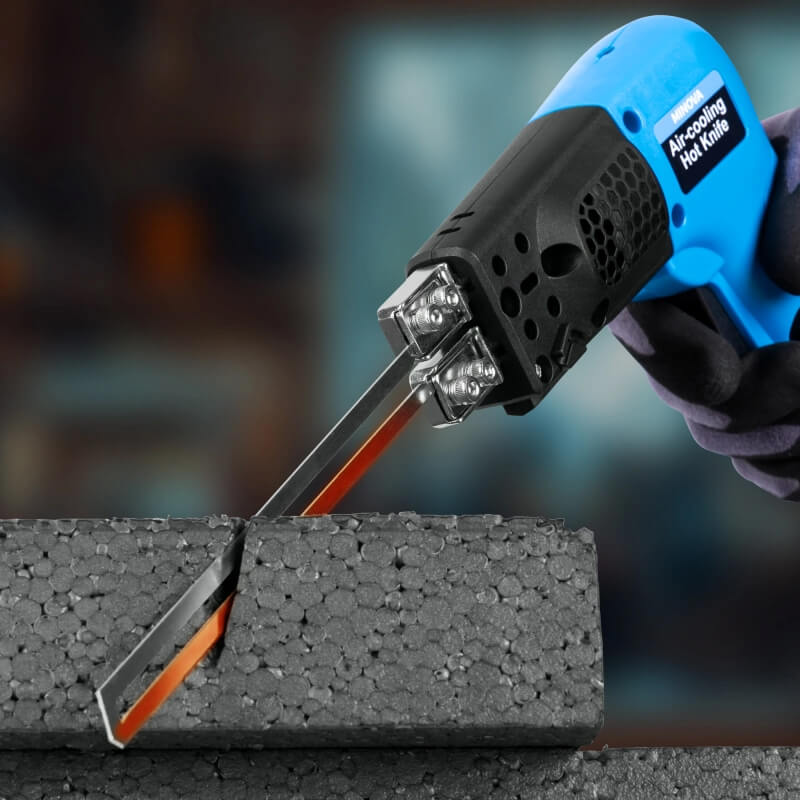
Do you want to use a thermal knife properly and get clean, smooth cuts? Many people buy a thermal knife and get to work right away, skipping basic preparations - the result is uneven edges, over-melted material and rapid wire wear. This guide will walk you through every step of the job - from preparing your station to maintaining your tool. Learn proven techniques that professionals use every day!
Key rules for proper cutting:
- Heating Professional models take only 3-5 seconds.
- Optimum speed cuts are about 5-10 cm per second for smooth edges.
- EPS requires a temperature of 250-300°C, XPS needs 320-380°C.
- Minimum pressure on the blade ensures even cutting without bending the blade.
How to use the Styrofoam thermal cutter correctly and safely?
To use a thermal knife properly, you need to understand how the tool works.
The blade heats up to 300-500°C and melts the material in its path – does not cut it mechanically like a regular knife. Therefore, the guiding technique is quite different from that with traditional tools. Too fast a movement causes tugging and rough edges, too slow - excessive melting and a wide gap.
Work safety requires observing a few basic rules. A hot blade can cause serious burns on accidental skin contact. It is advisable to work with protective gloves and always put the tool on a stable stand. In addition, minimal amounts of vapor are produced during cutting - It is recommended to work in a ventilated room or outside the building.
Step 1 - Preparing the workstation for polystyrene foam cutting
Good job preparation is half the battle when it comes to thermal cutting. You need a stable, flat work surface - preferably a workbench or building trestle with a board laid on it. Thermal knife for cutting polystyrene foam requires space to run the cut freely without obstruction. Make sure you have all the materials you need at your fingertips - pads, rulers, markers for markings.
Surface protection and material stabilization
Styrofoam during thermal cutting must lie down stably - Any movement of the material translates into bumps on the edge. The best solution is to use heavy objects as weights on both sides of the cutting line. It's a good idea to put a piece of old insulation material underneath the sheet, which protects the top from contact with the hot blade and allows the material to be cut fully.
Step 2 - Choosing the right thermal cutter for polystyrene foam
The choice of a thermal cutter should be tailored to the nature of the work. For occasional cuts for minor repairs, a simple model without temperature control will suffice. Professionals need a tool with three-stage power regulation, air cooling and a set of replaceable blades. A power supply of at least 200W guarantees stable temperature throughout operation.
Types of heating wire
Different types of heating elements are used in thermal knives. The most popular is polystyrene cutting wire of nichrome (NiCr 80/20), which is characterized by fast heating and good durability. Teflon-coated wires reduce the sticking of molten material. You can recognize a worn wire by uneven heating and tendency to bend during operation.
Step 3 - Selecting the temperature for the thickness of the polystyrene foam
Proper selection of temperature This is the basis for a clean cut. Temperature too low makes The blade jerks the material, instead of melting it - The result is frayed edges. Too high a temperature melts excessive material, creating a wide gap and blackened edges. Thermal cutter for thick polystyrene foam must have sufficient power to maintain the temperature as it passes through the dense material.
Each type of polystyrene requires different settings. White EPS of standard density cuts most easily at 250-300°C. Graphite polystyrene is denser and needs slightly higher parameters. Styrodur (XPS) requires a temperature of 320-380°C due to its compact cellular structure. When cutting new material for the first time, always do test cutting on the waste.
Step 4 - Thermal knife guidance technique
The correct technique for guiding the knife determines the quality of the edge. The knife should move smoothly and steadily, without jerks or stops. The optimal speed is about 5-10 cm per second for standard EPS polystyrene. Minova 7Y 250W Thermal Knife, which you can find in our store, with air cooling keeps the temperature stable even during longer cuts.
Maintaining even pressure
The pressure on the knife when cutting should be minimal – it is the temperature that does the work, not the mechanical force.
TIP: Pressing too hard causes the blade to bend and cut unevenly. A properly guided knife glides through the material almost without resistance, leaving a smooth, slightly glazed edge. If you feel resistance - check the temperature or slow down the speed. Keep your gaze a few centimeters in front of the blade, which allows you to smooth correction of direction.
Step 5 - Stabilize the sheet when cutting at an angle
Angled cutting requires special stabilization of the material. When the blade is set at 45°, the forces acting on the sheet try to move it sideways. Therefore, the weights should be placed closer to the cut line than when cutting straight. Guide the blade at a constant angle through the entire length of the cut - even slight fluctuations produce a visible ripple effect on the finished edge.
Proper cleaning of wire and heating elements
Regular cleaning of the heating wire prolongs its life and ensures an even cut. Residues of melted Styrofoam deposited on the surface form an insulating layer that disrupts temperature distribution. NiCr 80/20 resistance wire It is best to clean while still warm - residual material is then easier to remove with a soft brush. After each session, check the condition of the wire for discoloration and deformation.
Top rated products
-
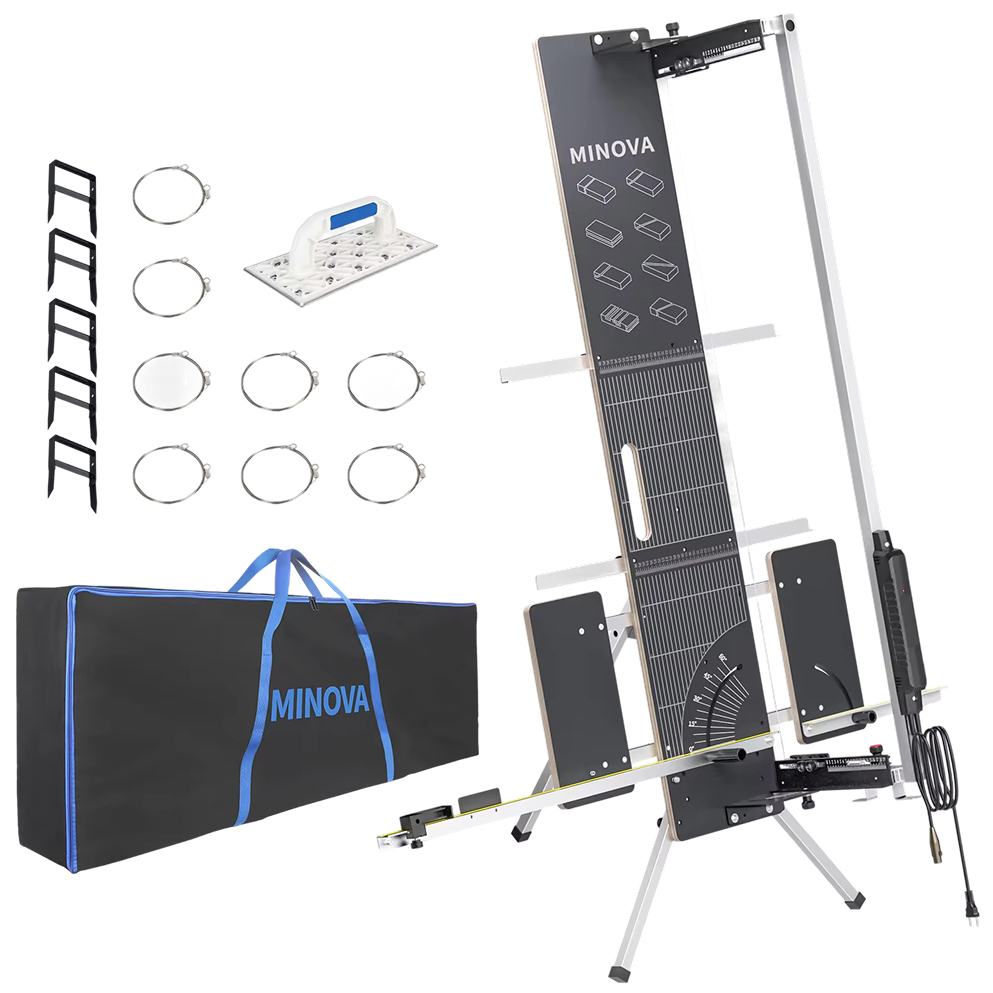
Styrofoam guillotine cutter Minova Pro 260W (Network + Battery)
Price range: € 479,76 through € 512,38 -
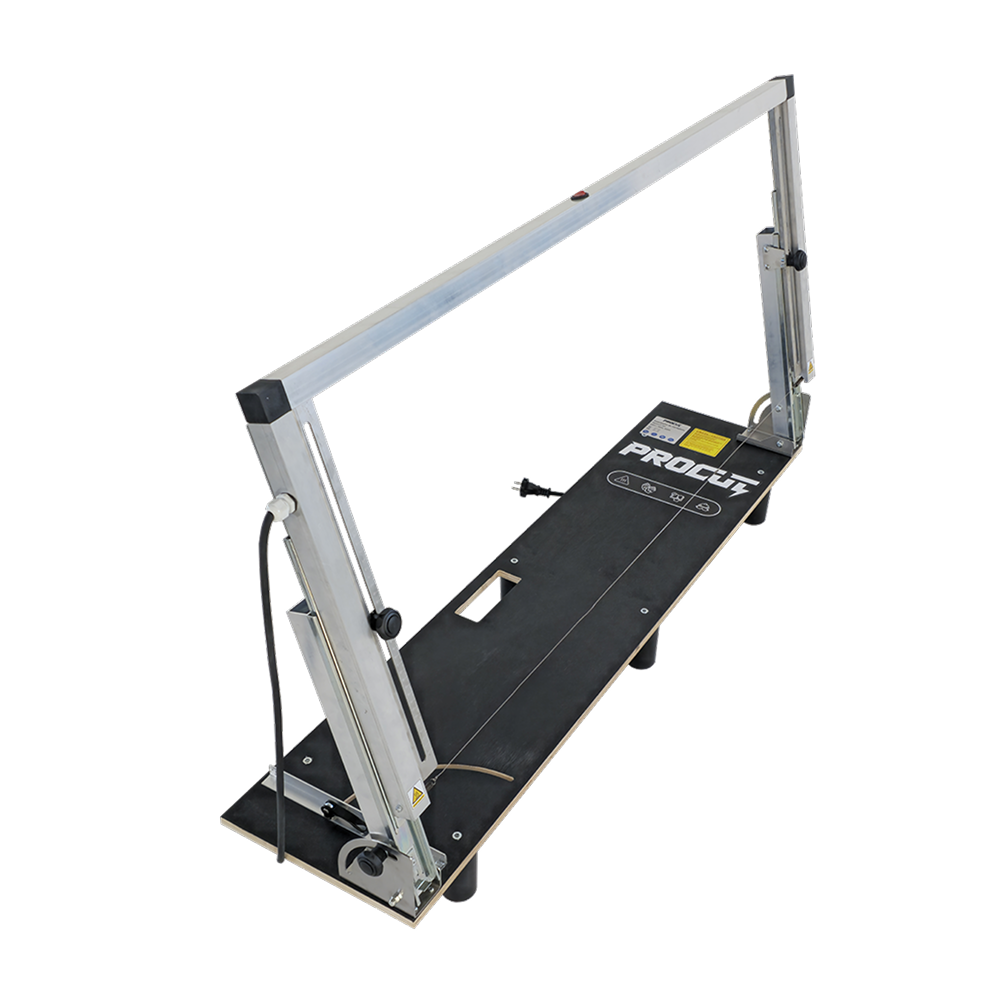
Procut Base 108cm 200W polystyrene cutter
€ 192,00 -
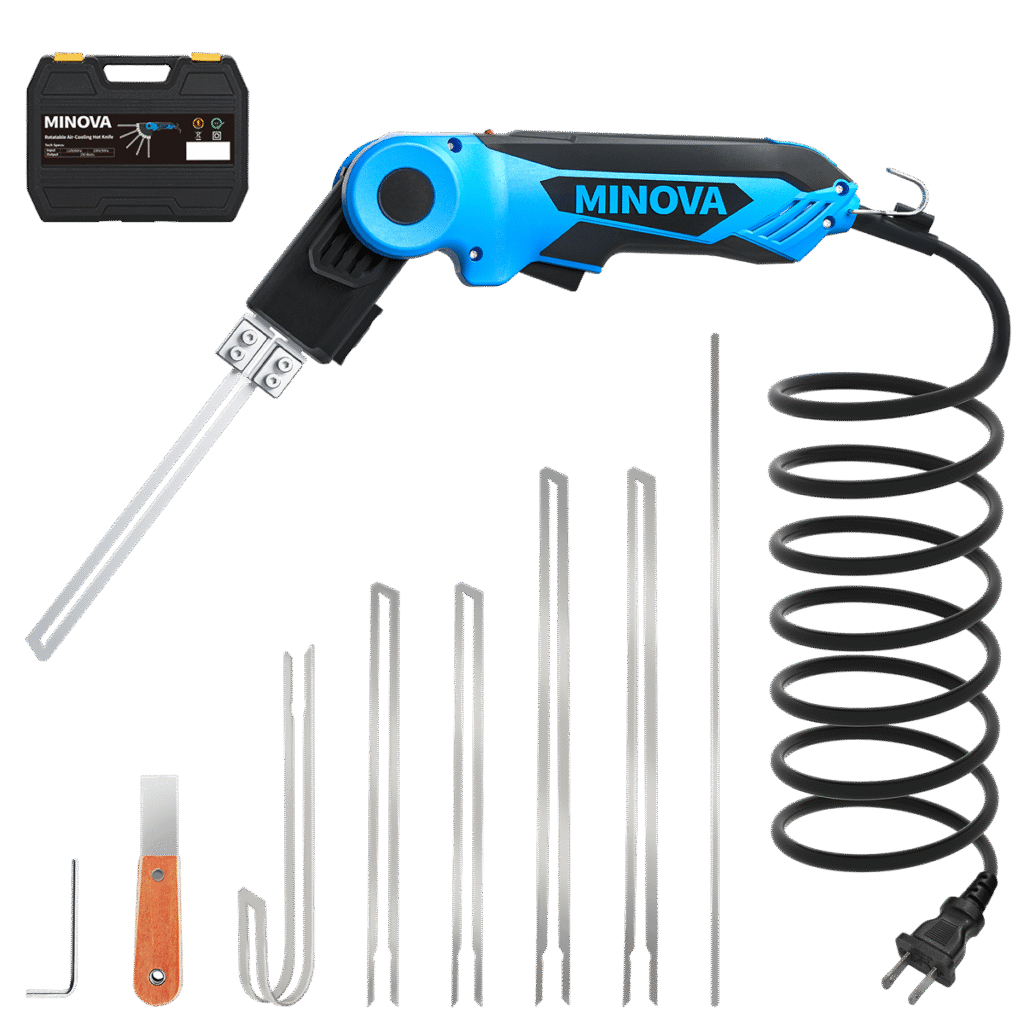
Minova 30Y 250W Thermal Knife with 6 Blades and Air Cooling
Original price was: € 216,00.€ 192,00Current price is: € 192,00. -
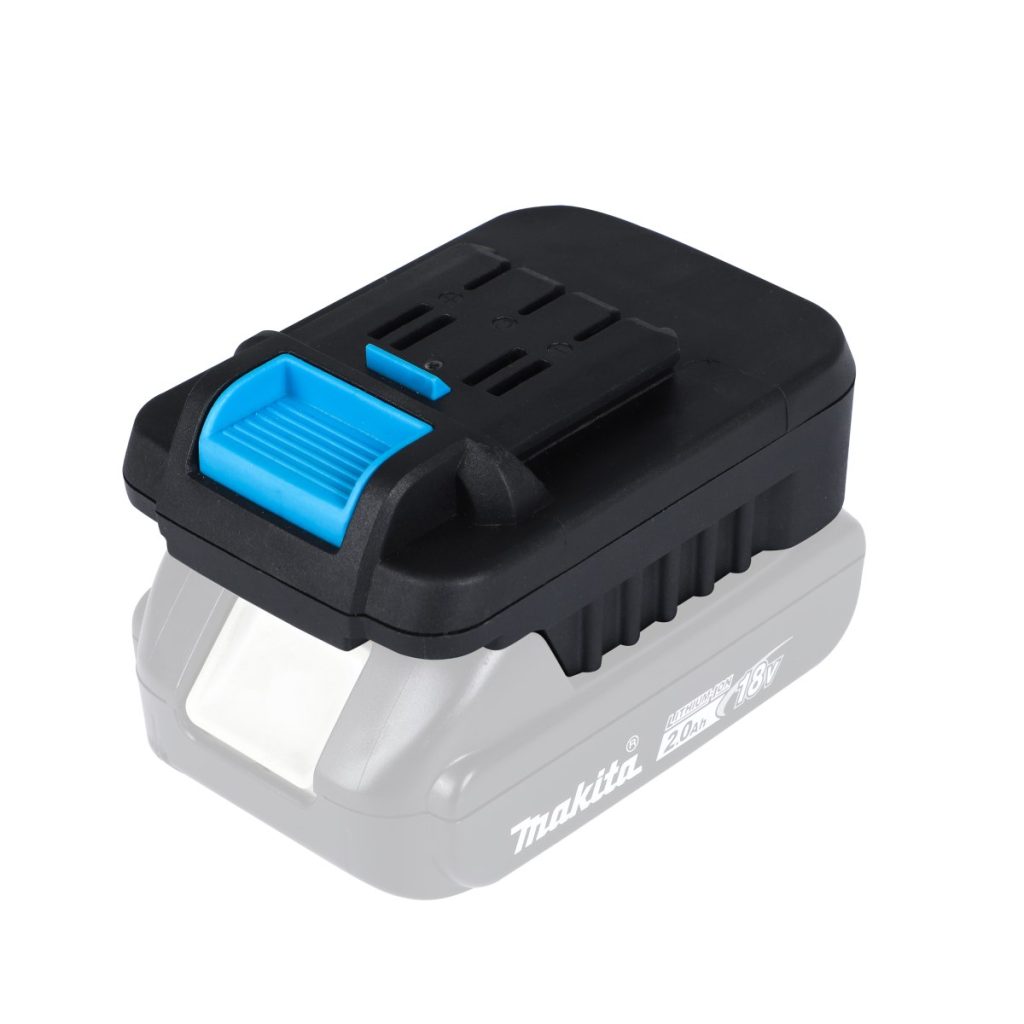
Minova → Makita 18V adapter
Original price was: € 29,00.€ 24,00Current price is: € 24,00. -
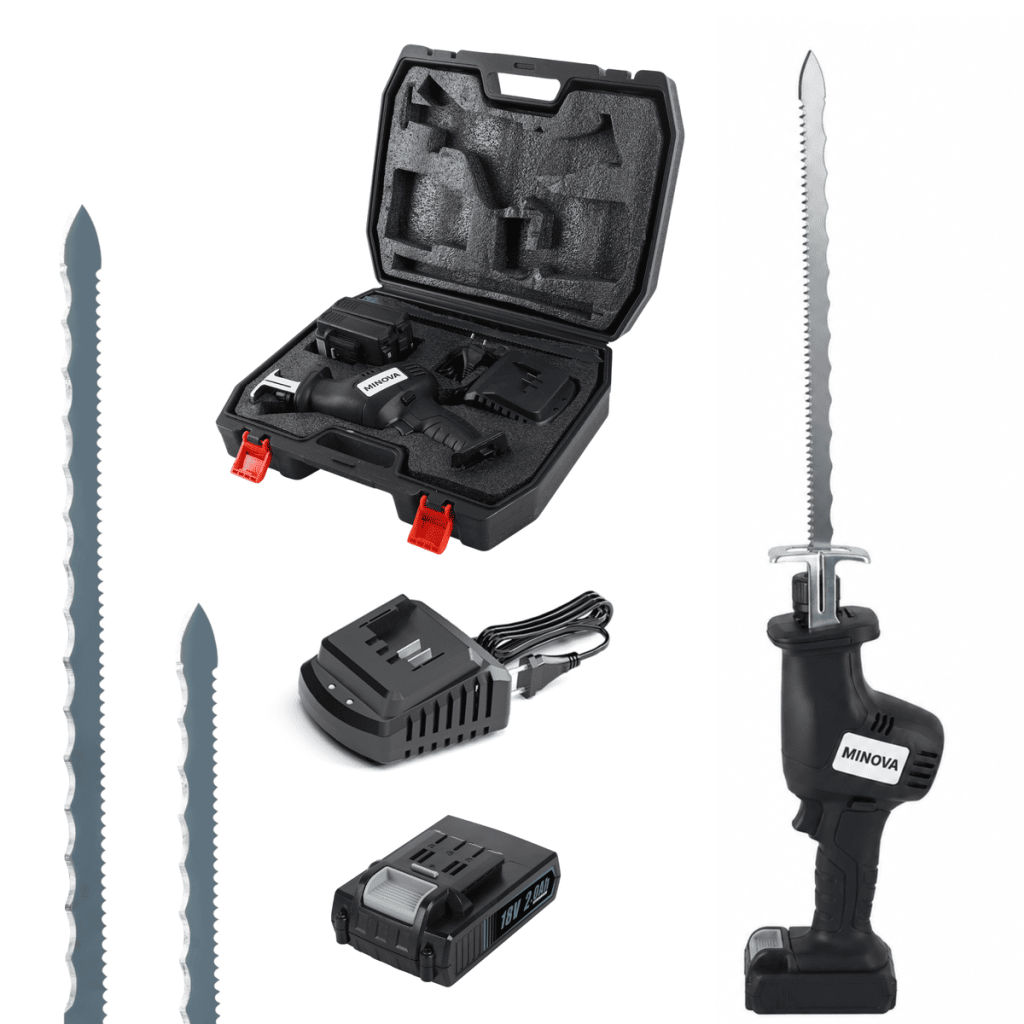
Cordless cutter for mineral wool, PIR and foams MINOVA W01
Original price was: € 209,00.€ 168,00Current price is: € 168,00.
How to avoid the most common cutting mistakes?
The most common mistake beginners make is running the knife too fast - the result is jagged edges and an uneven cutting surface. The second common problem is using too low a temperature, when the blade does not melt, but jerks the material. Also keep in mind that your styrofoam cutting device was always properly heated before the actual cutting began.
Mistakes to avoid:
- Too fast - causes ragged material and uneven edges.
- Temperature too low - The blade crushes, instead of melting Styrofoam.
- Too high a temperature - creates a wide gap and blackening of the edges.
- Lack of material stabilization - causes ripples on the cutting edge.
- Intermittent movements - leave visible traces of apprehensions.
Tips to speed up work on large areas
For larger projects, work organization is crucial for efficiency and cutting quality. It's a good idea to mark all the cutting lines on all the sheets first, and only then proceed with the actual work - this allows you to maintain a rhythm without interruptions for measuring and drawing. Stacked sheets can be cut in series, grouping all straight cuts first, then all angled cuts.
We have tested dozens of models of thermal knives and know that temperature stability for extended use is key. As polish distributor of cut-off machines we also provide full service and access to spare parts- discover our solutions for professionals!
FAQ - Frequently asked questions about the proper use of a thermal knife
How long does it take to heat up a thermal knife before the first cut?
Professional models heat up to full operating temperature in 3-5 seconds. It is a good idea to wait an additional 2-3 seconds for even heat distribution before making the first cut.
At what speed to move the knife so that the edge is perfectly smooth?
The optimal speed is about 5-10 cm per second for standard EPS polystyrene. For denser materials (XPS, graphite EPS), the speed should be reduced by about 30-40%.
How to avoid „stepping” when finishing cutting a long sheet?
Maintain a constant speed until the blade exits the material. Slowing down at the end causes excessive melting and a characteristic cavity.
How to check if the temperature of the knife is properly matched to the material?
Make a test cut on the waste. The correct temperature will produce a smooth, slightly shiny edge with no blackening.