















Guide
Hot polystyrene foam cutting - working principle and effectiveness

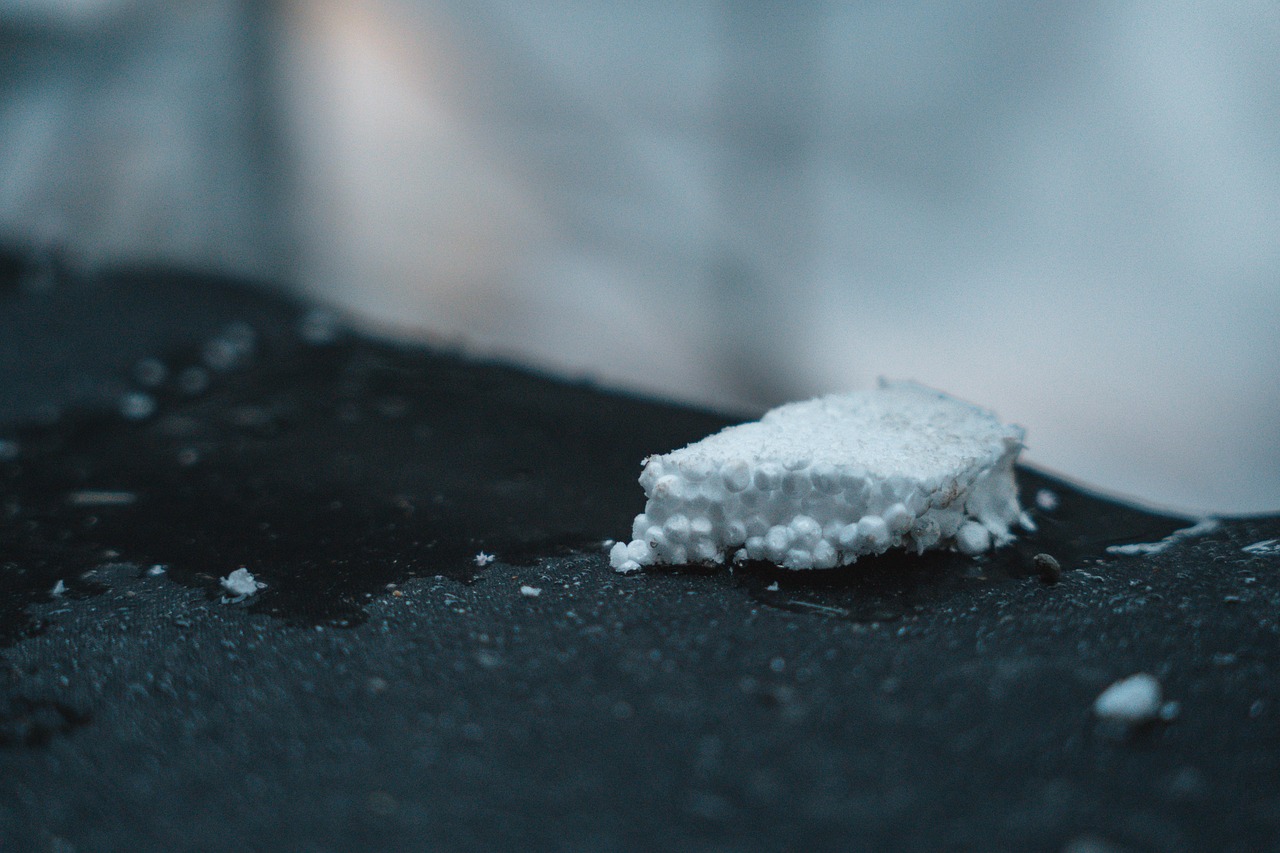
Are you wondering why professionals choose hot cutting of polystyrene foam over traditional mechanical methods? It’s no coincidence! Thermal processing of foam materials ensures a level of precision and quality that you simply can’t achieve with a saw or a knife. How does this technology work? What parameters are key? And which machines are the best?
How does hot cutting of Styrofoam work, and why is it the most effective method?
The thermal method involves using a heated element—a wire or blade—that melts the material along the cut line in a controlled manner. Unlike mechanical methods, where the tool presses into the polystyrene structure, causing it to crumble, hot cutting does not exert mechanical pressure. The heated wire melts the polymer in a fraction of a second, creating a smooth surface free of debris.
Our product line includes professional equipment designed to maximize the efficiency of this process.
Does the resistance wire used to cut Styrofoam melt it or cut through it?
In practice, a hybrid process takes place— resistance wire Heated to the appropriate temperature, it locally liquefies the polymer while simultaneously performing a sliding motion that separates the material.
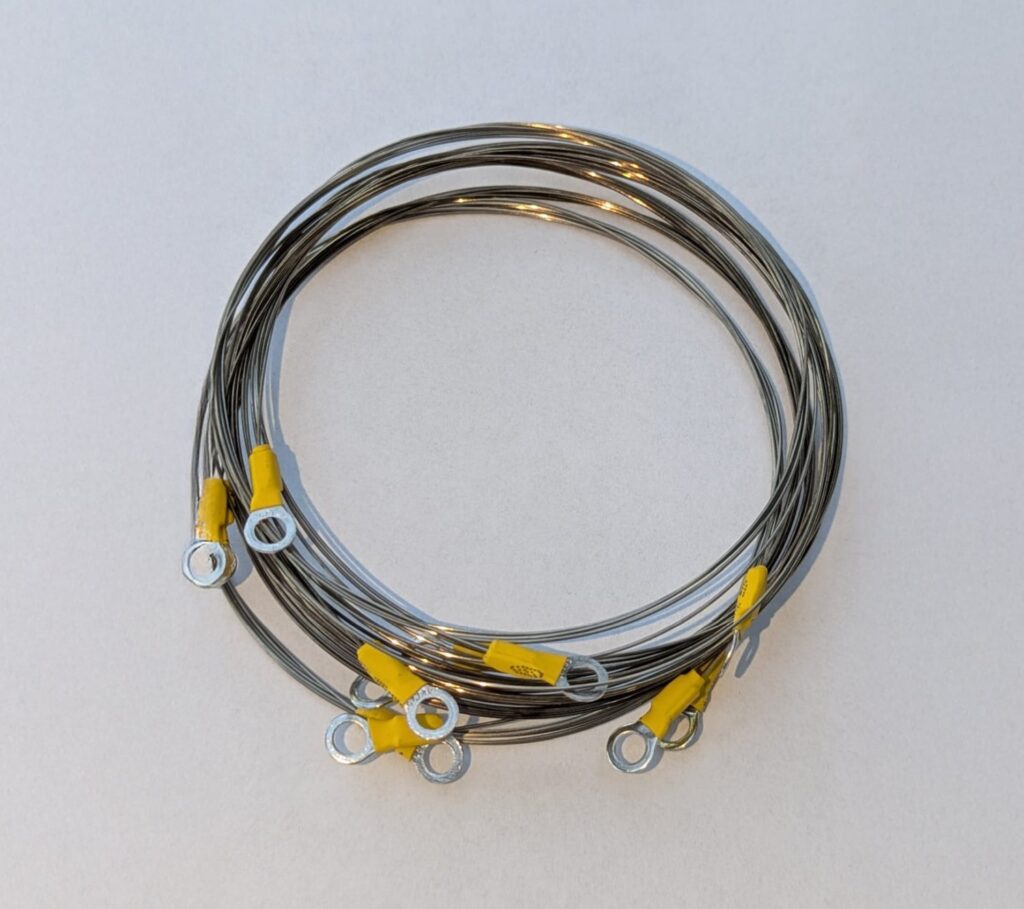
The Joule effect plays a key role – a physical phenomenon in which heat is generated in a conductor through which an electric current flows. A wire made of a nickel-chromium alloy heats up to its operating temperature within a few seconds.
Cutting Temperature for Styrofoam – Optimal Values for Various Materials
Standard EPS foam requires a temperature of 200–300°C, whereas the harder XPS Styrodur requires a value of 350–400°C. Materials of different densities react differently—low-density sheets melt faster, while high-density sheets require more energy. Professional devices offer power adjustment, allowing you to tailor the settings to a specific task.
How does resistance wire differ from regular wire in practical applications?
Resistance wire is an alloy of nickel and chromium in an 80/20 ratio, characterized by high electrical resistance and excellent resistance to high temperatures. Ordinary steel wire oxidizes quickly and breaks during operation. NiCr80/20 wire It maintains a stable structure even at temperatures exceeding 400°C, heating evenly along its entire length.
Comparison of Effectiveness: Thermal Cutting of Styrofoam vs. Mechanical Methods
Mechanical methods—such as saws, knives, or wires—present a number of problems. Mechanical cutting produces dust, chips, and irregular edges that require sanding. It’s worth learning about types of methods options, so you can make an informed choice about the best solution.
Key advantages of thermal cutting:
- Edge Quality – a smooth surface ready for further processing
- Waste Minimization – no dust or crumbs
- Precision of workmanship – accuracy down to a single millimeter
- Operating Speed – no finishing required
- Security – fewer fumes
Speed, Precision, and Edge Quality – A Comparative Analysis
Thermal methods are superior to mechanical ones for straight cuts. An experienced operator can cut polystyrene at a speed of several dozen centimeters per minute while maintaining perfect straightness. A heated wire just a fraction of a millimeter thick allows for cuts with accuracy down to a single millimeter, especially when cutting shapes and curves.
Hot-Cut Styrofoam Cutter – Design and Key Components
A professional wire cutter consists of a sturdy aluminum or steel frame that ensures stability and eliminates vibrations. The most important component is the wire tensioning system, which must maintain the proper tension, which remains constant even as the wire heats up. Equally important is the power supply, which must provide electrical current with the appropriate specifications.
Minova Pro 260W cutting machine combines all the elements into a well-thought-out design. Sturdy 260W power supply It guarantees heating in 3–5 seconds and stable operation. The welded frame eliminates play, and the tool-free tensioning system allows for instant wire replacement.
What type of resistance wire should you choose for cutting Styrofoam to ensure maximum efficiency?
The choice of wire directly affects the quality and durability of the cutting system. Thinner wires heat up faster and allow for more precise cuts, but they are less durable. Thicker wires are better suited for heavy-duty use.
Key specifications of the resistance wire:
- Diameter – typically 0.6–0.8 mm
- Chemical Composition – NiCr80/20 alloy
- Length – designed to fit the specific model of the cutter
- Workmanship – uniform diameter and smooth surface
NiCr80/20 wire designed specifically for this model Minova Pro It was carefully selected to match the device's specifications.
Hot Knife for Cutting Styrofoam – When Is It Better Than a Cutter?
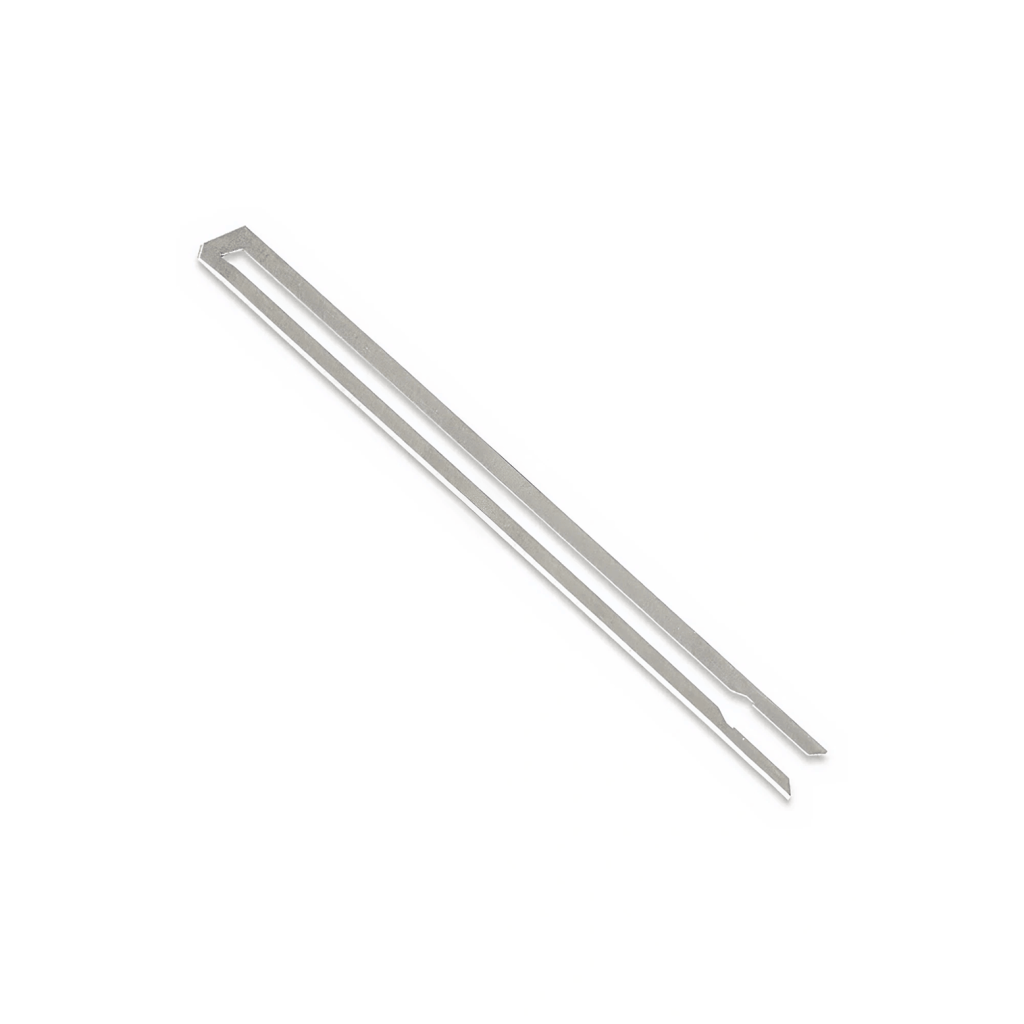
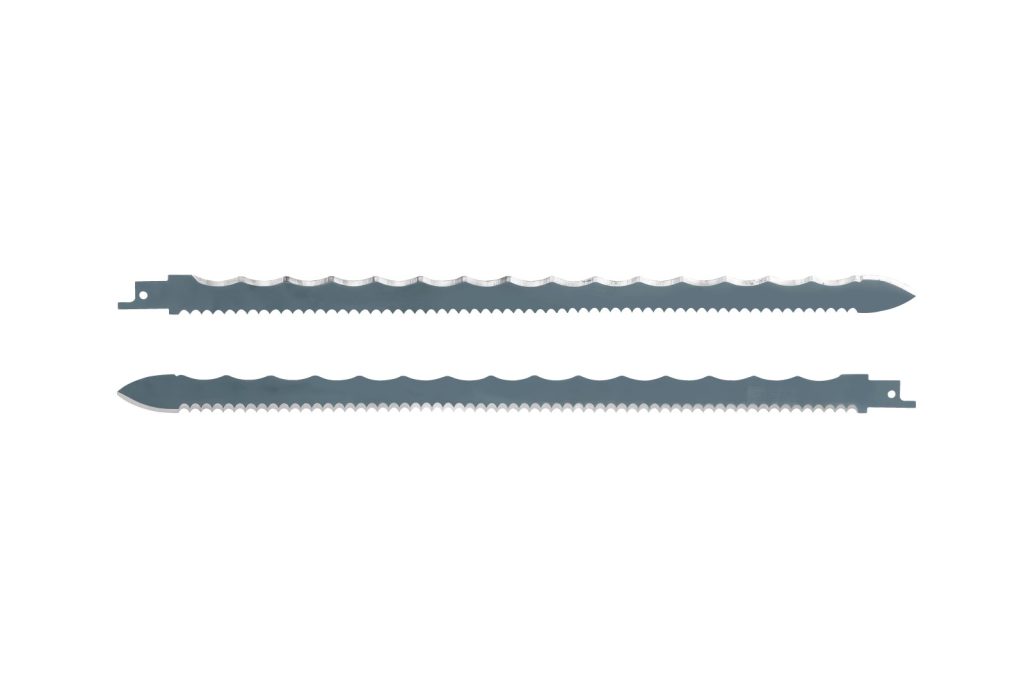
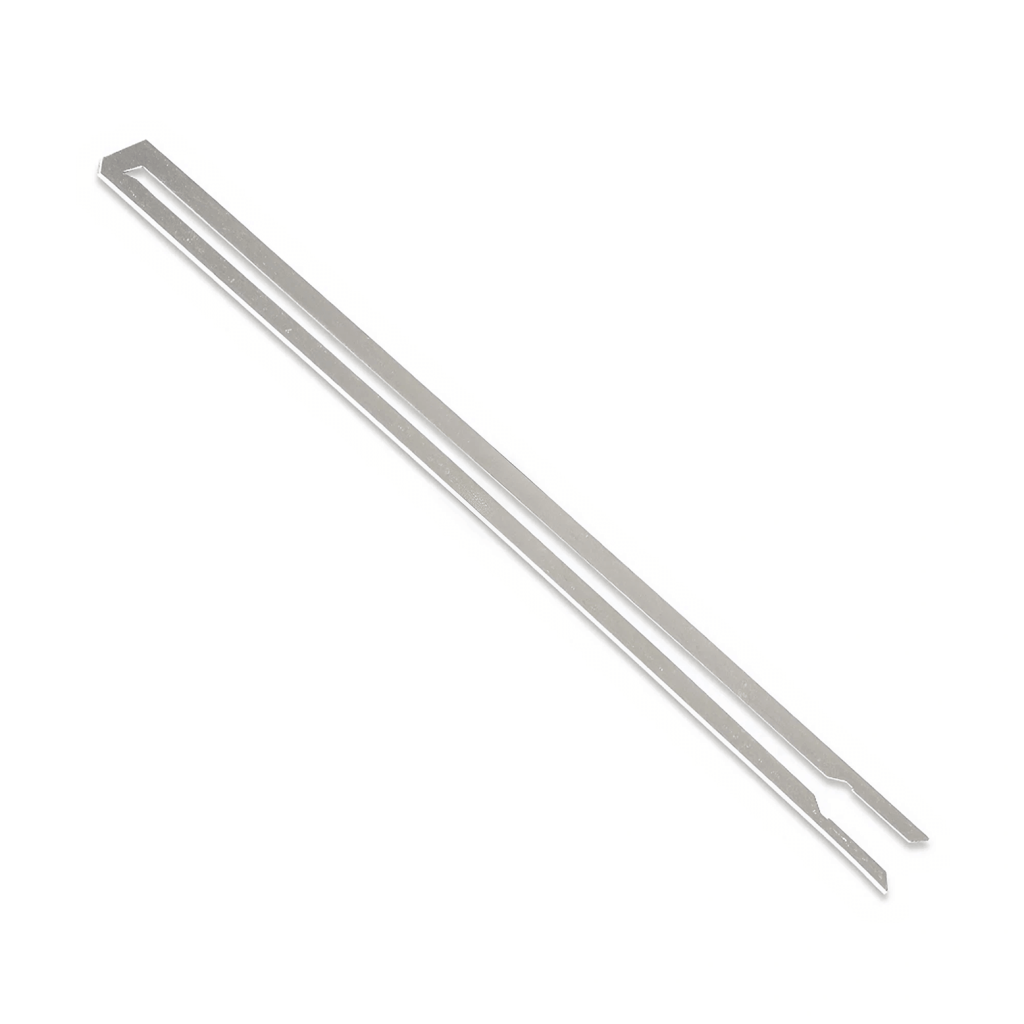
A thermal cutter is ideal for cuts made directly on a construction site or in places where transporting a large machine would be difficult. Lightweight and portable, these are its main advantages. Thanks to its interchangeable blades, it can be adapted to various types of cuts—from straight lines to complex shapes.
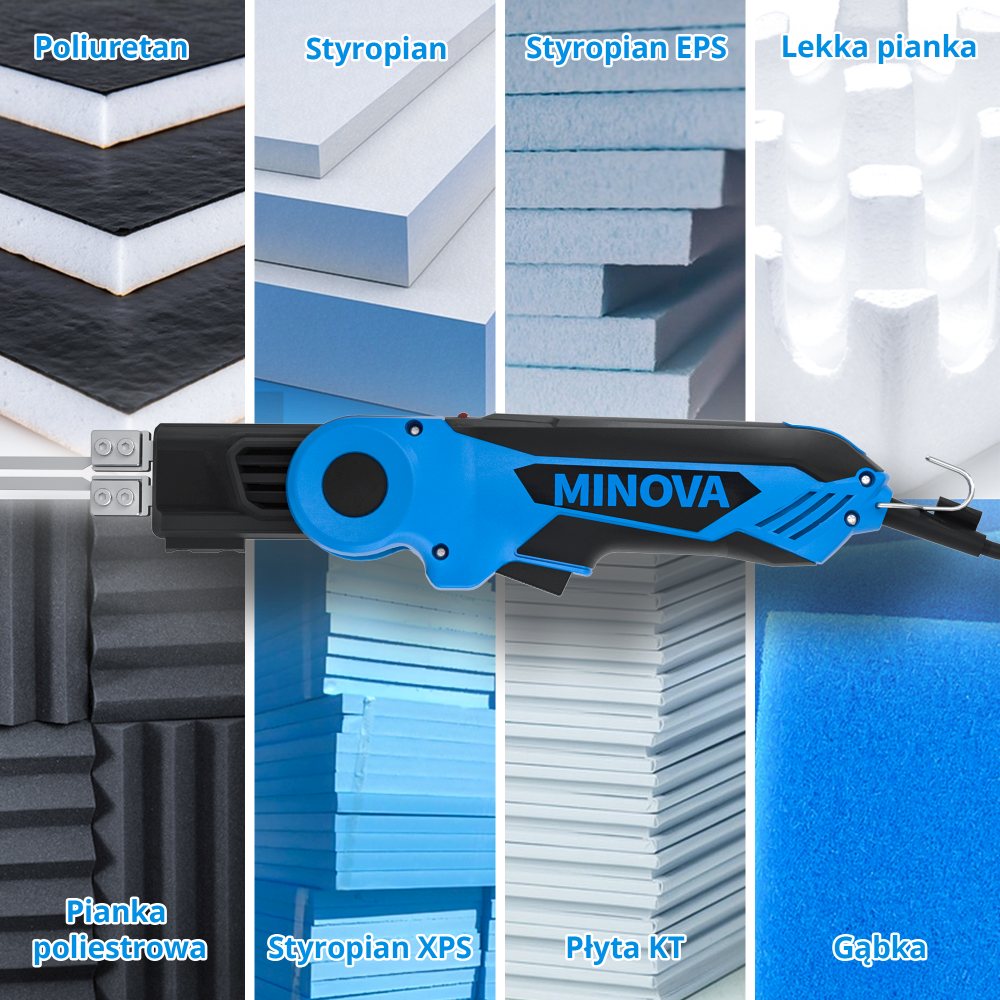
Our Minova hot knife It heats up to 500°C in a few seconds and offers three temperature settings.
Practical Applications of Thermal Cutting in Various Industries
The hot-cutting method has found application in the construction industry for insulating buildings—it allows for the precise fitting of insulation panels and the cutting of openings for utilities. The packaging industry uses it in the production of protective inserts. Applications also include set design, model making, advertising, and crafts.
Our store offers professional thermal cutting equipment and accessories.
FAQ – Frequently Asked Questions About Hot Cutting of Styrofoam
What is the best way for beginners to cut Styrofoam?
For beginners, the best choice is a temperature-controlled heat knife, which offers ease of use and versatility.
What is the cutting temperature for Styrofoam that won't damage the material?
The optimal temperature for EPS polystyrene is 200–300°C, while for XPS polystyrene, the temperature should be 350–400°C.
What's the best way to cut Styrofoam—with wire or a hot knife?
Resistance wire is best suited for straight cuts and high-volume production, while a thermal cutter is ideal for mobile applications and finishing work.
What's the best way to cut Styrofoam at home?
For home use, a compact thermal knife with adjustable temperature settings—which combines portability and versatility—works best.