













Guide
Resistance wire in styrofoam guillotines - which one to choose?

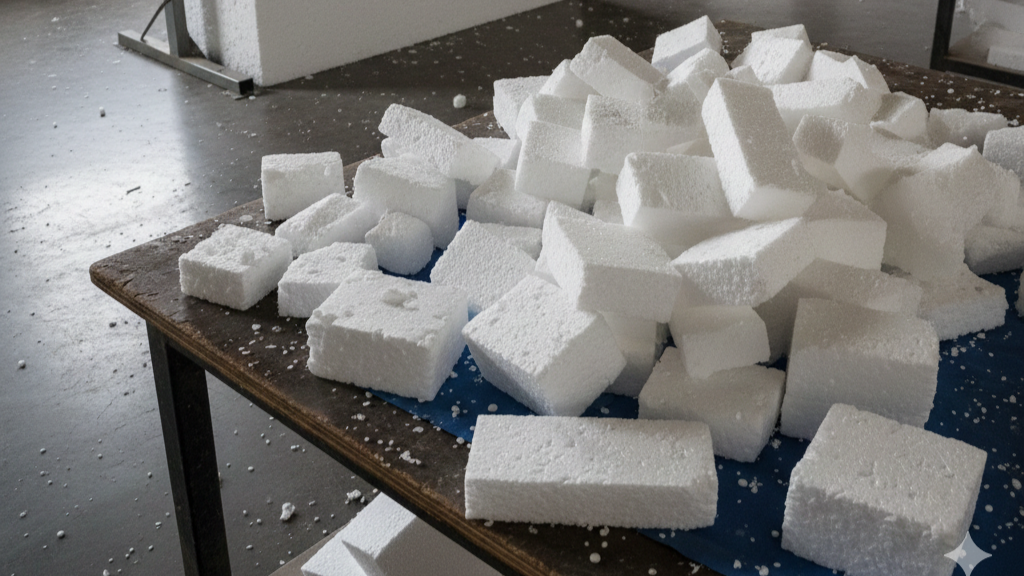
NiCr 80/20 resistance wire with a diameter of 0.4–0.5 mm is the optimal choice for most 200–260 W guillotines — it heats up in just 3 seconds, lasts for 50–100 hours of operation, and cuts EPS without dust, without crumbling the edges, and without the need for sanding. Below, you’ll find everything you need to choose the right wire for your machine and material.
Key facts about resistance wire:
- NiCr 80/20 nichrome wire (nickel-chromium alloy) heats up in 3–5 seconds and it is easier to install than Kanthal.
- The wire diameter is selected based on the power supply's output—thicker wire requires more power.
- All you need to cut EPS is 250–300°C, XPS needs 320–380°C.
- Professional NiCr wire can withstand 50–100 hours service life before the first replacement.
- The length of the wire must be compatible with the guillotine—the standard is 100 cm, 120 cm, or 130 cm.
- Kanthal (FeCrAl) wire is designed for industrial use of 8+ hours per day—in standard guillotine cutters, it offers no advantage over NiCr.
What is a resistance wire, and how does it work in a polystyrene cutting machine?
Resistance wire (also known as cutting wire) melts the Styrofoam using the heat generated by the flowing current—rather than tearing the material apart like a saw. Resistance wire for cutting Styrofoam heats up to 250–400°C in 3–5 seconds, allowing it to cut through foam without creating dust, without crumbling the edges, and without making noise.
The principle of operation is based on the phenomenon of electrical resistance. A material with high resistance—such as nichrome (NiCr) or kanthal (FeCrAl)—converts electrical energy into heat. The higher the resistance, the faster the wire reaches its operating temperature. Stable electrical parameters ensure even heating along the entire length, without any local overheating.
What factors affect the effectiveness of wire resistance?
- Chemical composition of the alloy — NiCr 80/20 has optimal resistance 1.09 Ω/m with a diameter of 0.4 mm.
- Wire diameter — A thicker wire has lower resistance per meter and requires more power.
- Wire length — A longer wire means higher total resistance and slower heating.
- Ambient temperature — Resistance increases as the wire's temperature rises during operation.
- Workmanship — The uniform thickness ensures consistent resistance along the entire length.
NiCr vs. Kanthal — Which Resistance Wire Should You Choose?
There are two main types of wire available on the market. NiCr 80/20 wire (chromium-nickel alloy) heats up three times faster than Kanthal and is easier to install in standard guillotine-style vaporizers—Kanthal is suitable only for industrial use exceeding 8 hours per day.
| Parameter | NiCr 80/20 wire (chromonikelina) | Kanthal Wire (FeCrAl) |
|---|---|---|
| Ingredients | Nickel 80%, Chromium 20% | Iron, Chromium 20–23%, Aluminum 4–6% |
| Warm-up time | 3–5 seconds | 8–12 seconds |
| Specific resistance (ø0.4 mm) | 1.09 Ω/m | 1.35–1.45 Ω/m |
| Maximum operating temperature | 1,400°C | 1,300–1,400°C |
| Service Life | 50–100 hours | 200–400 hours (industrial) |
| Flexibility / Installation | Tall — easy to install | Low — more difficult to install |
| Application | Standard, Construction, Hobbies | Manufacturing, continuous work, 8+ hours per day |
| Price | Lower | 2–3 times higher |
NiCr 80/20 nickel-chromium wire (chromonickel / nikrothal)
Nichrome — also known as chromonickelina or nikrothal — it’s the top choice among professionals. The nickel (80%) and chromium (20%) alloy is distinguished by its excellent resistance to corrosion and oxidation. Its melting point exceeds 1,400°C, which provides a huge safety margin at standard operating temperatures of 250–400°C.
Advantages of NiCr 80/20 wire:
- Instant heating — full temperature in 3–5 seconds.
- Precise resistance — 1.09 Ω/m At ø0.4 mm, it ensures predictable heating.
- Corrosion resistance — It functions normally in a humid construction environment.
- Thermal stability — a consistent temperature throughout the entire operating period.
- Ease of installation — flexible material, easy to adjust the tension.
- Long service life — 50–100 hours hard work.
NiCr 80/20 resistance wire This is the standard used in our Minova Pro cutters.
Kanthal Wire (FeCrAl) — When Is It a Good Choice?
Kanthal — actually an alloy FeCrAl (iron-chromium-aluminum) — contains 20–23% chromium and 4–6% aluminum. The specific resistance is 1.35–1.45 Ω/m at ø0.4 mm (28% higher than NiCr), which means that it heats up more slowly at the same power supply output: 8–12 seconds to operating temperature. The Al₂O₃ layer that forms on the surface of the wire protects it from further corrosion and allows it to operate continuously for 200–400 hours without replacement.
Greater mechanical rigidity makes installation in standard cutting machines more difficult and precludes the use of a tool-free tensioning system.
Kanthal only makes sense when:
- Continuous operation 8+ hours a day (manufacturing facility, warehouse).
- Cutting thick blocks with a density of >40 kg/m³ or a thickness of >200 mm.
- Industrial power supply (>300 W) with automatic voltage regulation.
For a standard 200–260 W guillotine operating up to 4 hours per day, Kanthal offers no advantage, and the 2–3 times higher cost is not justified.
What kind of resistance wire should I use for a polystyrene cutter?
The choice of wire depends on three numbers: power supply output (W), wire length (cm), and material hardness — EPS or XPS. There’s no such thing as a one-size-fits-all wire—each application requires a custom fit.
For standard 200–260 W wire cutters, nichrome wire with a diameter of 0.4–0.5 mm works best. This combination ensures fast heating, a stable temperature, and a service life of 50–100 hours. When cutting harder XPS Styrodur, it’s worth considering a thicker wire, 0.5–0.6 mm.
Matching the wire to the application:
- Hobby and Occasional Projects — 0.3–0.4 mm wire, 100–150 W power supply.
- Professional Building Insulation — 0.4–0.5 mm NiCr wire, 200–260 W power supply.
- Cutting Rigid XPS — 0.5–0.6 mm wire, temperature up to 380°C, powerful power supply.
- Intense daily work — Only high-quality NiCr 80/20; replace every 50–100 hours.
- Mass production: 8+ hours per day — Kanthal (FeCrAl) wire, 0.6–0.8 mm, industrial power supply, service life of 200–400 hours.
Check out our full selection machines for cutting polystyrene foamu, which come standard with proven NiCr 80/20 wires.
Compatibility of the resistance wire with the Styrofoam guillotine
The 130-cm wire stretches perfectly between the Minova Pro guillotine clamps, maintaining constant tension throughout the entire operation. Not every wire fits every device—the length must match the exact spacing of the clamps.
Compatibility parameters to check:
- Wire length — must match the spacing of the frame brackets (100, 120, or 130 cm).
- Wire diameter — matched to the power supply's output (0.4–0.5 mm for 200–260 W).
- Mounting Type — screw-type, clamp-type, or quick-connect fittings (Minova Pro: tool-free).
- Wire Tension — Proper tension prevents vibrations and premature breakage.
- Maximum temperature — The wire must be able to withstand the device's operating temperature.
Our Minova Pro 260 W Cutter Requires a 130 cm wire with a diameter of 0.4–0.5 mm. The tool-free tensioning system allows for replacement in just a few seconds.
Device Power and Resistance Wire Specifications
A 0.3 mm wire connected to a 260 W power supply will burn out within the first few minutes of operation—the thermal load exceeds the wire’s heat capacity. A wire that is too thick, on the other hand, will not reach the proper temperature. The basic rule: 1 meter of 0.4-mm-diameter wire requires approximately 150–180 W of power. For a length of 1.3 m, approximately 200–240 W is therefore required.
Devices in the product lineup Pro-cut They are equipped with 200–260 W air-cooled power supplies, which ensure professional performance even during construction work lasting many hours.
Why does the resistance wire break?
A resistance wire breaks for three reasons: power supply voltage too high, tension too low, or wire too thin for the material in question. Each one presents different symptoms and requires a different correction.
Excessive voltage / temperature
When the power supply delivers more power than the wire can dissipate, localized overheating and burning occur. Symptom: sudden, one-time breakage with visible melting or scorching at the point of breakage.
Solution: Reduce the power supply voltage by 10–15%, or switch to a wire with a larger diameter (e.g., from 0.4 to 0.5 mm), which has a higher heat capacity.
Incorrect wire tension
If the wire is too loose, it vibrates during cutting and causes fatigue in the material at the attachment points—the tension spring or clamping handle repeatedly pierces the wire's cross-section. Symptom: Gradual thinning and cracking at the handle.
Adjustment: Adjust the wire tension according to the machine's instructions—the wire should be as taut as a guitar string, without any slack, but without excessive tension that could cause permanent deformation.
The wire is too thin for this material
A 0.3-mm-diameter wire pressed into dense XPS (40 kg/m³) will bend mechanically before the material melts. Symptom: The wire does not cut through the Styrofoam but instead digs into it and breaks when you try to push it through.
Selection criterion:
- Standard EPS (15–20 kg/m³) — minimum diameter of 0.4 mm.
- Rigid EPS (20–30 kg/m³) — minimum diameter of 0.45 mm.
- XPS / Styrodur (>30 kg/m³) — minimum ø0.5 mm.
- Industrial blocks (>40 kg/m³) — 0.6 mm diameter or Kanthal FeCrAl.
Top rated products
-
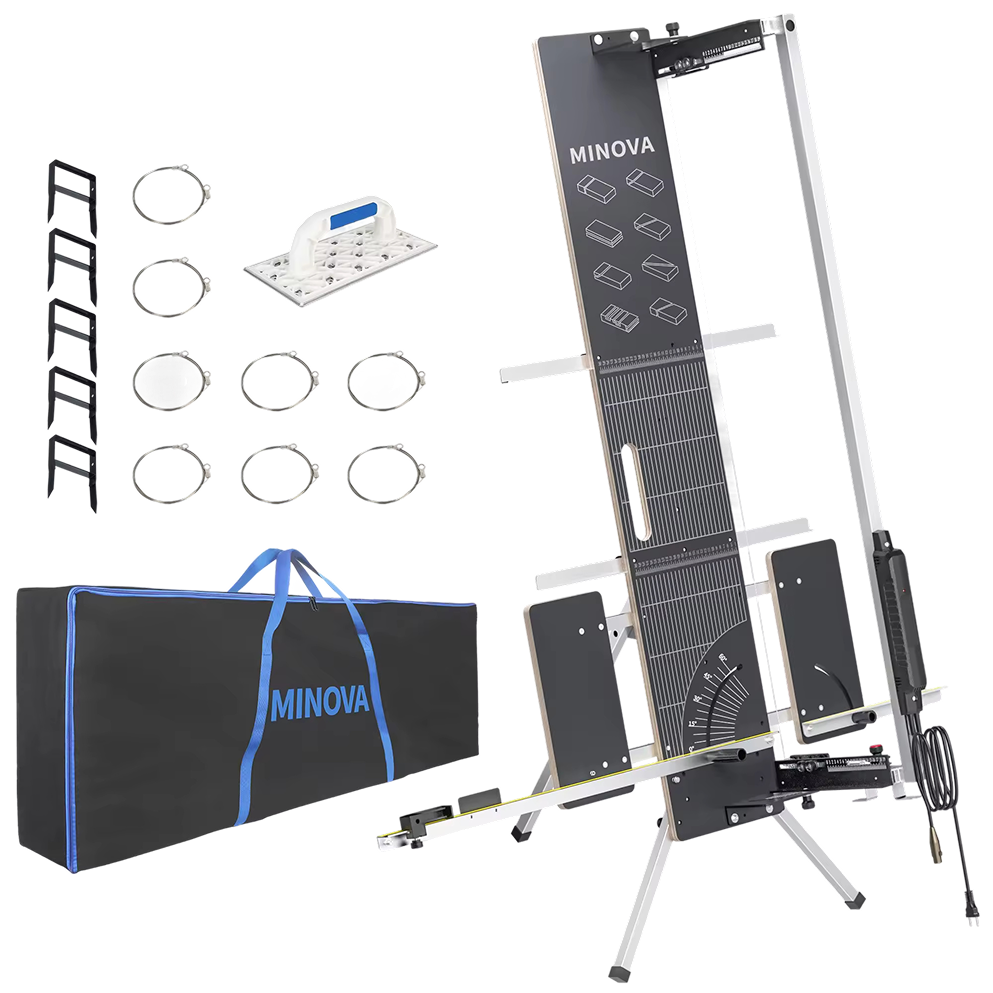
Styrofoam guillotine cutter Minova Pro 260W (Network + Battery)
Price range: € 479,76 through € 512,38 -
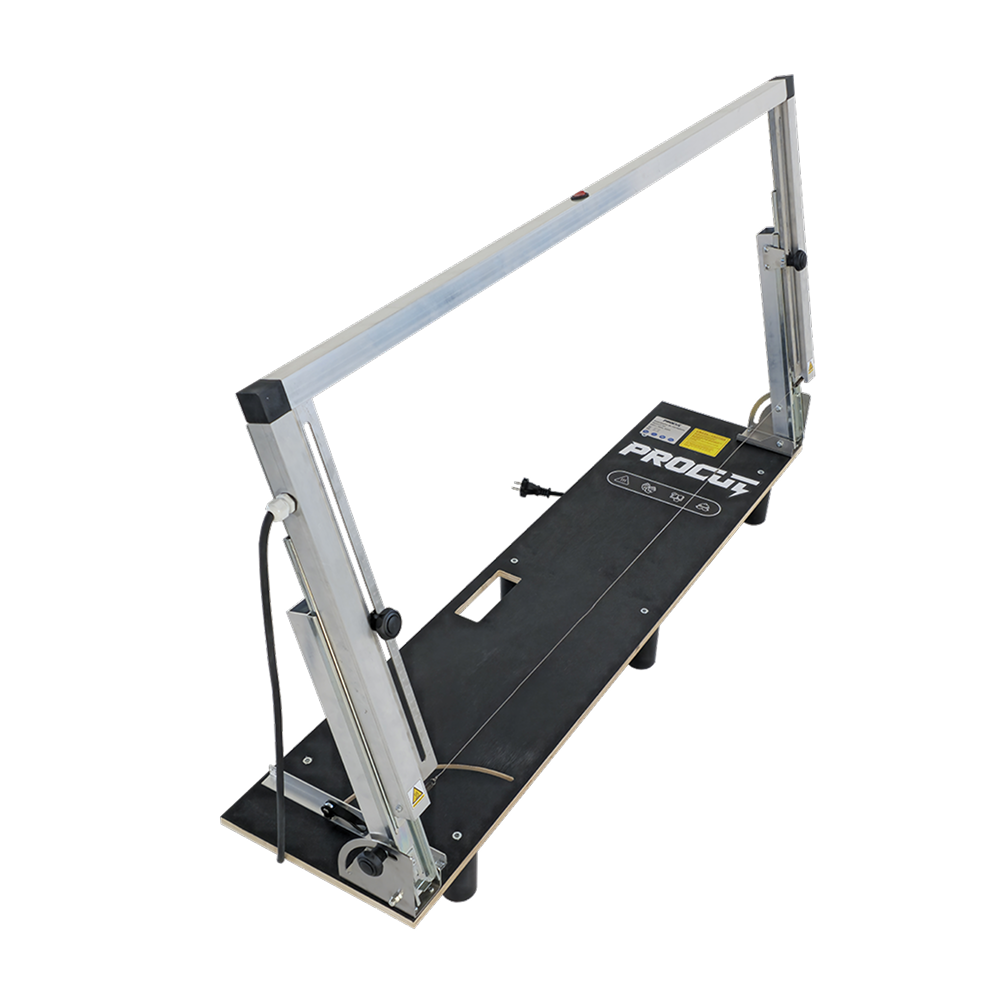
Procut Base 108cm 200W polystyrene cutter
€ 192,00 -
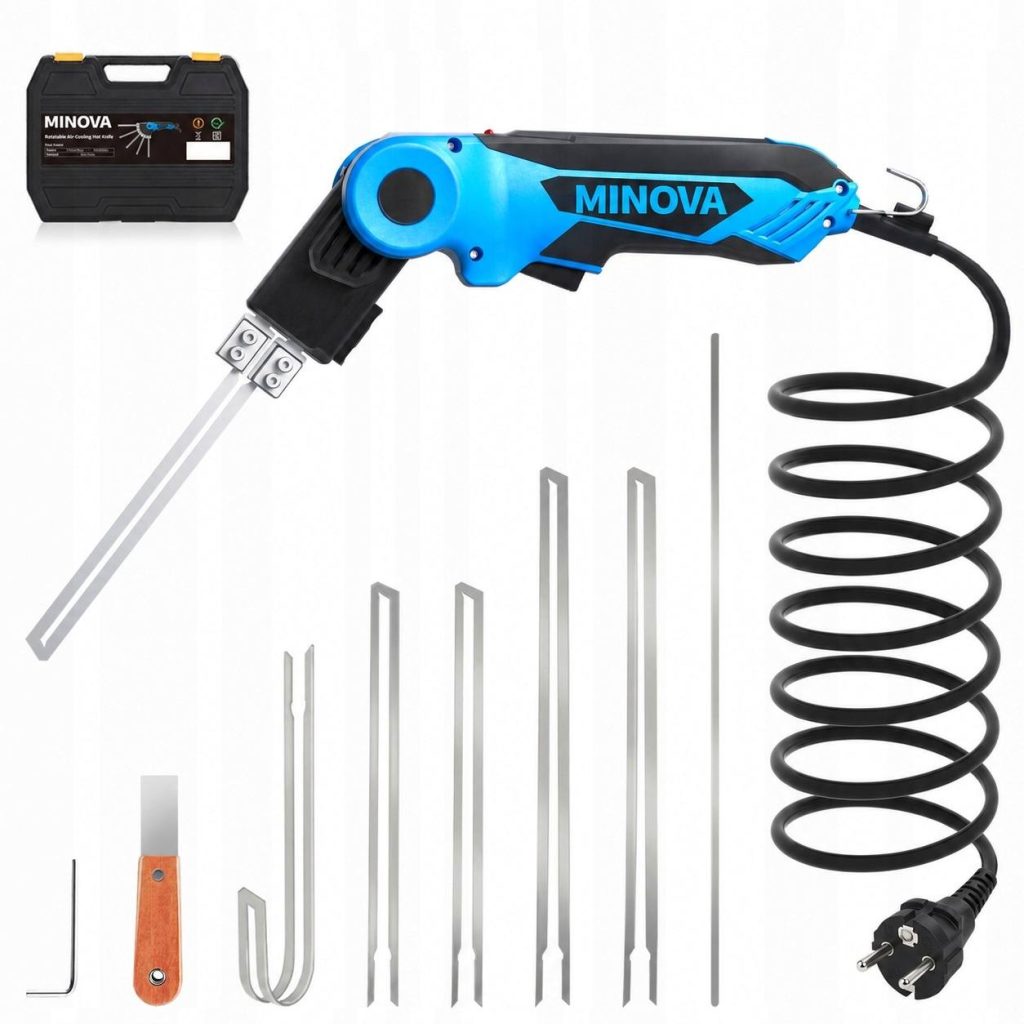
Minova 30Y 250W Thermal Knife with 6 Blades and Air Cooling
Original price was: € 216,00.€ 192,00Current price is: € 192,00. -
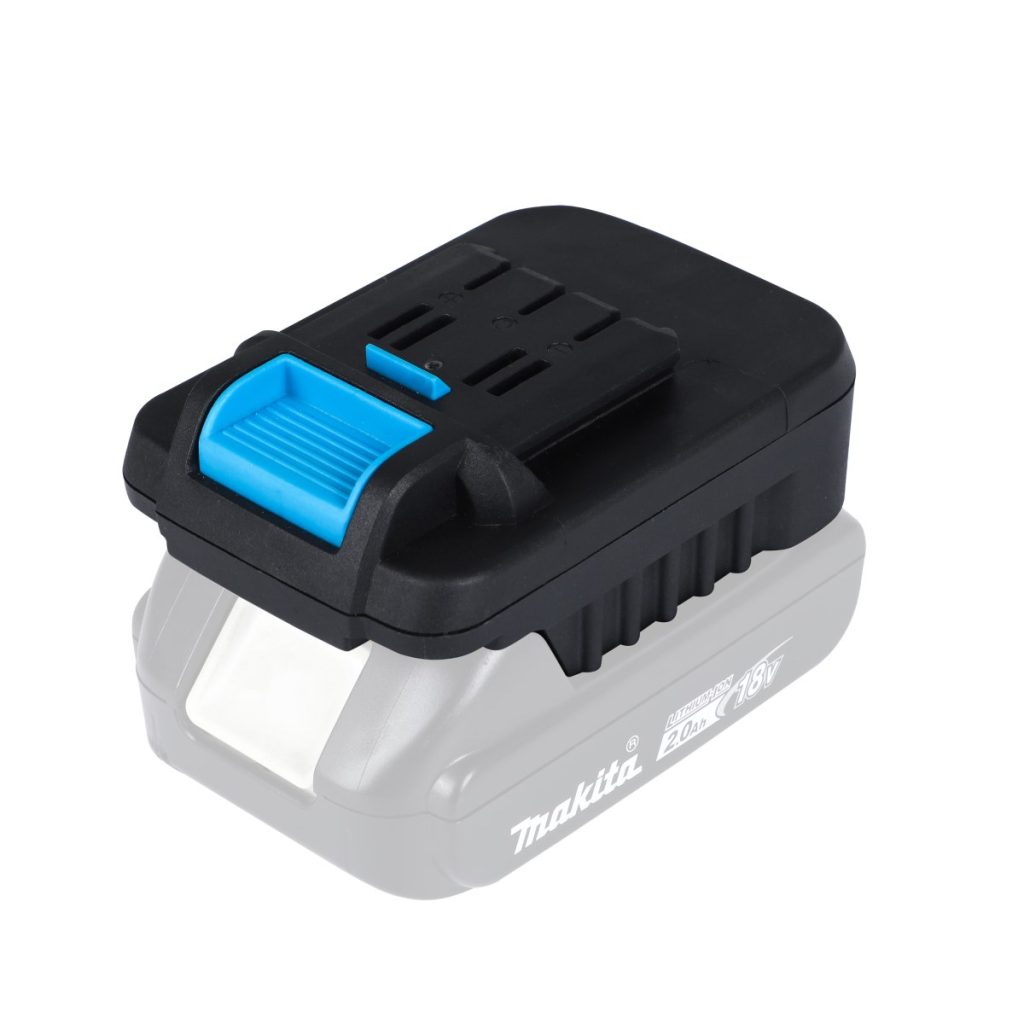
Minova → Makita 18V adapter
Original price was: € 29,00.€ 24,00Current price is: € 24,00. -
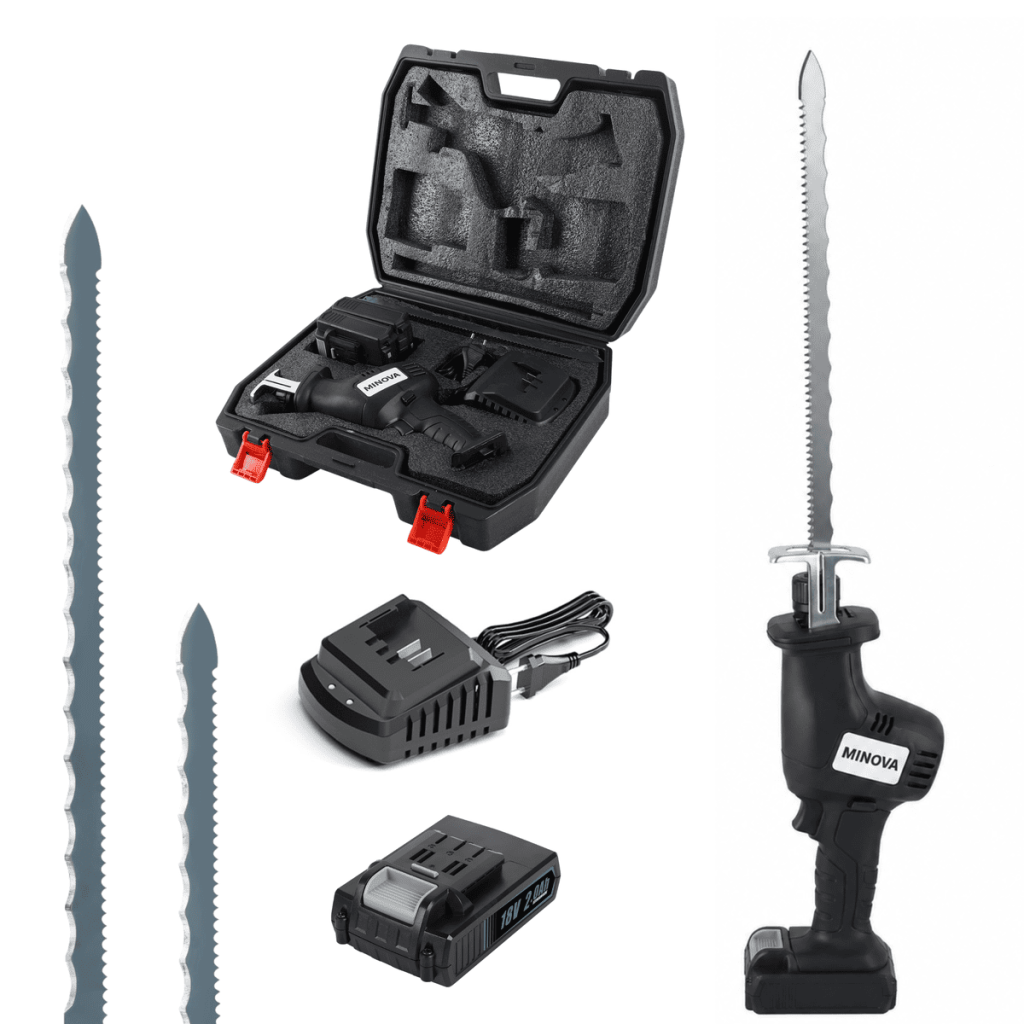
Cordless cutter for mineral wool, PIR and foams MINOVA W01
Original price was: € 209,00.€ 168,00Current price is: € 168,00.
How often should the resistance wire be replaced?
NiCr 80/20 wire needs to be replaced every 50–100 hours of intensive work — that’s 2–4 weeks at 4 hours per day or 1–2 months with occasional use. Kanthal lasts 200–400 hours, but its use is rarely economically justified in standard construction guillotines.
| Workload | Hours per day | Replacing the NiCr Wire | Replacing the Kanthal Wire |
|---|---|---|---|
| Hobby | 1–2 hours | 2–4 months | not applicable |
| Professional / Construction | 4–6 hours | 2–4 weeks | not applicable |
| Industrial continuous | 8+ hours | 1–2 weeks | 4–8 weeks |
Signs of wire wear — replace when:
- The wire loses its straightness—visible bends or waves along the wire.
- The cut edges become uneven or jagged even though the temperature is correct.
- The warm-up time exceeds 8 seconds (due to an increase in resistance caused by oxidation).
- Visible loss of luster—the wire becomes dull or develops a gray oxide layer.
- The wire begins to bend under its own weight between the clamps.
NiCr 80/20 heating wire in lengths of 100, 120, and 130 cm is always in stock at Pro-cut—you don’t have to wait for a delivery to replace it.
What should you look for when choosing a wire for cutting Styrofoam?
When making your selection, check these four key parameters: alloy (NiCr 80/20 or FeCrAl Kanthal), diameter (0.4–0.5 mm for a 200–260 W power supply), length (100/120/130 cm, depending on the distance between the clamps of your guillotine), and CE certification.
Key factors to consider when purchasing wire:
- Chemical composition of the alloy — NiCr 80/20 (chromium-nickel alloy) is the quality standard for the construction industry; FeCrAl (Kanthal) is used in industry.
- Wire diameter — directly affects the heating rate and mechanical strength.
- Length and the ability to cut to size — compatibility with a specific device model.
- Packaging — The wire should be supplied on a roll or in rigid packaging that protects it from bending.
- Quality Certificates — Check for compliance with CE safety standards.
- Availability of replacement parts — Wire is a consumable; choose manufacturers with inventory to avoid downtime.
Specialty Wires for Industrial Applications
Industrial production lines require wires with a reinforced construction. The following wires are used here: Kanthal (FeCrAl) with a diameter of 0.6–0.8 mm, which can withstand temperatures up to 500°C and they work 200–400 hours without replacement. The Al₂O₃ oxide layer protects the wire from further degradation even in continuous operation for 8–12 hours per day.
The cost is 2–3 times higher than that of NiCr, but for plants producing hundreds of meters of insulation per day, the investment pays for itself within 2–3 months by reducing downtime caused by wire replacement.
When Kanthal industrial wire is needed:
- Continuous work, 8–12 hours per day, 5–7 days a week.
- Cutting thick blocks with a density greater than 40 kg/m³.
- Automatic material feeding systems.
- Required service life of more than 200 hours between replacements.
FAQ — Frequently Asked Questions About Resistance Wire in Styrofoam Guillotines
What type of resistance wire is best for cutting EPS polystyrene?
The best choice is NiCr 80/20 wire (nickel-chromium alloy) with a diameter of 0.4–0.5 mm, which ensures fast heating (3–5 seconds) and smooth edges without excessive melting. For a 200–260 W power supply, use a wire length that matches your guillotine (100, 120, or 130 cm).
Can the same wire be used to cut both EPS and XPS?
Yes, but XPS requires a higher temperature (320–380°C vs. 250–300°C for EPS). The wire should be slightly thicker (ø0.5 mm) or the power supply more powerful to ensure a stable temperature when working with a harder material.
Why does the resistance wire break?
The most common causes are: (1) Power supply voltage is too high — localized overheating and burnout; (2) The wire tension is too low — Vibrations cause material fatigue at the attachment points; (3) The wire is too thin for hard material — XPS with a density of 40 kg/m³ requires a minimum diameter of 0.5 mm.
How do you choose the right resistance wire for a power supply?
Basic rule: 1 meter of 0.4-mm-diameter wire requires approximately 150–180 W of power. A 1.0–1.2 m wire is suitable for a 200 W power supply, and up to 1.5 m for a 260 W power supply. A thicker wire (ø0.5 mm) requires approximately 20% more power per meter.
How is resistance wire different from regular wire?
Resistance wire is made of special alloys (NiCr or FeCrAl) with high specific resistance (1.09–1.45 Ω/m) and corrosion resistance. It can withstand temperatures up to 400–500°C without degradation. Ordinary steel or copper wire will burn through immediately or fail to reach the required temperature.
How often should the resistance wire be replaced?
NiCr 80/20 wire needs to be replaced every 50–100 hours of intensive work. At 4 hours per day, this is 2–4 weeks; with occasional use (1–2 hours per day) — 2–4 months. Signs of wear: uneven edges, longer warm-up time, visible wire sagging.