














Guide
Cutting Styrofoam vertically or horizontally - which gives a better result?

Vertical or horizontal—this question comes up with every major project. Cutting Styrofoam vertically and horizontally are two different approaches, each with its own unique advantages and limitations. In this article, you’ll compare both techniques, learn about their practical applications, and find out how to choose the right tools for your chosen method. See for yourself which orientation yields the best results!
Vertical vs. Horizontal Cutting of Styrofoam – Pros and Cons
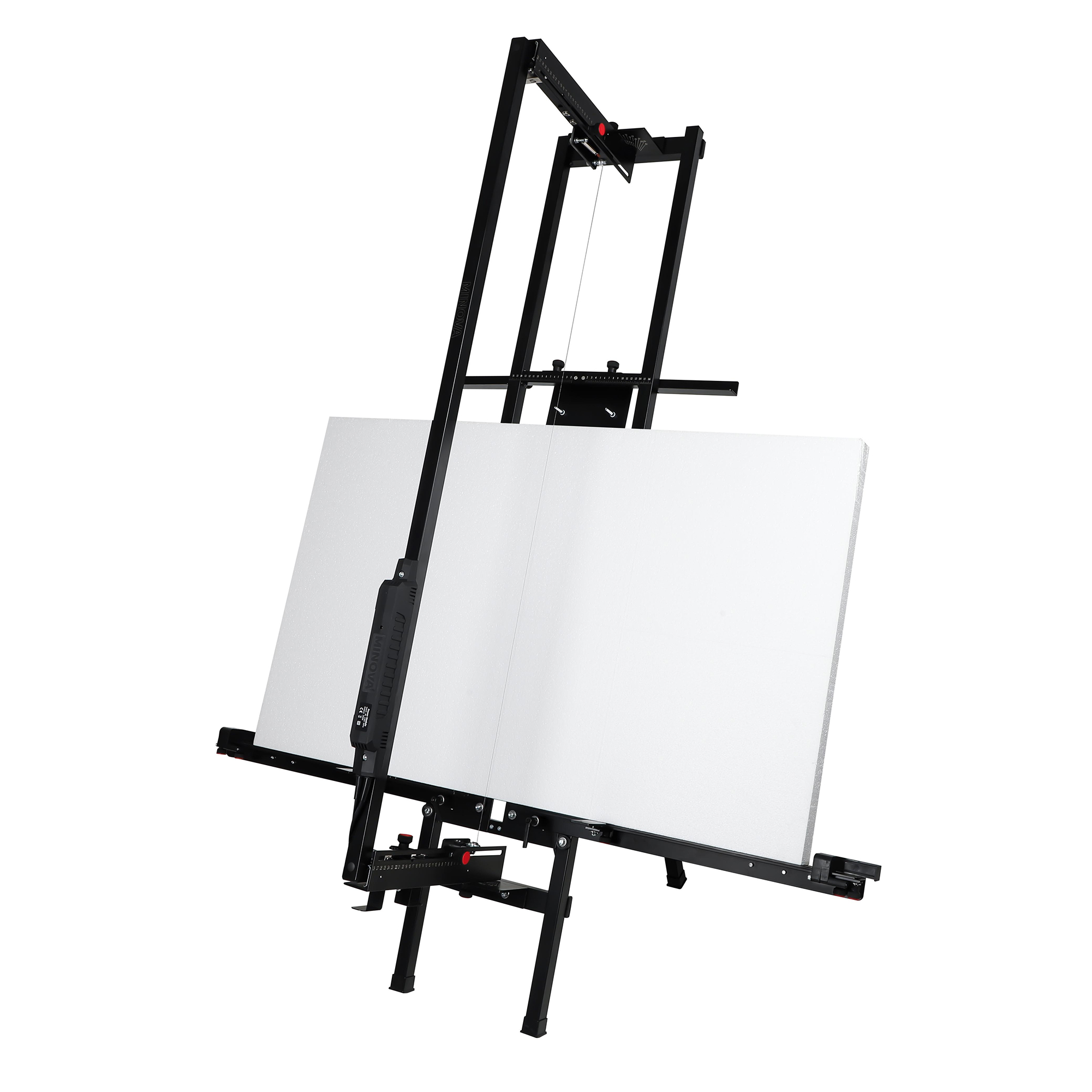
Vertical cutting involves feeding the material through a wire positioned vertically, which is ideal for cutting strips and sheets in batch production. Designed by us Procut Base 200W Styrofoam Cutter It enables stable vertical cuts thanks to its welded aluminum frame and laser-engraved measuring scales. This method allows for the quick preparation of large quantities of material with consistent dimensions.
Advantages of vertical cutting:
- High efficiency – the ability to cut in batches without changing settings.
- Stable operation—the material rests on the tabletop, which eliminates vibrations.
- Easy thickness control—adjusting the wire height ensures consistency.
- Lower risk of sagging—the material does not hang but rests on the support.
Horizontal cutting, on the other hand, is used for shaping, cutting out sections, and precision work that requires full control over the blade. This technique requires more skill, but it offers the freedom to create custom shapes and details.
How does the choice of tool affect the cutting result?
The choice of tool determines which orientation will be effective. Guillotine saws and guide-type cutters are designed for vertical cutting—their stable construction and work surface are their main advantages. In Pro-Cut We design our equipment to ensure maximum precision in the intended operating orientation.
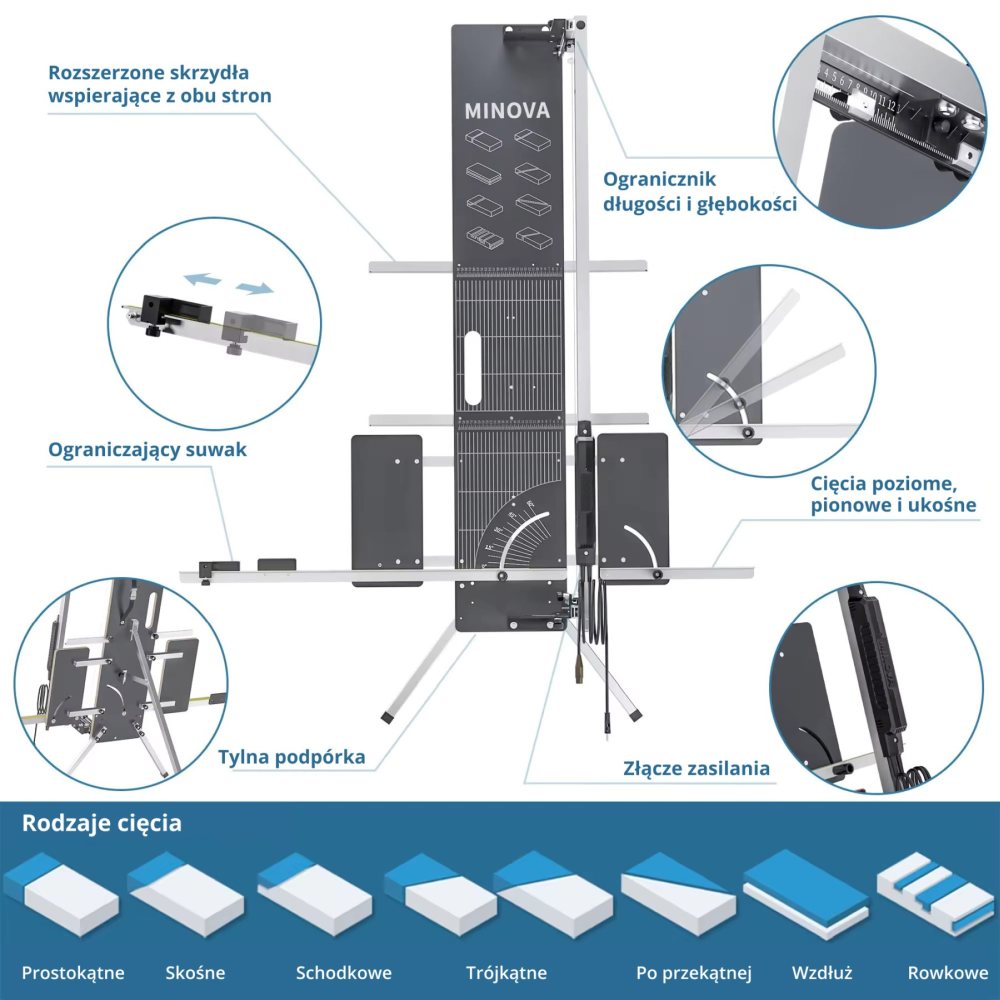
Minova Pro 260W polystyrene foam cutting machine It offers versatility—the 260W air-cooled power supply ensures a stable wire temperature regardless of the cutting orientation. Hybrid power (260W AC or 18V batteries) gives you the freedom to work both in the workshop and cordlessly on the job site. The welded aluminum frame and waterproof tabletop eliminate vibrations, which are the main enemy of precision in both orientations.
Cutting Techniques and Material Stabilization
The correct technique varies depending on the orientation. When making a vertical cut, it is crucial to maintain a steady feed rate—stopping halfway through the cut leads to overheating and concavity. Proper Styrofoam cutting machine With milled measurement marks, it allows for consistent dimensioning without the need for constant measuring.
Basic principles of vertical cutting:
- Feed the material smoothly without stopping—a constant speed ensures even melting.
- Press the sheet firmly against the guide—eliminating any play prevents the sheet from deviating from the line.
- Start cutting with a heated wire—a cold wire tears the structure instead of melting it.
- Support large sheets on both sides—bending under their own weight will cause the cut line to curve.
Stabilization is more difficult when cutting horizontally—the material often needs to be held in place or secured. Cutting thick panels horizontally without proper support results in uneven edges and deviations from the intended line.
How to stabilize Styrofoam during vertical cutting
Stability during vertical cutting depends on proper support and guidance. The board should rest flat on the work surface, and the guide should be secure but without excessive pressure. Minova 250W Thermal Knife With its rotating head, it works well for vertical cuts on workpieces—5 angle settings and three temperature levels allow you to adjust the tool to the material and orientation.
When working with large sheets, it is advisable to use additional supports or enlist the help of a second person. The material must not bend during cutting, as this changes the angle relative to the wire and results in uneven edges. Rollers or side guides eliminate this problem in mass production.
How can you avoid unevenness when making horizontal cuts?
Horizontal cutting requires complete control over the blade and the material. Uneven Cutting of Styrofoam This is due to a lack of stable support and a variable feed rate. The material should be secured on a stable surface, and the knife should be guided at a steady speed without accelerating or decelerating.
How to ensure a straight horizontal cut:
- Mark the cutting line before you begin—cutting „by eye” leads to inaccuracies.
- Use guides or rails as reference points—a physical barrier helps you maintain a straight line.
- Control the temperature of the tool—if it's too high, it will melt the material; if it's too low, it will damage the structure.
- Work in a stable position—fatigue and an uncomfortable posture can affect your precision.
Vertical or horizontal—how do you decide which approach to choose?
The decision depends on the type of project and the tools available. Vertical cutting works well for large numbers of straight cuts—such as adding insulation to facades and floors, and cutting elements with repetitive dimensions. Horizontal cutting is the preferred choice for shaping architectural details, cutting out letters and shapes, and projects requiring complete freedom of movement.
If you regularly perform insulation work, investing in a guide-railed cutter will ensure consistency and speed. For occasional creative projects, a good heat gun and proper support are sufficient. It’s worth having both tools—that way, you adapt the method to the task, not the other way around.
FAQ – Frequently Asked Questions About Vertical vs. Horizontal Cutting
How do you prepare Styrofoam for precision cutting?
The material should be at room temperature, free of dust, and have the cutting lines marked—this preparation eliminates the primary sources of error before work begins.
Will a Styrofoam knife work in both directions?
A thermal cutter is versatile and works in any orientation, but it requires more skill than a guide-type cutter—precision depends on the operator's skill.
Is it worth using a guide for every type of cut?
A guide rail is essential for straight and repetitive cuts, regardless of orientation—it eliminates deviations and ensures dimensional consistency without the need for constant measuring.