

















Styrofoam trowels
Showing all 5 resultsSorted by latest
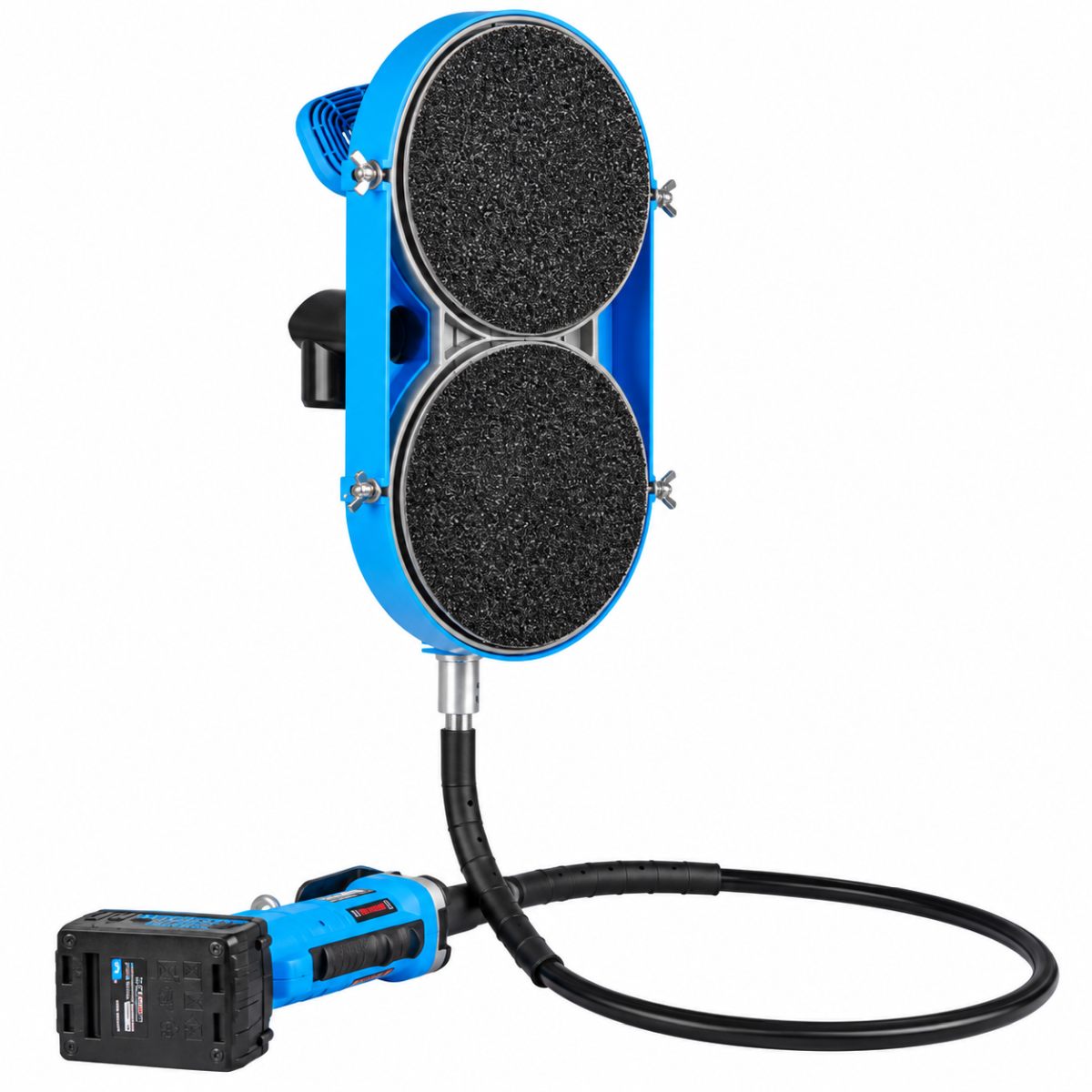
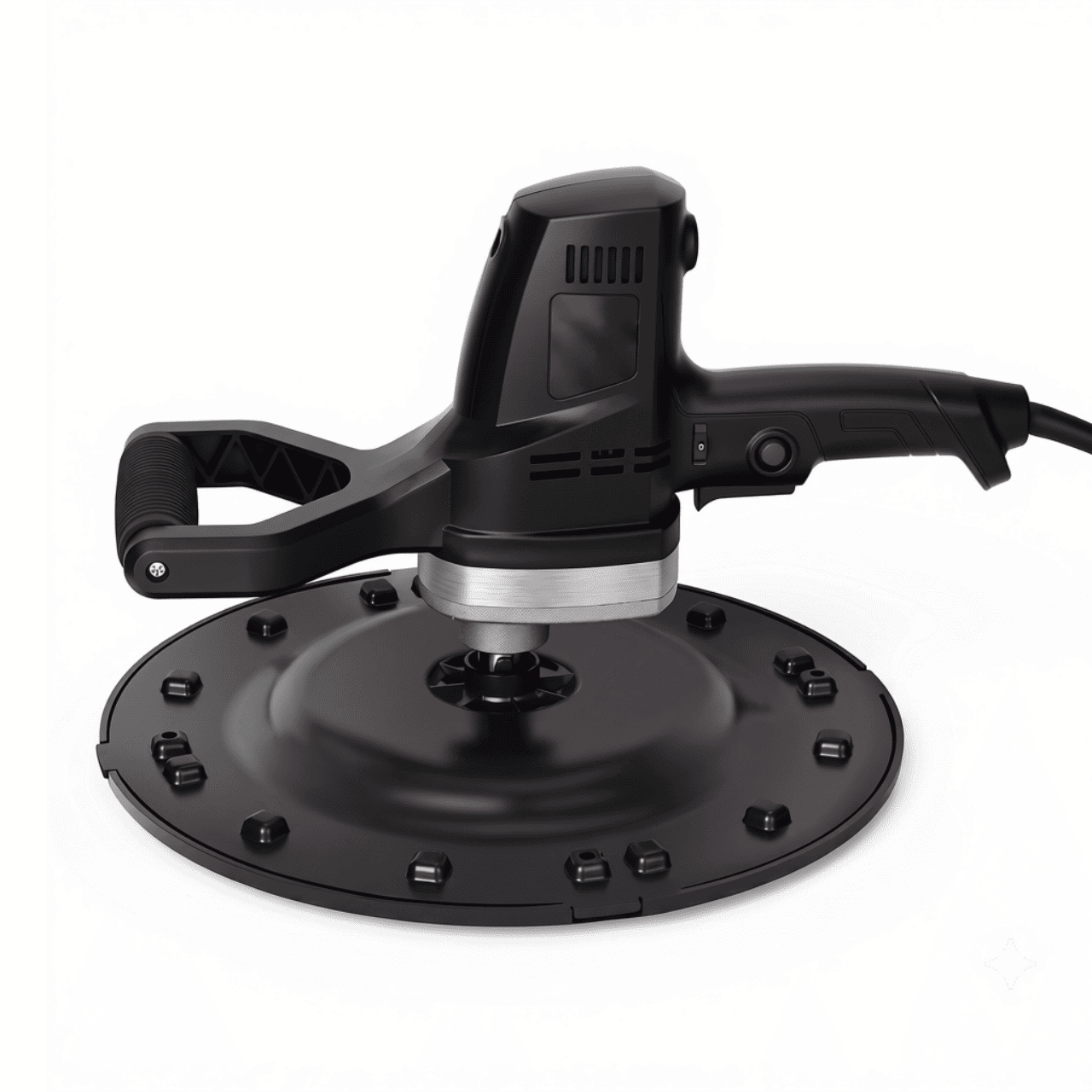
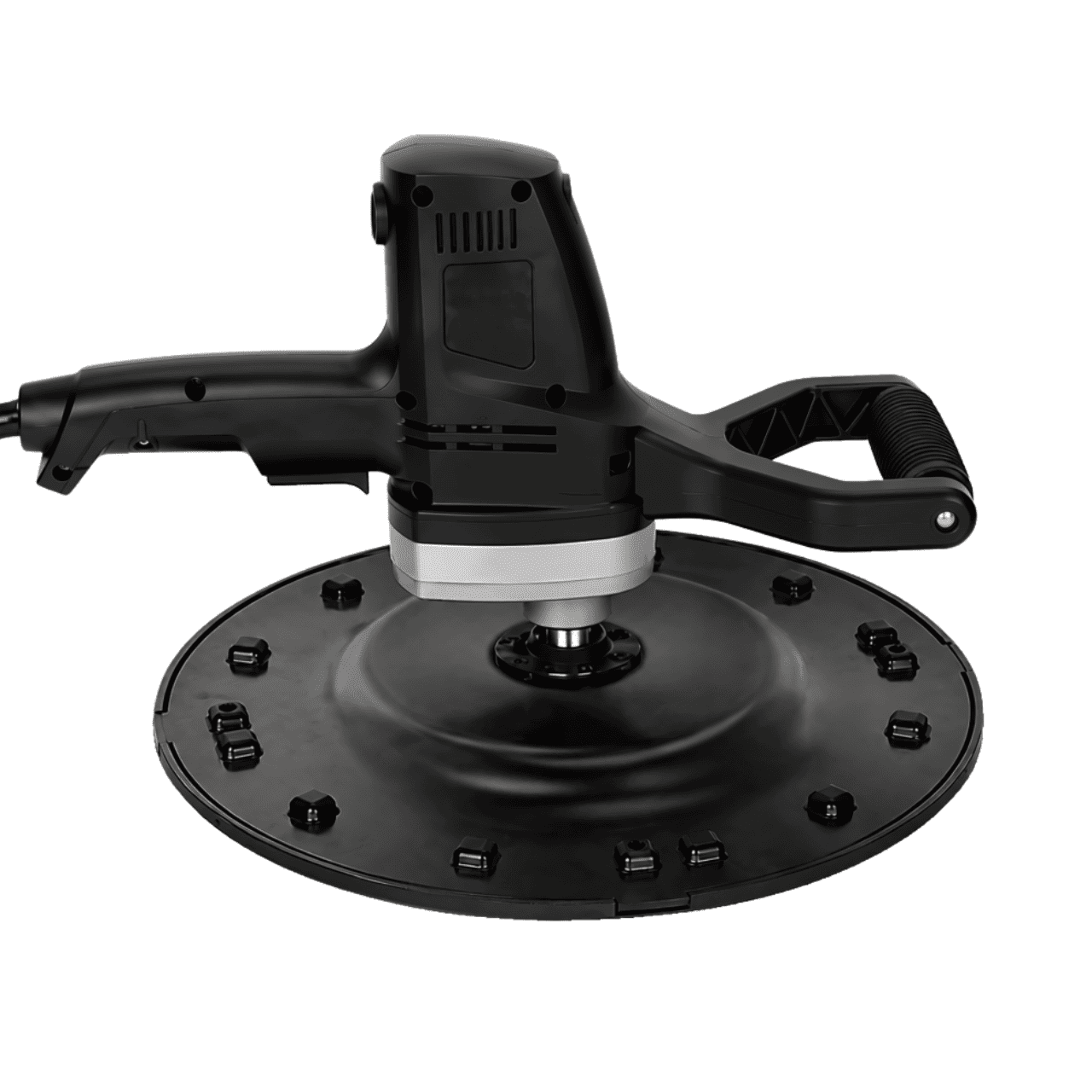
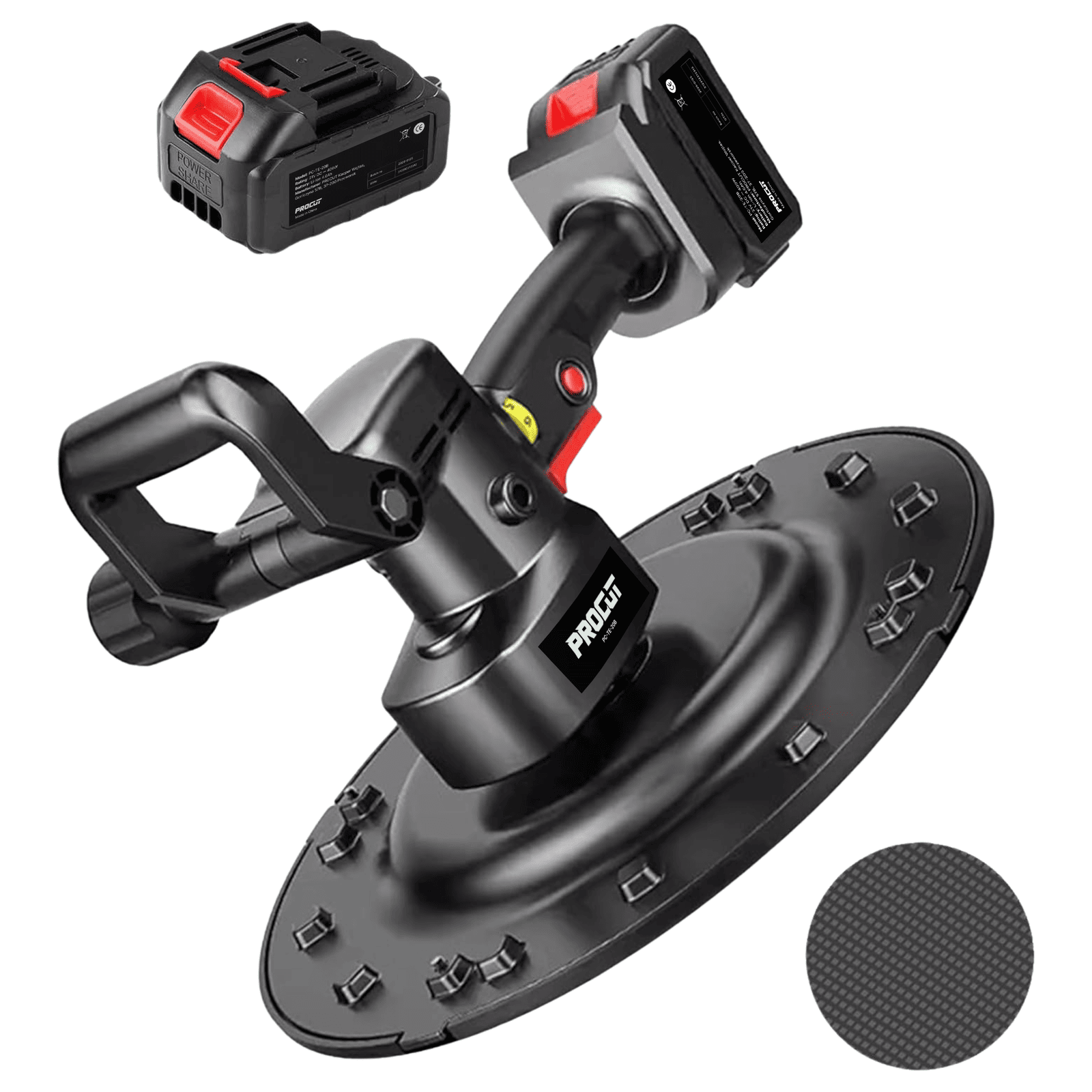
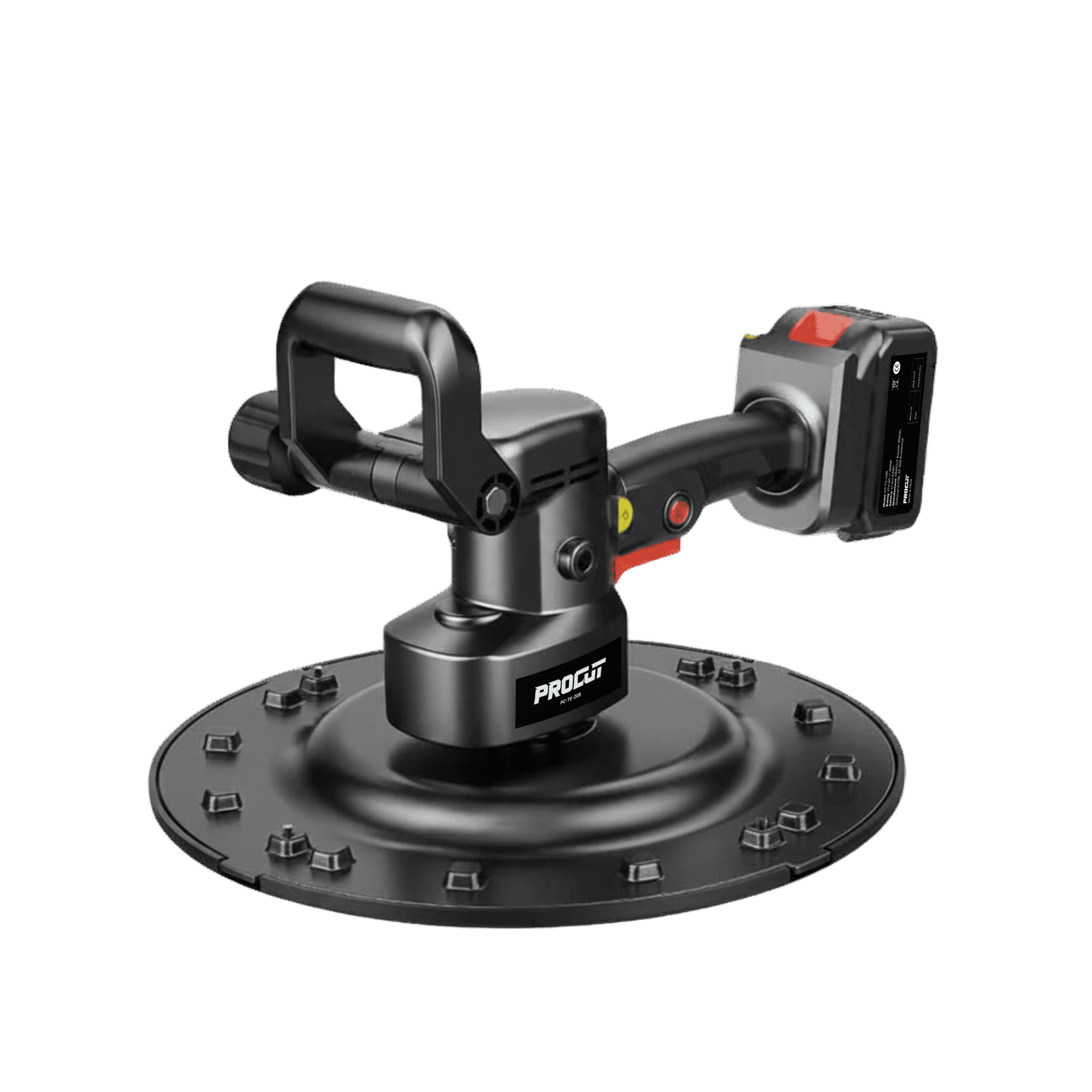
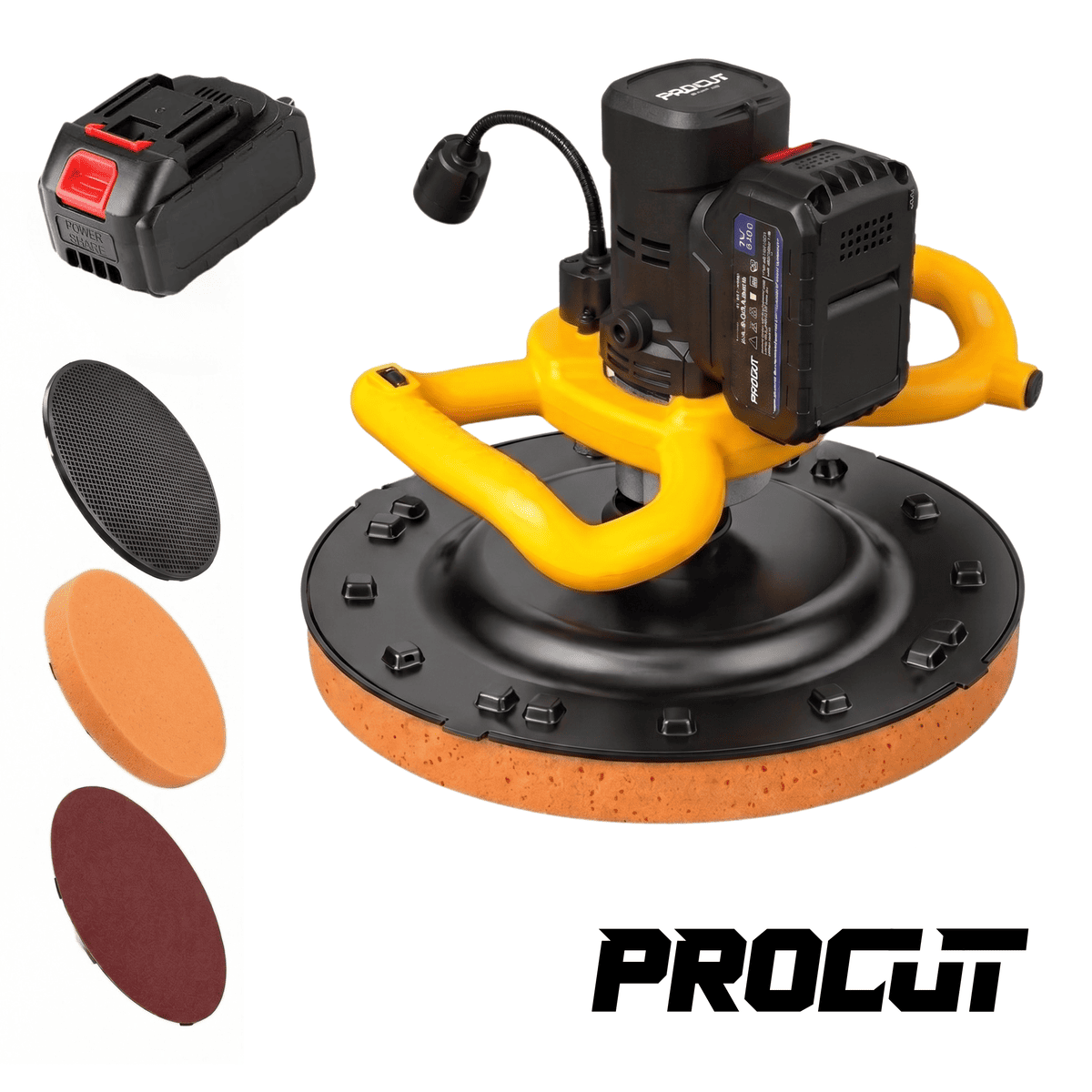
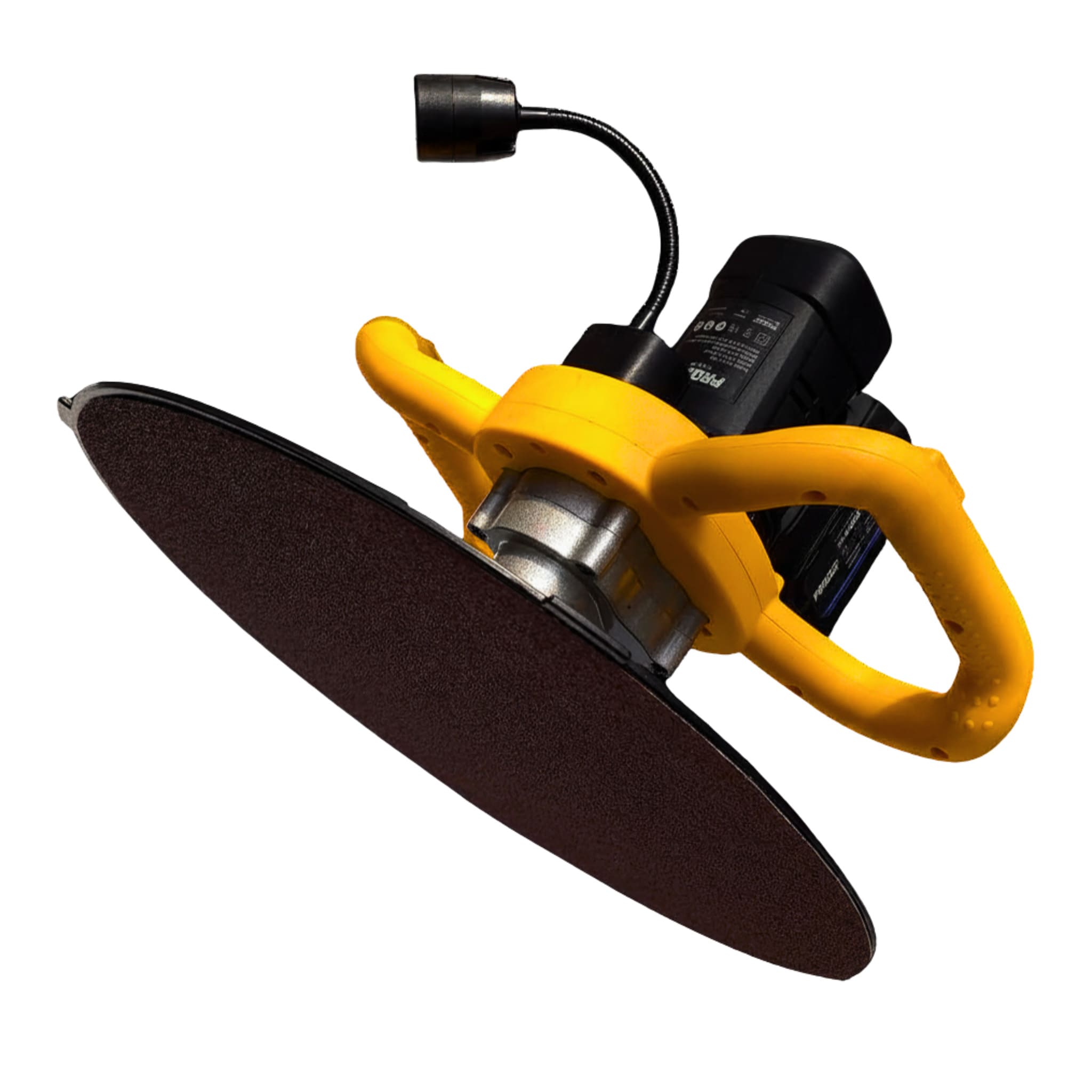
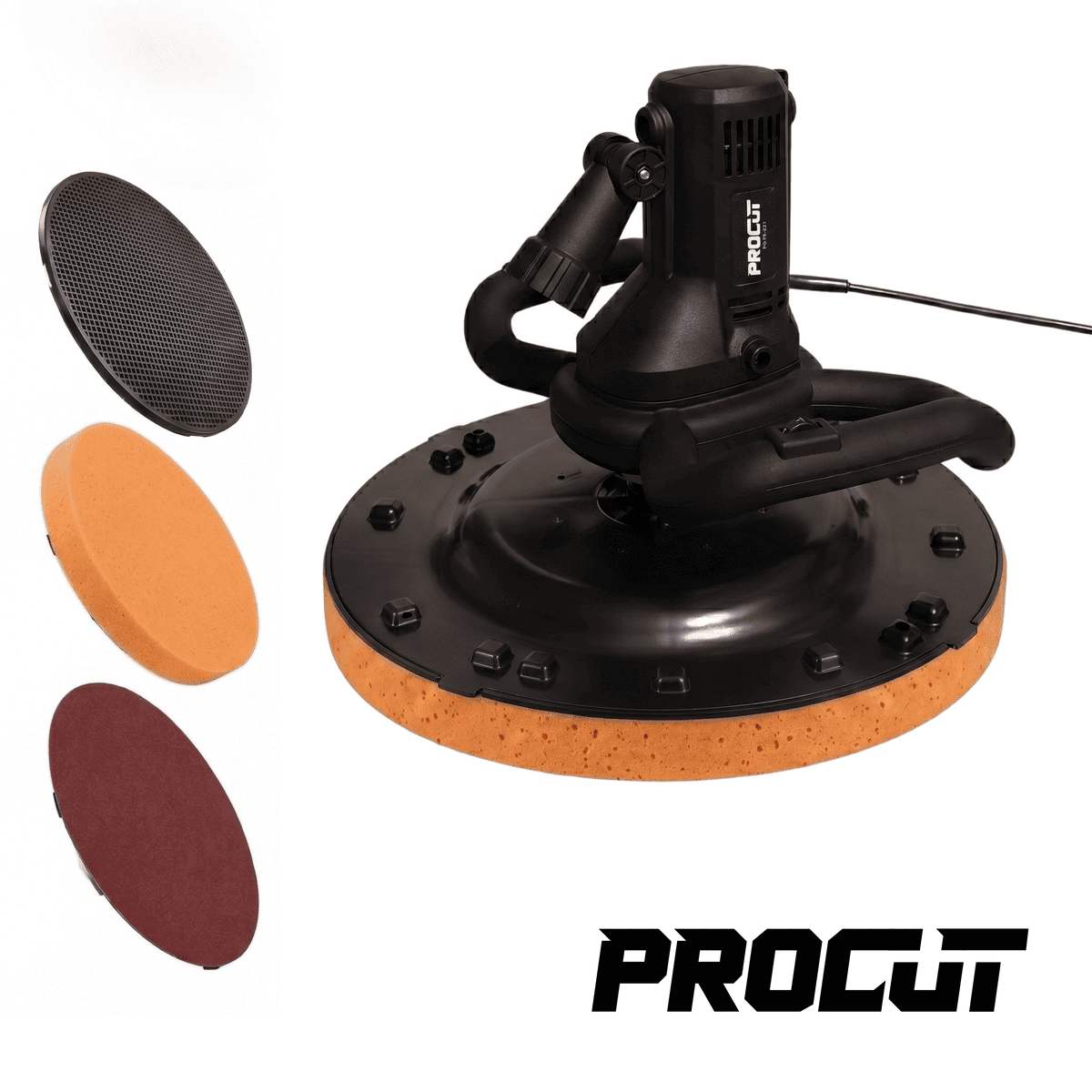
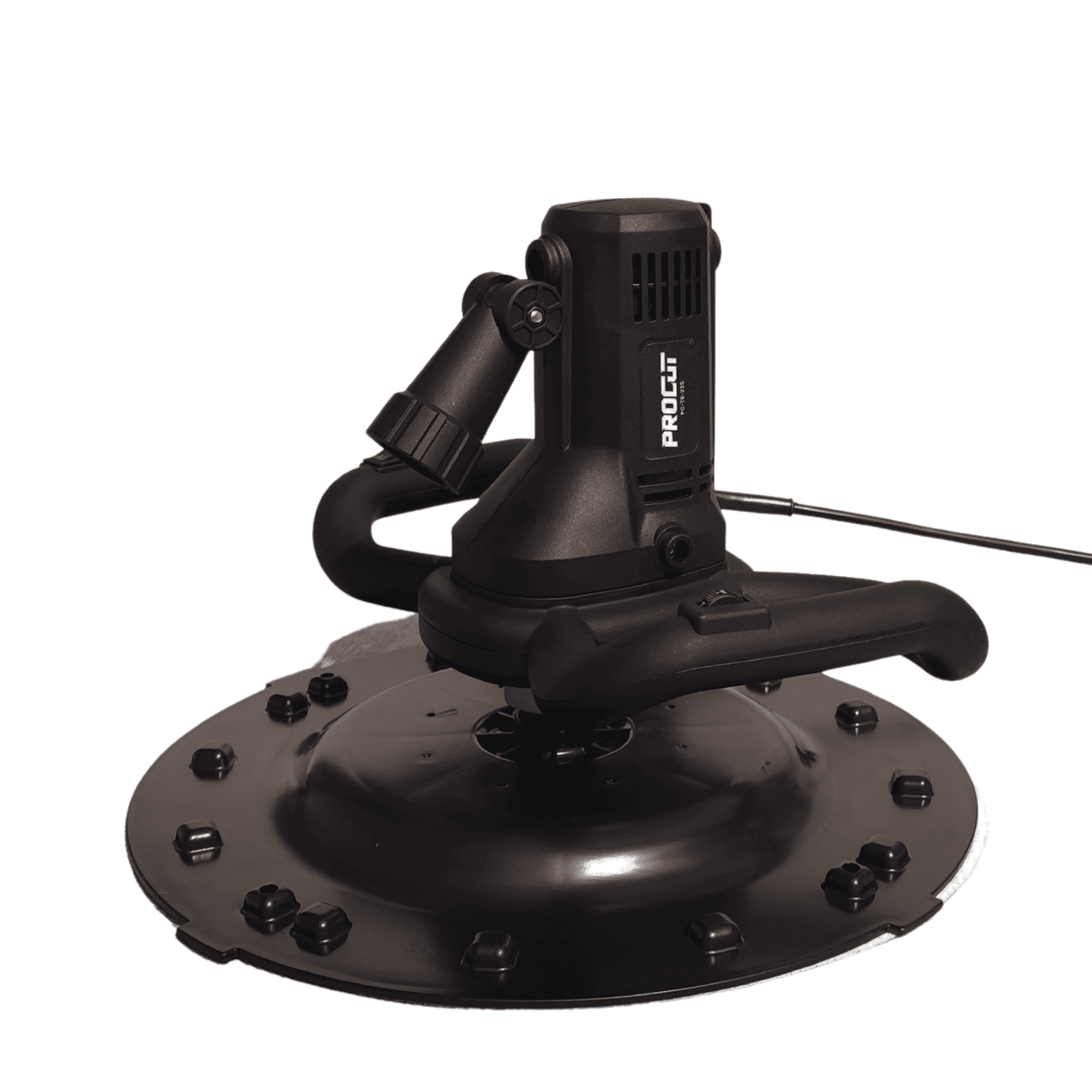
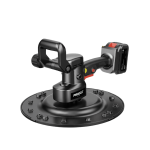
Procut polisher for expanded polystyrene (EPS) evens out EPS panels on building facades before applying a reinforced layer in an ETICS system—we offer three models starting at 449 PLN, that is more than 15 times cheaper than its Western counterpart in this class. The TE-22S corded model operates on a 230V power supply with 1,680 W of power, while the two cordless models (Dual 21B and Single 20B, 21V/18V) provide freedom of movement on scaffolding without a cord. All models are equipped with a large Ø 380 mm disc with 6-speed adjustment (80–200 rpm), a brushless motor, and a 4-in-1 system: grinding polystyrene, troweling plaster, stripping coatings, and smoothing.
✓ 24-hour delivery | ✓ Returns within 30 days | ✓ 12-month warranty | ✓ Service in Poland | ✓ 5.0/5 rating on Allegro
What is a polystyrene sander used for?
A polystyrene sander is an electric disc sander used to level out gaps and unevenness between EPS panels adhered to a building’s facade before applying the reinforced layer in an ETICS system. The 380 mm rotating disc grinds and levels the surface of the polystyrene so that the next layer—reinforcing adhesive with mesh—adheres evenly across the entire surface.
Procut grinders are ideal for four different work scenarios:
- Sanding EPS/XPS Styrofoam — leveling out the faults between the slabs before the reinforced layer
- Smoothing Wet Plaster — gypsum and cement-lime plasters after application, before they dry
- Stripping Old Coatings — old paint, loose plaster, whitewash (using a steel brush)
- Surface Smoothing — final smoothing before painting (using a sponge or felt pad)
The Procut TE-22S sands and levels polystyrene panels using a 230V AC power supply, delivering a constant 1,680 W of power throughout operation. The Procut Dual 21B levels expanded polystyrene facades using a 21V battery—no cord, no limits on mobility. The Procut Single 20B sands polystyrene and plaster using an 18V battery—a solution for crews working without constant access to electricity.
Why is it important to sand polystyrene before plastering?
Uneven expanded polystyrene increases adhesive consumption by 10–15%, makes it difficult to embed the reinforcing mesh evenly, and causes visible unevenness after applying the thin-coat plaster. Sanding eliminates four key problems:
- Discontinuities between EPS panels — differences in level between adjacent panels, visible after applying decorative plaster
- Uneven adhesive wear — On an uneven surface, the reinforcing adhesive is applied more thickly in the depressions, which increases material costs
- Difficulties with submerging the net — Unevenness prevents the mesh from being pressed evenly against the ground across its entire width
- Thermal Bridges — Styrofoam that does not fit snugly creates localized gaps in the insulation, reducing the effectiveness of the ETICS system
A properly contoured polystyrene facade is essential for the durability and aesthetic appeal of the entire insulation system. ETICS contractors treat sanding as a standard step in the process—between bonding the panels and applying the reinforced layer.
Mains-powered or cordless—how do you choose a sander for Styrofoam?
The TE-22S corded model (230V, 449 PLN) is ideal for continuous use on building facades with access to a power source—its 1,680 W power output remains constant at all times, with no risk of a drop in performance toward the end of the cycle. The cordless Dual 21B (21V, 699 PLN) and Single 20B (18V, 649 PLN) models offer complete freedom of movement on scaffolding and in areas without power outlets—the lack of a cord eliminates the risk of getting tangled while working at heights.
| Feature | TE-22S (Network) | Dual 21B (Battery) | Single 20B (Battery) |
|---|---|---|---|
| Perfect for | Continuous operation with access to electricity | Large facades without cables, working with both hands | Cordless mobile work, light-duty tasks |
| Limitations | A cable, a power outlet is needed | Battery life per charge | Battery life per charge |
| Handle | Standard | Dual Grip (two-handed, symmetrical) | Single (single, lightweight) |
| Price | 449 PLN | 699 PLN | 649 PLN |
Tip: If you’re working on scaffolding or in hard-to-reach areas, choose a cordless model. The Dual 21B with a two-handed grip (Dual Grip) provides better control over large surfaces; The Single 20B is lighter and more comfortable for precision work.
Technical Specifications — Comparison of Procut Models
All Procut grinders use a 380 mm diameter disc with 6-speed adjustment (80–200 rpm) and are compatible with 4-in-1 accessories: sandpaper (EPS/XPS), plastic disc (filling), sponge (smoothing), and steel disc (stripping).
| Parameter | Procut TE-22S | Procut Dual 21B | Procut Single 20B |
|---|---|---|---|
| Power supply | 230V / 50Hz Mains Power | 21V / 4.0Ah Li-Ion Battery | 18V / 4.0Ah Li-Ion Battery |
| Engine power | 1680 W | — | — |
| Engine Type | Electric, reinforced transmission | Brushless | Brushless, planetary gear |
| Disc diameter | 380 mm | 380 mm | 380 mm |
| Rotational speed | Adjustable | 80–200 rpm (6-speed) | 80–200 rpm (6-speed) |
| Handle Type | Standard | Dual Grip (two-handed, symmetrical) | Single (one) |
| Weight | — | approx. 3.5 kg (without battery) | approx. 3.5 kg (without battery) |
| Battery Compatibility | — | Makita (DeWalt/Milwaukee adapter available) | Makita (DeWalt/Milwaukee adapter available) |
| Inspection Flashlight | ✓ included | ✓ included | — |
| Work System | 4-in-1 | 4-in-1 | 4-in-1 |
| Kit contents | Grinder, plastic disc, sponge disc, sandpaper, flashlight, instruction manual | Sander, 21V/4.0Ah battery, charger, flashlight, plastic disc, sponge disc, P40 sandpaper, instruction manual | Orbital sander, 18V/4.0Ah battery, charger, plastic disc, sponge disc, P40 sandpaper, instruction manual |
| Application | EPS/XPS expanded polystyrene, gypsum and cement-lime plasters, coatings | EPS/XPS expanded polystyrene, gypsum and cement-lime plasters, large-scale facade work | EPS/XPS expanded polystyrene, gypsum and cement-lime plasters, facade and finishing work |
| Warranty | 12 months (service in Poland) | 12 months (service in Poland) | 12 months (service in Poland) |
| Price | 449 PLN (from 499 PLN, −10%) | 699 PLN (from 749 PLN, −7%) | 649 PLN (from 699 PLN, −7%) |
Procut's Price Advantage: Professional polystyrene sanders from Western brands cost 6,000–11,000 PLN (Rokamat Chameleon 20000: 6,850 PLN, Rokamat FOX 24000: 11,000 PLN). The Procut TE-22S costs 449 PLN — that's more than 15 times less, given a comparable range of applications on building facades.
Dust-free operation — a sander with a backpack vacuum cleaner
Sanding EPS polystyrene generates electrostatic dust that settles on the work surface and makes it difficult to control the surface being sanded. For removing EPS dust while working on a facade, we recommend Class L backpack vacuum cleaners with a Ø 35 mm connection—Procut sanders are compatible with vacuum cleaners equipped with a standard connector. A dust-free workstation speeds up the work, improves visibility of irregularities, and is required for safety reasons during prolonged sanding.
Check out our accessories for grinders — P40 sandpaper (5 sheets) and replacement discs are available immediately.
How to Sand Styrofoam Properly — Step by Step
Proper sanding of Styrofoam requires allowing sufficient time after the panels have been glued in place, using even strokes without applying pressure, and continuously checking the surface with a straightedge. Here is the entire process:
- Please wait at least 24 hours after the Styrofoam panels have been glued in place (the adhesive must be completely dry)
- Check the panel joints — Mark with chalk any faults larger than 3 mm
- Remove large irregularities first — with a utility knife or a hand grater before using a sander
- Attach the P40 sandpaper for sanding Styrofoam (included)
- Plug in the backpack vacuum cleaner for the grinder's connector (recommended)
- Move the sander in parallel strokes, without pressure — the disc maintains the correct grinding level on its own
- After each pass, place a 2-meter strip — Check to see if the surface is level; the inspection flashlight (included with the TE-22S and Dual 21B) makes it easier to detect unevenness
- Clean the surface of any EPS dust before applying the reinforced layer (mesh + adhesive)
The Most Common Mistakes When Sanding Styrofoam on a Facade
Applying too much pressure with the sander and working without dust extraction are the two mistakes that most often compromise the quality of sanding an expanded polystyrene facade. Here is a complete list of mistakes and their consequences:
- The disc is pressed too hard — the formation of indentations (pits) on the surface of the EPS, which become visible as "waves" after the plaster is applied. Solution: Guide the sander gently, without applying pressure.
- Working Without a Vacuum Cleaner — EPS dust reduces visibility of the surface being sanded and is harmful if inhaled. Solution: Connect the backpack vacuum cleaner.
- Sanding before the adhesive dries — The disc tears off pieces of Styrofoam instead of grinding it down. Solution: Wait at least 24 hours after applying it.
- Lack of patch-based control — Cracks go unnoticed and only become apparent after a thin layer of plaster has been applied. Solution: Check the patch after each pass of sanding.
- Using the wrong sandpaper — If the grit is too fine (P80+), it gets clogged with EPS dust; if it's too coarse (P20), it damages the surface. Solution: P40 sandpaper for EPS (included), P60 sandpaper for plaster.
FAQ — Procut Styrofoam Sanders
- What should I use to sand Styrofoam on a facade?
- An electric orbital sander with P40 sandpaper is used to sand EPS/XPS foam on the facade. Procut sanders (TE-22S, Dual 21B, Single 20B) with a Ø 380 mm disc level out unevenness between panels before applying the reinforced layer in an ETICS system. We do not recommend using hand-held sanders—they are slower and less precise when working on large areas.
- Which grinder is best for Styrofoam?
- For most facade contractors, the best choice is the Procut TE-22S corded sander (230V, 1680 W, 449 PLN)—it offers consistent power and a low purchase price. If you’re working without access to a power outlet or on scaffolding, choose a cordless model: the Dual 21B (two-handed grip, better control on large surfaces) or the Single 20B (lighter, for precision work). All models feature a 380 mm blade and a speed range of 80–200 rpm.
- Is it worth choosing a cordless model?
- Yes, if you're working on scaffolding or in areas without access to electricity. The Procut Dual 21B (21V) and Single 20B (18V) cordless models are equipped with a brushless motor and a 4.0Ah battery compatible with Makita batteries. The limitation is the runtime on a single charge—for intensive sanding, it’s a good idea to have a spare battery. For long-term, continuous operation with access to a power source, the TE-22S corded model is more efficient.
- Why is sanding Styrofoam important?
- Sanding removes the unevenness between EPS panels that occurs during bonding. Failure to sand results in: visible unevenness after applying thin-coat plaster, higher consumption of reinforcing adhesive (by 10–15%), difficulties in embedding the mesh evenly, and the formation of thermal bridges. In the ETICS system, sanding is a standard step in the process.
- How do you sand Styrofoam properly?
- Wait at least 24 hours after installing the panels. Attach P40 sandpaper, connect a backpack vacuum, and run the sander in parallel passes without applying pressure. After each pass, check the surface with a 2-meter straightedge. Remove large irregularities (greater than 3 mm) with a knife or rasp before using the electric sander.
- How much does a Procut styrofoam sander cost?
- The Procut TE-22S corded sander costs 449 PLN (available). Cordless models are priced at 649–699 PLN. By comparison, professional polystyrene sanders from Western brands cost 6,000–11,000 PLN. Procut offers Polish-made tools for grinding facades, backed by a 12-month warranty and service in Poland.