















Resistance wire
Showing all 3 resultsSorted by latest
NiCr80/20 Heating Wire — Specifications, Compatibility, and Replacement
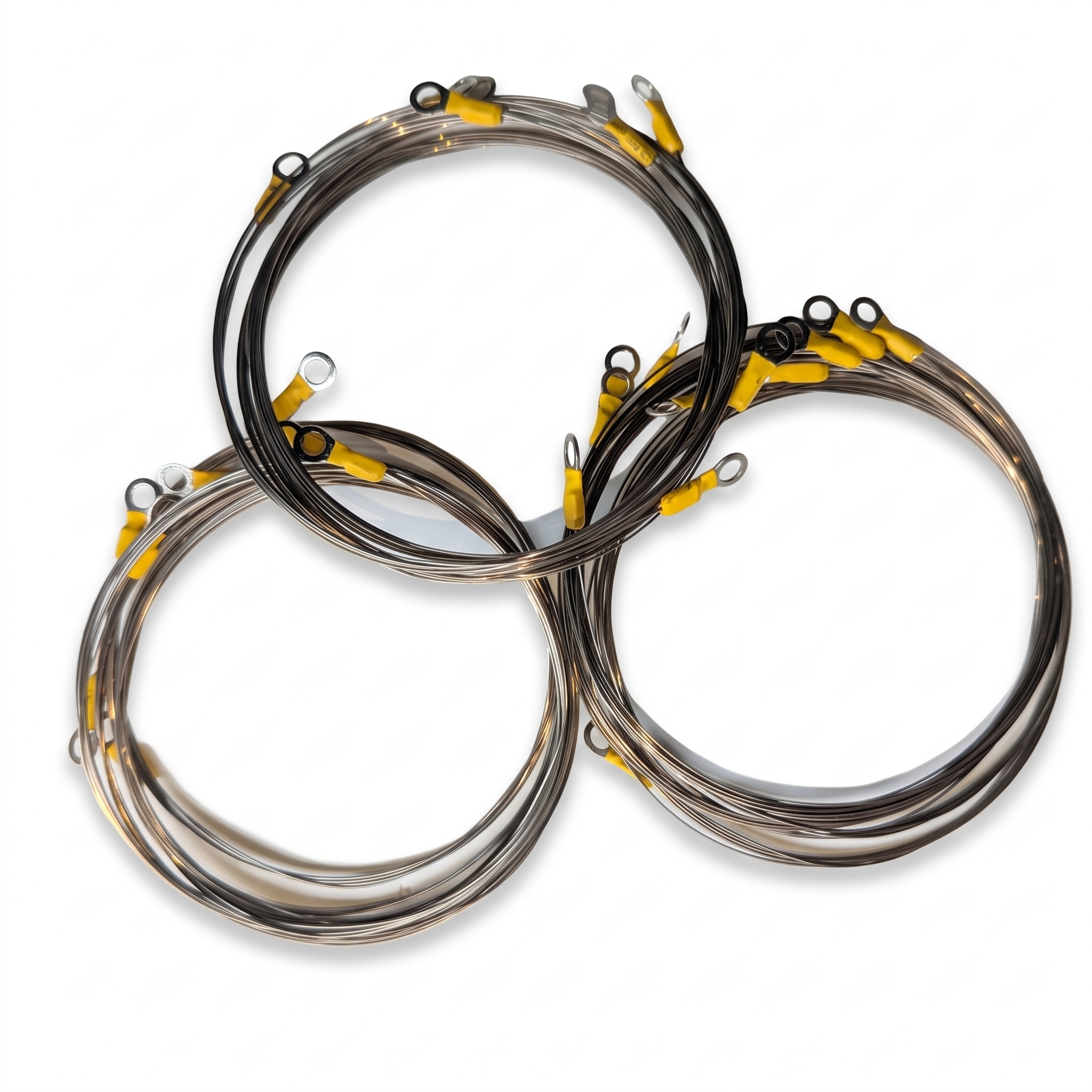
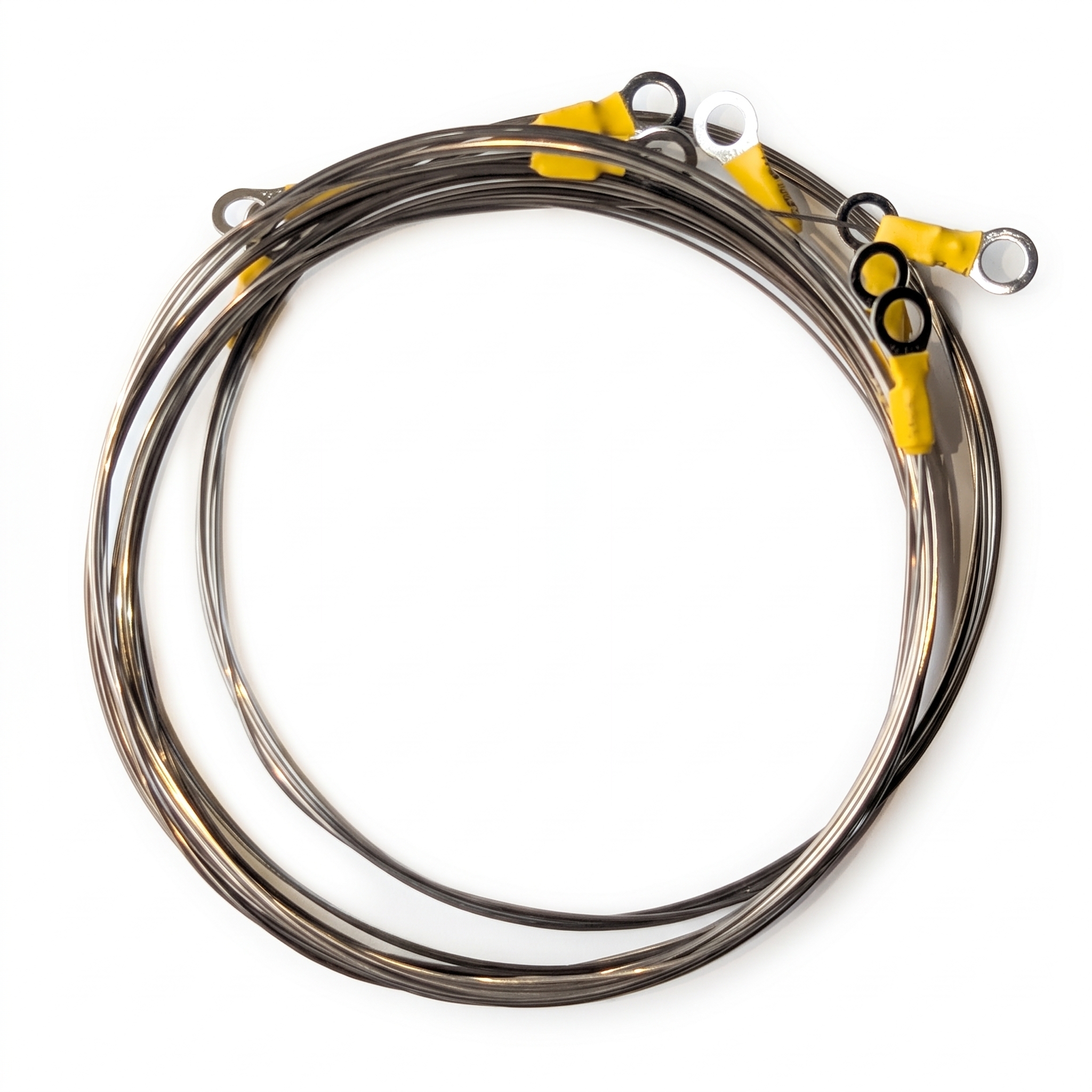
NiCr80/20 resistance wire (nickel-chromium alloy) with a resistance of ~3.5 Ω/m and a diameter of 0.25 mm melts EPS at 130–150°C and XPS at 160–180°C within ~30 seconds of being turned on—the edge remains smooth, free of burrs and deformation, for hundreds of cutting cycles.
Technical specifications: resistance, diameter, temperature
NiCr80/20 wire (nickel-chromium alloy) with a diameter of 0.25 mm and a resistance of ~3.5 Ω/m heats up evenly along its entire 130 cm length—the nickel-chromium alloy does not oxidize or become brittle at temperatures up to 1200°C, maintaining a constant resistance over hundreds of cutting cycles.
- Stop: NiCr80/20 (80% nickel, 20% chromium) — also known as nichrome, chromonicel, or nikrothal
- Property: non-magnetic — contains no iron (unlike Kanthal D / FeCrAl)
- Electrical resistance: ~3.5 Ω/m (for comparison: copper 0.017 Ω/m — 200 times less)
- Wire diameter: 0.25 mm (tolerance ±0.01 mm)
- Length: 130 cm
- Operating temperature: up to 1,200°C — the alloy does not oxidize or become brittle
- Flexibility: high — ensures proper tension without the risk of breaking
- Corrosion resistance: very high — multiple heating and cooling cycles without degradation
Compatibility: Which cutters work with this wire?
Selecting the right wire requires matching three parameters: power (W), arm length (cm), and required resistance (Ω/m)—the table below lists the appropriate options for popular models.
| Cutter Model | Power | Required wire | Arm length |
|---|---|---|---|
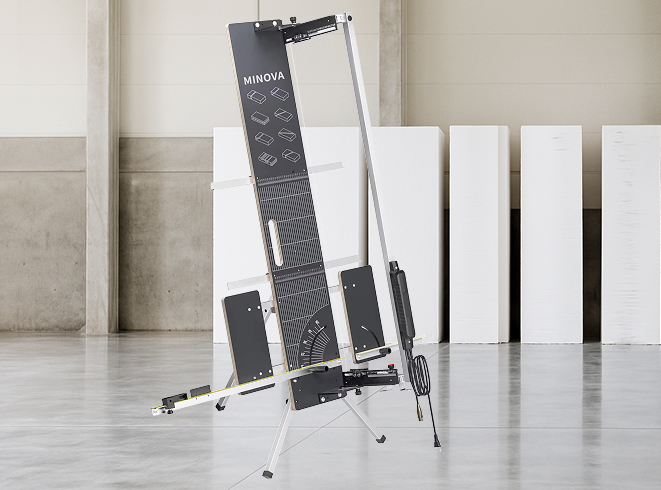
| Minova Pro | 260 W | NiCr80/20 ~3.5 Ω/m (this product) | 130 cm |
| Procut Base | 200 W | NiCr80/20: higher resistance (~5 Ω/m) | 108 cm |
| Other 260 W Cutters | 260 W | NiCr80/20 ~3.5 Ω/m, check the length of the arm | — |
| Unknown cutting machine | any | Measure the resistivity with a multimeter: the correct range is 3.0–5.5 Ω/m; select the wire based on the result | Measure your arm |
NiCr80/20 vs. FeCrAl (Kanthal) — Which Alloy Should You Choose?
NiCr80/20 is non-magnetic, contains no iron, and retains its flexibility after hundreds of thermal cycles — Kanthal D (FeCrAl with iron) is less expensive, but it is magnetic and brittle, which shortens the wire’s service life under heavy use.
| Property | NiCr80/20 (nichrome / chromium-nickel alloy) | FeCrAl Kanthal A1 | FeCrAl Kanthal D |
|---|---|---|---|
| Operating temperature | up to 1,200°C | up to 1,400°C | up to 1,200°C |
| Resistance | ~3.5 Ω/m (0.25 mm) | greater for the same diameter | greater for the same diameter |
| Flexibility | tall — easy to install | lower — more brittle | low — brittle |
| Magnetism | nonmagnetic | nonmagnetic | magnetic |
| Ingredients | Ni80/Cr20 — no iron | Fe/Cr/Al | Fe/Cr/Al |
| Corrosion resistance | very good | goods | average |
| Typical Applications | EPS and XPS cutters | industrial furnaces | a cheaper alternative, shorter operating time |
| Availability | standard on Minova cutting machines | less common in tools for polystyrene foam | available, not recommended |
NiCr80/20 is the only alloy optimized for the 130–180°C temperature range of the Minova Pro and Procut series cutters—FeCrAl (Kanthal) requires higher operating temperatures and is more brittle during installation.
When to Replace the Heating Element — 5 Signs of Wear and Tear
The heating wire needs to be replaced when the cut edges become uneven, dark burn marks appear on the EPS or XPS, or the wire sags and does not run in a straight line — these are signs that the wire’s resistance has changed and it no longer ensures an even temperature along its entire length.
- Uneven cut edges — the wire overheats in specific spots; visible „steps" or burrs on the EPS/XPS cut
- Dark marks or burn marks on Styrofoam — localized overheating at a single point along the wire
- The wire is sagging and losing tension — The metal has stretched after repeated thermal cycles; the wire does not run straight.
- Visible cracks or dark spots on the wire — microcracks in the alloy; the wire may break during cutting
- Longer warm-up time to operating temperature — The wire's resistance has changed; the device needs more time or is not reaching the correct temperature
Any wire exhibiting any of the above signs should be replaced before the next cut—continuing to use a worn-out wire accelerates wear on the clamps and the cutter's transformer.
How to Replace a Heating Element — A 5-Step Guide
Replacing the tension wire takes 5 minutes and requires only a Phillips-head screwdriver—the key is to achieve the correct final tension: a 2–3 mm deflection in the middle of the arm when cold, no more.
- Unplug the saw from the power source — an absolute safety requirement; wait until the wire cools down (the temperature drops to a safe level of ~40°C 2–3 minutes after turning it off)
- Loosen the clamps or screws securing the wire — There are screw clamps (Phillips-head screwdriver) at both ends of the Minova Pro cutting arm
- Pull out the old wire — Gently slide it out along the guides; do not jerk it to avoid damaging the clamps
- Insert a new NiCr80/20 wire (130 cm) through the guides — Make sure the wire lies in the guide grooves along the entire length of the arm
- Pull the clamps tight and tighten them — The wire should lie in a straight line without sagging; excessive tension will cause it to break the first time it heats up (the metal expands thermally and exceeds its tensile strength).
After installation, plug in the device and perform a test heating without cutting—check to see if the wire turns a reddish color evenly along its entire length. If only a section of the wire heats up, check the terminals and repeat the installation.
Resistance Wires — Types and Applications
The NiCr80/20 resistance wire determines the cutting temperature and edge quality—correct parameters (resistance, diameter) eliminate burrs and irregularities on the cut edges of EPS and XPS.
Wire for EPS (white polystyrene)
EPS (expanded polystyrene) requires a cutting temperature of ~130–150°C. A 0.25 mm NiCr80/20 wire with a resistance of ~3.5 Ω/m and a power rating of 260 W reaches this temperature in ~30 seconds after being turned on. Cutting EPS with the correct settings results in a smooth, matte surface without melting the polystyrene beads.
Wire for XPS (Styrodur)
XPS (extruded polystyrene, Styrodur) is denser than EPS and requires a higher temperature—~160–180°C. The same 260 W NiCr80/20 wire works well for XPS when moved more slowly. If XPS is cut too quickly, jagged edges appear—the wire did not have time to transfer heat through the denser material.
NiCr80/20 Wire Specifications — Complete Technical Data
NiCr80/20 alloy (80% nickel, 20% chromium) — a chromium-nickel alloy — with a specific resistance of ~1.09 μΩ·m and an operating temperature up to 1200°C, retains its full mechanical properties through hundreds of thermal cycles without oxidation or embrittlement.
- Alloy name: NiCr80/20 — nichrome, chromonicel, nikrothal (trade names)
- Ingredients: 80% nickel (Ni), 20% chromium (Cr)
- Property: nonmagnetic — contains no iron
- Specific resistance: ~1.09 μΩ·m
- Resistance of a 0.25 mm wire: ~3.5 Ω/m (range for the entire alloy: 3.0–4.0 Ω/m)
- Continuous operating temperature: up to 1,200°C
- Melting point: ~1,400°C
- Diameter: 0.25 mm (±0.01 mm)
- Length: 130 cm
- Oxidation resistance: very high — the chromium layer protects the alloy from corrosion at high temperatures
- Tensile strength: high — ensures proper tension without the risk of breaking during installation
NiCr80/20 wire retains its resistance and flexibility even under heavy use—the nickel-chromium alloy does not oxidize or become brittle at temperatures up to 1200°C, allowing for hundreds of cutting cycles without any change in its electrical properties.
FAQ — Frequently Asked Questions About Resistance Wire
What kind of wire should I choose for a Styrofoam cutting machine?
Select the wire based on the tool’s power and the length of the cutting arm. For 260 W / 130 cm cutters: NiCr80/20 wire, resistance ~3.5 Ω/m, diameter 0.25 mm. For 200 W / 108 cm tools: wire with higher resistance (~5 Ω/m). If you have any questions, please provide the model number of your wire saw—we’ll help you choose the right wire: 660 020 443.
How much does a piece of resistance wire cost?
A set of 5 costs 45 zł — that’s 9.00 zł each. A set of 10 costs 85 zł (8.50 zł each; you save 14%). A set of 20 costs 159 zł (7.95 zł each; you save 16%). For regular replacement, the set of 20 is the most economical option.
How many cuts can a NiCr80/20 resistance wire withstand?
Under normal operating conditions (cutting EPS, correct installation voltage), 0.25 mm NiCr80/20 wire can withstand 200–500 cuts before the first signs of wear appear. Intensive use with XPS (higher temperatures) or incorrect voltage reduces the service life to 100–200 cuts. With regular use (approx. 50 cuts per week), a set of 20 pieces lasts 4–10 weeks.
What can be used as a replacement for the resistance wire in a wire cutter?
The resistance wire may only be replaced with another NiCr80/20 or FeCrAl wire of identical resistance and length. Do not use copper or steel wire—copper has a resistance of 0.017 Ω/m (200 times less than nichrome) and will not generate enough heat, while steel may overheat the device’s transformer.
How is resistance wire different from regular wire?
NiCr80/20 resistance wire has a resistance of ~3.5 Ω/m (ordinary copper wire: 0.017 Ω/m) and can withstand 1200°C without oxidizing. Ordinary wire heats up unevenly, melts the insulation, and cannot withstand repeated thermal cycles—using it instead of resistance wire risks damaging the cutter.
What is the correct tension for the resistance wire?
The wire should lie in a straight line without sagging, but should not be overly taut—excessive tension will cause it to break the first time it is heated, when the metal expands due to heat. Correct tension: the wire should not bend more than 2–3 mm in the middle of the arm when pressed with a finger while cold. A wire that breaks during heating indicates excessive installation tension—loosen the clamps and reinstall with less tension.
Is NiCr80/20 wire compatible with cutting machines other than the Minova Pro?
The 0.25 mm / ~3.5 Ω/m / 130 cm wire is designed for the Minova Pro 260 W / 130 cm. It is compatible with other 260 W wire saws with a 130 cm arm. For cutters with different power ratings or arm lengths, a wire with different specifications is required—please contact us and provide the model number of your device: 660 020 443.
What is resistance wire tension, and how does it affect cutting?
Tension is the force with which the wire is stretched between the clamps. If the wire is too loose, it bends during cutting and forms an arc—the edge of the Styrofoam is curved and uneven. If the wire is too tight, it breaks when heated. Correct tension = a straight line, with no more than 2–3 mm of deflection when pressed with a finger in the middle of the arm.