











Guide
Uneven Cutting with a Thermal Knife – Causes and Solutions


Uneven, wavy, or crooked cuts made with a hot knife are a problem that frustrates both beginners and experienced users. Instead of a smooth, straight edge, you end up with waves, steps, or diagonal lines. There can be many causes—from your cutting technique to the condition of the wire to how well the material is stabilized. In this guide, we discuss the most common reasons for uneven cuts and show you how to fix them. Find out what affects edge quality and how to achieve professional results!
Key information about uneven cutting:
- Uneven wire tension This is the most common cause of crooked cuts.
- Used wire Due to local variations in shading, it heats up unevenly.
- Unstable material It shifts during cutting, creating waves.
- Speeding A dull knife causes the food to tear and results in an uneven texture.
- Hand tremors is transferred directly to the cutting line.
The „wavy” effect—why isn't the edge a straight line?
There are several common causes of edge waviness during thermal cutting. The most common one is a variable blade speed – Every acceleration or deceleration leaves a mark on the material. Styrofoam thermal cutter It requires a steady, smooth motion throughout the entire cutting process.
The second cause is the operator's hand tremors. Even slight vibrations are transmitted to the blade and create microscopic deviations that add up to visible waves. The problem worsens during long cuts and when working in an uncomfortable position. The solution is to rest your hands on a stable surface or to guide the knife with your whole body.
Wire Type and the Cutting Effect of a Thermal Knife
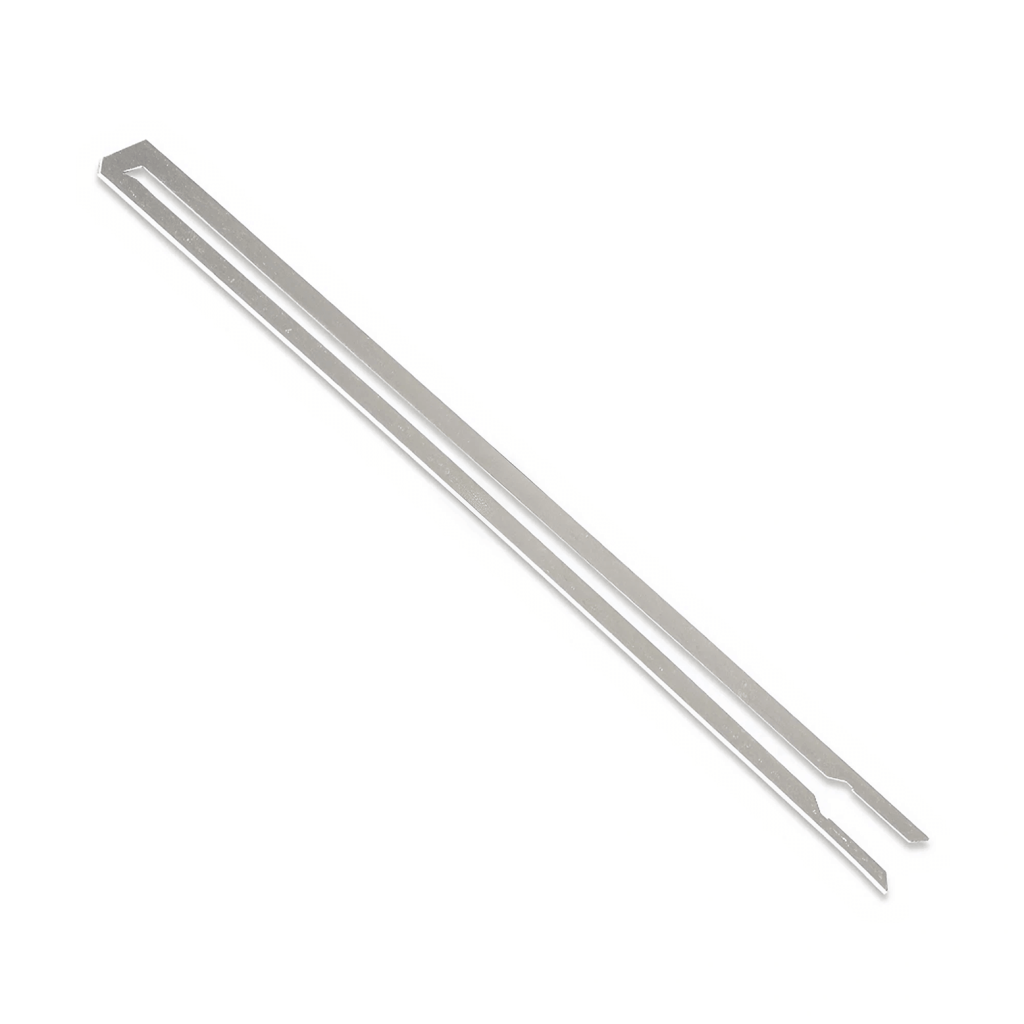
Wire for Styrofoam has a direct impact on the quality of the cut. New, uniform wire heats up evenly along its entire length and produces smooth edges. Worn wire with localized thin spots heats up unevenly—the thinner sections are hotter and melt the material faster, creating characteristic waves.
The quality of the wire matters, too. Inexpensive wire with a non-uniform structure may heat up unevenly, even when it is new. NiCr 80/20 nichrome wire It is characterized by high thermal stability and uniform temperature distribution. Investing in high-quality wire pays off in the form of better-quality cuts and less frequent replacements.
Stabilizing the material when cutting Styrofoam
Unstable material is another common cause of uneven cuts. If the Styrofoam sheet shifts during cutting, the cut line will be crooked. This problem is particularly common with thin sheets, which are lightweight and tend to shift easily under the pressure of the blade.
Methods for stabilizing the material:
- Carpenter's clamp – holds the material securely without risk of damage.
- Weights on the corners – prevent light sheets from shifting.
- Non-slip mat – increases the grip between the tabletop and the fabric.
- Support for Protruding Sections – prevents long panels from sagging.
With thick sheets, it’s also important to support the parts that extend beyond the work surface. Heavy material can sag under its own weight, leading to skewed cuts. A professional workstation should allow you to extend the work surface for large pieces.
Effective Ways to Align a Cut
If your cuts come out uneven despite using the correct cutting technique, it’s worth checking a few things. First, assess the condition of the wire—visible discoloration or uneven heating means it needs to be replaced. Next, check the wire tension and the stability of the entire equipment for cutting Styrofoam.
Even wire tension is the key to straight cuts. If the wire is looser on one side, it will bend and deviate from the cutting line when heated. To adjust the tension, loosen the clamps, straighten the wire, and tighten the clamps again. After making the adjustment, perform a test cut to check the result.
Does Styrofoam dull hot knives?
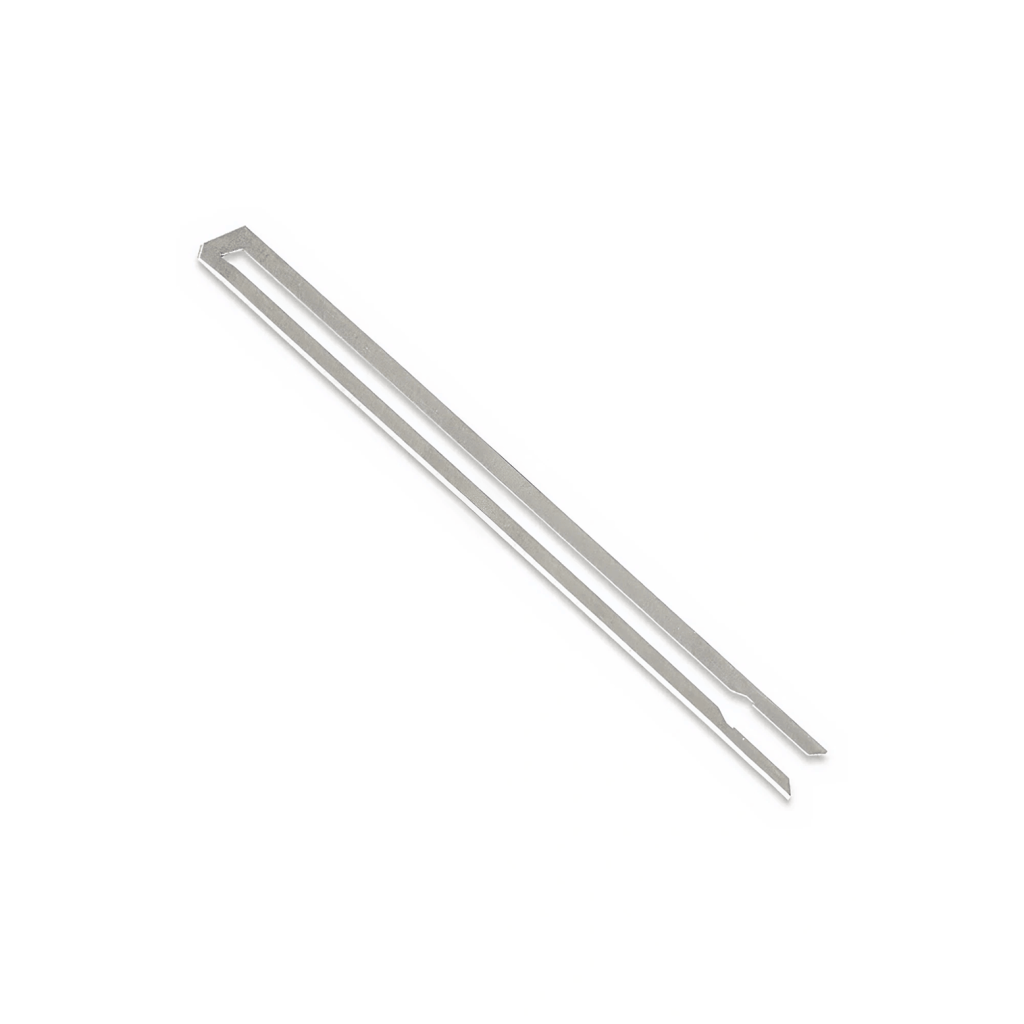
Thermal knives do not become dull in the traditional sense, because You do not cut the material mechanically – you melt him with your warmth. However, the resistance wire degrades during operation. High temperatures cause oxidation and gradual thinning of the wire, particularly in areas subject to the highest thermal stress.
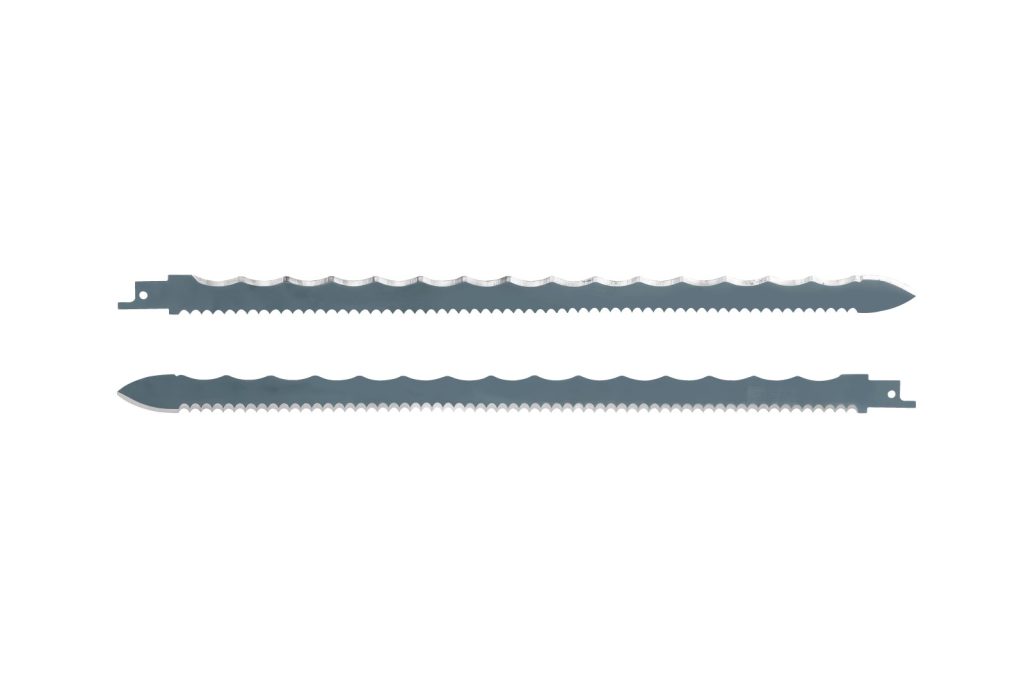
Minova 7Y 250W Thermal Knife An air-cooling system extends the service life of the heating elements. The cooling system dissipates excess heat and reduces the thermal load on the blade. Nevertheless, the wire must be replaced periodically—usually every 50–100 hours of intensive operation.
Adjusting the Settings for the Styrofoam Tool
An uneven cut with a hot knife may be caused by incorrect temperature settings. If the temperature is too low, the knife tears the material instead of melting it—resulting in jagged, uneven edges. Conversely, a temperature that is too high leads to excessive melting and deformation. How to Fix an Uneven Cut in Styrofoam – You can find more details in our dedicated guide.
Pre-cutting checklist:
- Check the wire voltage – It should be even on both sides.
- Assess the condition of the wire – Look for discoloration and shading.
- Stabilize the material – The plate must not move.
- Select a temperature – Test it on a scrap piece.
- Check the stability of the workstation – The table must not wobble.
- Plan Your Route – Where will you start, and where will you end up?.
We have over 40 years of experience in the construction industry, and we know that precise cutting requires a combination of good equipment and the right technique. Even the best tool won’t produce good results in the hands of an operator who doesn’t know the basics. That’s why we share our knowledge and help you choose the right equipment for your specific needs.
FAQ – Frequently Asked Questions About Uneven Cuts
Why does the wire „drift” to the sides when cutting thick Styrofoam?
The wire veers off to the sides when the tension is too weak or uneven—as it passes through thick material, a loose wire bends toward the path of least resistance.
Can wind at the construction site cause the wire to heat up unevenly?
Yes, strong winds can cool one side of the wire, causing uneven heating and a crooked cut—outdoors, it’s a good idea to shield your work area or work in a sheltered spot.
How can I smooth out unevenness on Styrofoam caused by a crooked cut?
Minor irregularities can be smoothed out with sandpaper or a special styrofoam rasp; for larger irregularities, it is better to cut off the defective section and make the cut again.
Could a dull or dirty wire cause the wire to run crooked?
A wire coated with deposits of melted Styrofoam may heat up unevenly and run crooked—regular cleaning and replacement of worn-out wire eliminate this problem.