















Guide
The Most Common Mistakes When Using a Heat Knife

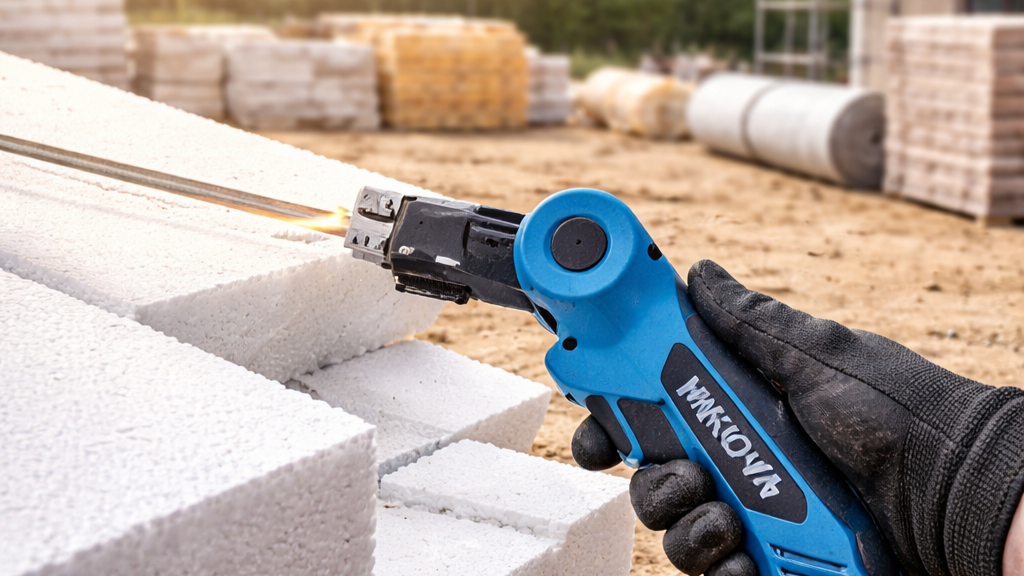
Did you buy a heat gun, but your cuts come out crooked, the Styrofoam melts, or the wire keeps breaking? Don’t worry—most beginners make the same mistakes, and fixing them is easier than you think. The most common mistakes when using a hot knife usually stem from a lack of knowledge of the basics, not from equipment defects. Too high a temperature, moving the knife too fast, or not stabilizing the material—these are problems that can be solved in a few minutes. In this guide, we’ll show you what usually goes wrong and how to fix it!
The most common errors and their causes:
- Curved cuts – moving the knife too quickly or working with unstable material.
- Excessive melting – the temperature is too high or the work is proceeding too slowly.
- Edge Tearing – The temperature is too low; the blade doesn't melt the material, it just tears it.
- A wire that snaps – a worn-out heating element or excessive voltage.
- Drop in temperature – a weak power supply or the tool overheating.
How can you avoid mistakes when working with a heat gun?
Let's start with the basics – professional thermal knife for polystyrene foam This tool is easy to use, but it requires an understanding of a few rules. Most problems stem from a single source: Operators treat it like an ordinary knife and try to cut with brute force. Meanwhile, here Temperature does all the work – Just guide the blade smoothly, and the material will part on its own. Once you start applying pressure and speeding up, that’s when the trouble begins.
The second common mistake is failing to prepare the workstation. The Styrofoam must lie securely on a flat surface. If it wobbles, shifts, or sags—even the best knife won’t make a straight cut. It’s also important to ensure good lighting and a comfortable body position. Working in an uncomfortable position leads to shaky hands and uneven movements, which are immediately visible along the edge of the material.
Uneven Cuts in Styrofoam – Causes and Solutions
Crooked, wavy cut lines are probably the most common problem for beginners. There may be several reasons for this, but Most often, the pace of work is to blame. If you move the knife too quickly, the blade can’t keep up with the melting material and starts to tear it. On the other hand, an uneven pace—sometimes faster, sometimes slower—leaves distinctive waves along the edge. Try to maintain a constant speed throughout the entire cut.
The most common causes of uneven cuts:
- Variable speed – accelerating and decelerating during cutting.
- Shaking hands – an uncomfortable position or fatigue.
- Moving material – The Styrofoam shifts during operation.
- Used wire – Uneven heating causes ripples.
- Temperature too low – The blade cuts through instead of melting.
The solution is simple: Slow down, stabilize the material, and check the temperature. With the right settings, the knife should cut through the Styrofoam with almost no resistance, leaving a smooth, slightly shiny edge. If you feel resistance, something is wrong.
The Effect of Material Type on the Cutting Performance of a Thermal Knife
Not all Styrofoam cuts the same way—and that’s another mistake beginners make. They set the temperature once and try to cut everything the same way. Meanwhile, Standard-density white EPS requires completely different specifications than hard XPS Styrodur. Minova 7Y 250W Thermal Knife It has three temperature settings specifically to adjust the power to the material.
Graphite Styrofoam is denser than regular white Styrofoam and requires a higher temperature and a slower cutting speed. XPS (Styrodur) is an even harder material—here, you need to set the highest temperature and guide the knife slowly and evenly. Soft foams like EPE or EVA require the opposite approach—a low temperature and a faster cutting speed to avoid melting too much of the material. Before cutting new material, always do a test cut on a scrap piece.
Styrofoam Melting – The Most Common Causes
Gaps that are too wide, blackened edges, and distortions around the cut line—these are all signs of excessive melting. The reason is simple: too much heat relative to the speed Cutting. Either the temperature is too high, or you're moving the knife too slowly. The Most Common Mistakes When Cutting Styrofoam That's exactly what this is about—operators are afraid they won't be able to cut through the material, so they set the power to the maximum.
How to recognize excessive melting:
- Wide gap – The cut should be narrow, almost invisible.
- Blackened Edges – The material burns instead of melting cleanly.
- Dents – Styrofoam shrinks around the cut line.
- A lot of fumes – At the correct vapor temperature, it is at a minimum.
Solution: Lower the temperature by one degree and increase the speed slightly. A proper cut leaves a smooth, slightly glassy edge with no discoloration. If you see blackening, it's definitely too hot.
Technical issues with the Styrofoam cutting tool
Sometimes the problem isn't with the technique, but with the equipment itself. A heat knife is a simple device, but it has a few parts that wear out. Heating wire loses its properties over time – darkening in areas of highest stress. The power supply may lose power, especially after prolonged use. Electrical connections may become loose. It’s a good idea to check the tool’s condition regularly.
Replacing the Heating Wire
Wire for Styrofoam It’s a consumable part—it doesn’t last forever and needs to be replaced. How can you tell when it’s time for a new one? If the wire heats up unevenly (you can see lighter and darker spots), has visible discoloration, or frequently breaks in the same place— Replacement is necessary. We've been operating on the Polish market for years, and we know that replacing the wire regularly is essential for a high-quality cut. A new wire costs just a few zlotys, and the quality of the work improves immediately.
When to Replace the Wire—Warning Signs:
- Uneven lighting – lighter and darker shades.
- Visible narrowings – The wire is thinner in some places.
- Frequent cracking – especially always at the same spot.
- Discoloration – white or dark spots on the wire.
- Deteriorated cut quality – even though the settings are correct.
Top rated products
-
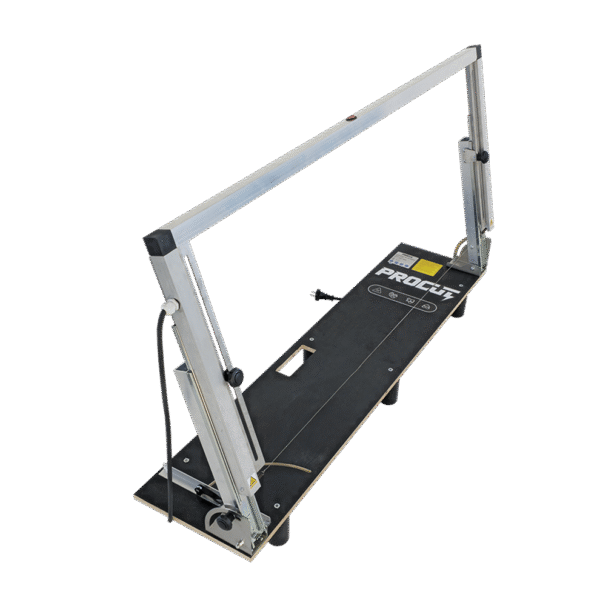
Procut Base 108cm 200W polystyrene cutter
€ 192,00 -
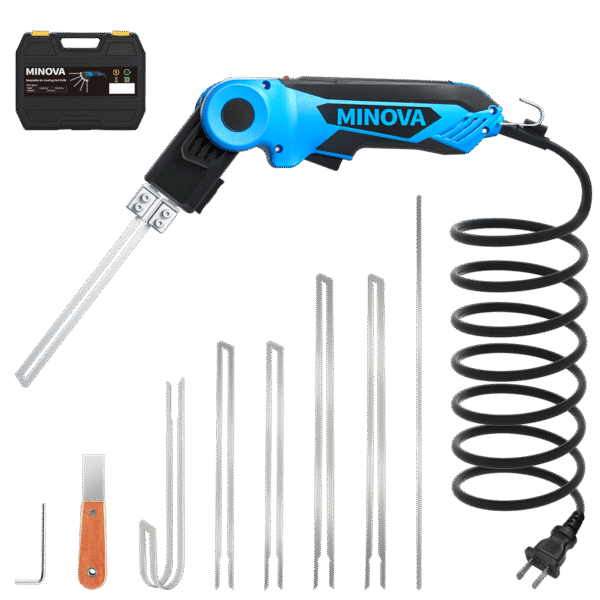
Minova 30Y 250W Thermal Knife with 6 Blades and Air Cooling
Original price was: € 216,00.€ 192,00Current price is: € 192,00. -
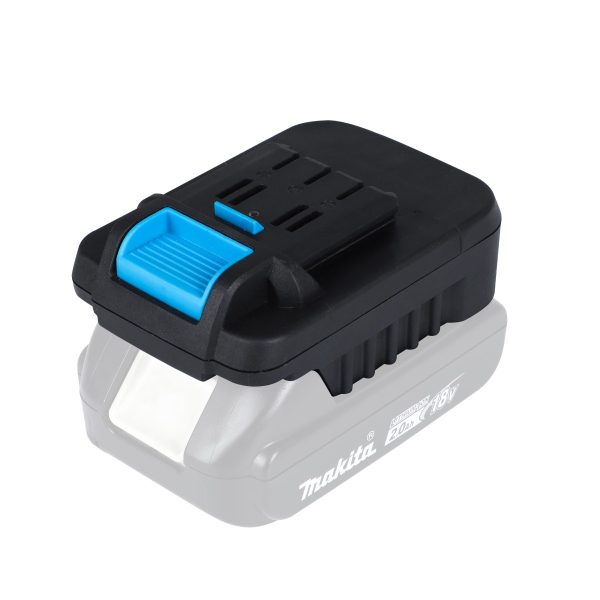
Minova → Makita 18V adapter
Original price was: € 29,00.€ 24,00Current price is: € 24,00. -
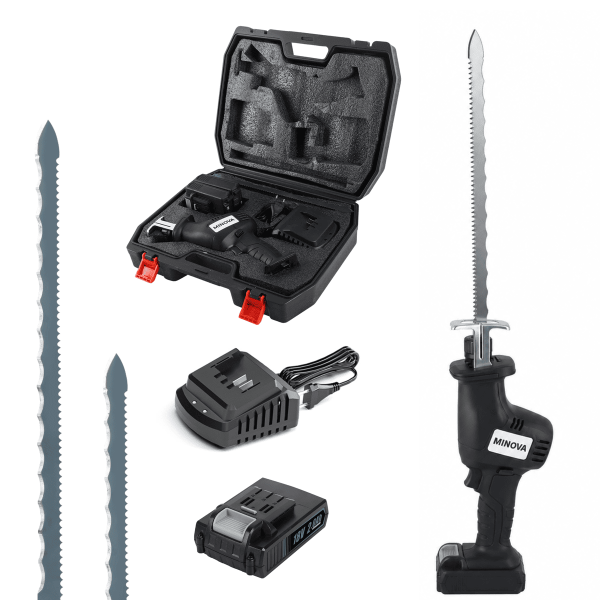
Cordless cutter for mineral wool, PIR and foams MINOVA W01
Original price was: € 209,00.€ 168,00Current price is: € 168,00. -
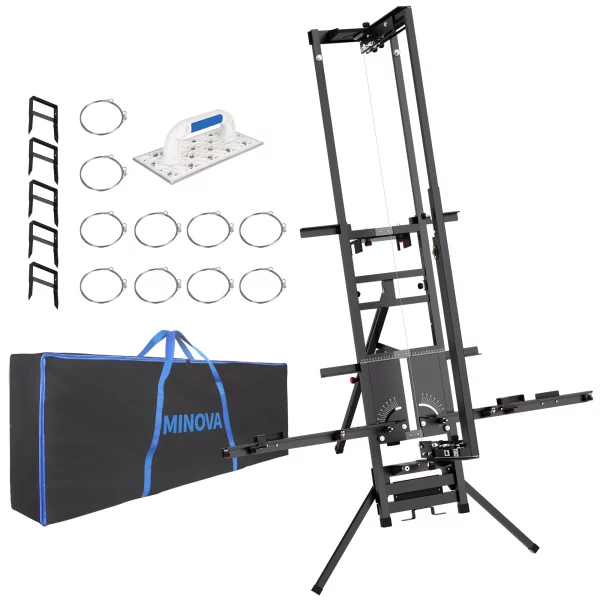
Professional guillotine cutter for cutting styrofoam styrodur Minova ELITE S30 260W
€ 888,00
Selecting the Right Settings and Tools for Styrofoam
There is no single universal temperature that applies to all materials and thicknesses. Thin EPS boards up to 5 cm can be cut at medium power at a fairly fast pace. Thick blocks over 10 cm require a higher temperature and slow, even cutting. Hard XPS requires maximum power and an even slower cutting speed than EPS of the same thickness.
The key is to experiment with scrap material before starting the actual work. Every material behaves a little differently, and every tool has its own characteristics. After a few tries, you’ll find the optimal settings for your knife and the specific material. Memorize them or write them down—that way, the next time you work on a project with the same Styrofoam, you’ll save time on testing. At our store Pro-cut You'll find knives with temperature control, which make it easier to adjust the settings for different tasks.
FAQ – Frequently Asked Questions About the Most Common Mistakes When Using a Heat Knife
Why does the heat gun tear the edges of the Styrofoam instead of melting them?
The temperature is too low—the blade is tearing the material instead of melting it smoothly. Increase the temperature by one degree and slow down the cutting speed.
What causes the wire to bend into an arc during cutting?
Too much pressure on the tool. With thermal cutting, there’s no need to press down—just guide the blade gently, and the heat will do the work.
Why does Styrofoam turn black and get dirty when a knife is run across it?
If the temperature is too high, it will burn the material. Reduce the power and increase the cutting speed until the edge is smooth and free of discoloration.
How can you prevent the resistance wire from breaking halfway through the job?
Replace worn wire regularly and do not tighten it too much. Wire with visible discoloration or constrictions must be replaced immediately.
Why does a knife lose heat during prolonged cutting?
The power supply is overheating or doesn't have enough power. Take short breaks every few minutes, or consider a more powerful model with active cooling.