














Guide
Wire thermal knife - is it a good choice?

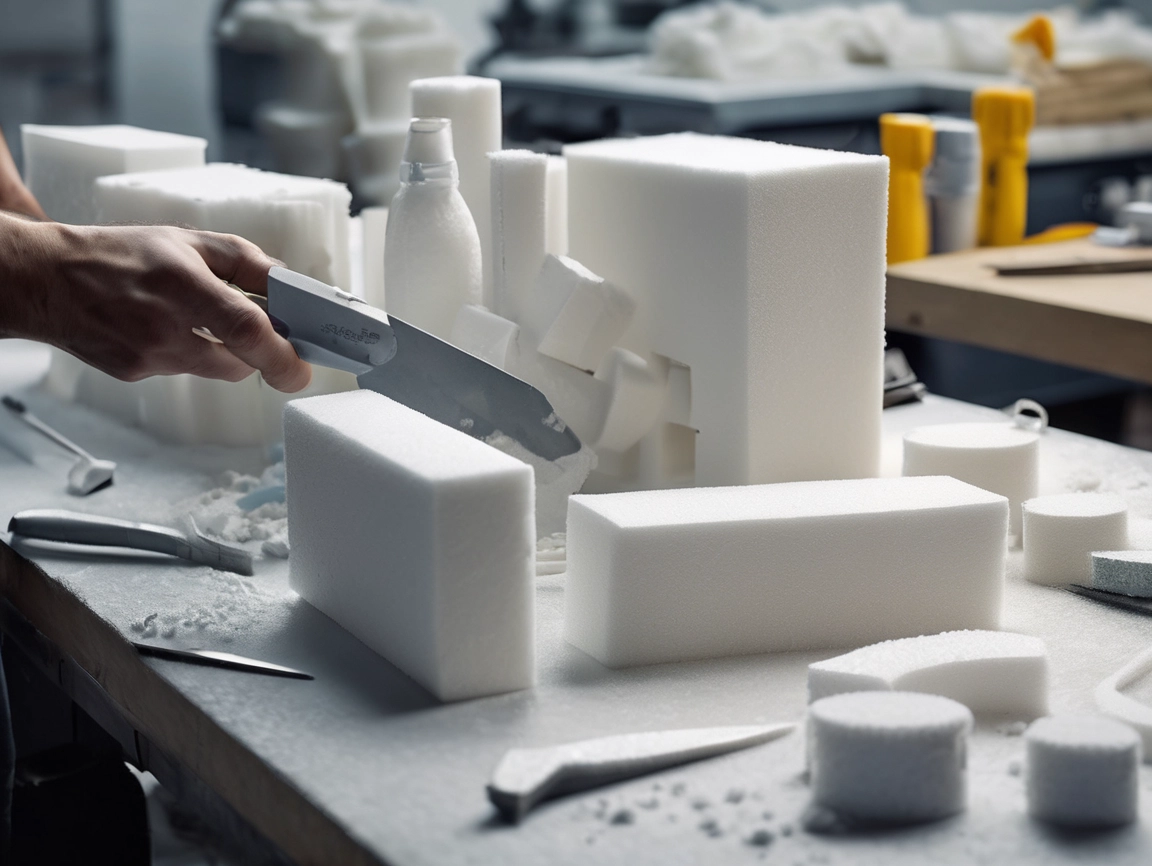
Imagine a tool that combines the portability of a heat knife with the precision of a table saw. A wire thermal cutter is exactly that—a compact device that lets you create complex shapes and details you can’t achieve with a standard flat blade. Is this the right choice for your projects? Find out how this technology works, what possibilities it offers, and when it’s worth using!
How is a wire knife different from a regular thermal knife?
The main difference lies in the cutting element. Standard thermal cutter It uses a flat metal blade that heats up and melts the material. A wire knife, instead of a blade, has a taut loop or a section of resistance wire that works on a similar principle to a table-top cutter, only in a miniature, portable form. The result is surprisingly different—the wire allows for much greater freedom of movement and the ability to create curves.
The second important aspect is precision. A flat blade has a specific width, which limits the minimum turning radius. Thin wire allows for much sharper curves and more complex shapes.
W Pro-Cut We understand these differences and tailor our solutions to the nature of the work being performed.
How does it work? Wire vs. flat blade
The mechanism of operation is based on the same principle of converting electrical energy into heat. However, the way the heat interacts with the material is different. A flat blade has a larger contact surface, which means more heat is transferred at once, but with less precision. A wire has a minimal contact surface, which allows for precise control over the melting point.
Wire-equipped thermal knives are particularly well-suited for:
- Shape Cuts – arcs, spirals, and waves with no radius restrictions
- Cutting holes – round or irregular holes inside the material
- Sculpting – creating three-dimensional forms and details
- Engraving – drawing thin lines and text
- Edge chamfering – gentle curves and contours
A flat blade works better for straight cuts and larger surfaces, where speed is more important than precision.
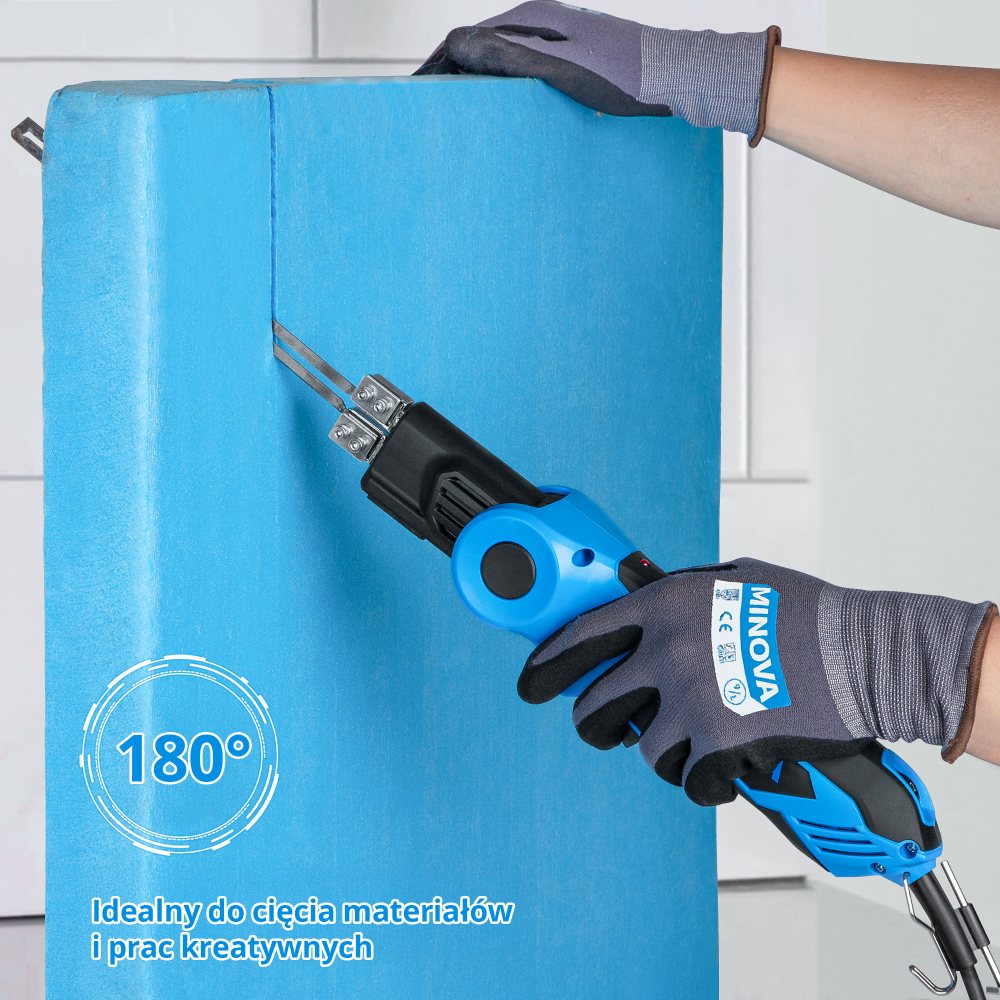
Resistance Wire in a Hand Knife – Design
The design of a wire cutter is simpler than it might seem. At its base is a handle with a power supply that delivers current with the appropriate specifications. At the end of the handle, there are two mounting points between which the resistance wire is stretched. The tensioning system must ensure the correct tension—a wire that is too loose will bend during cutting, while one that is too tight may snap.
The length of the wire in hand knives is usually 10–20 cm, which provides sufficient freedom of movement while maintaining control. The wire thickness is usually 0.3–0.5 mm – thinner than in table saws, which allows for even more precise details. The power supply must be powerful enough to heat the wire to its operating temperature, but not as powerful as in large cutters.
Top rated products
-
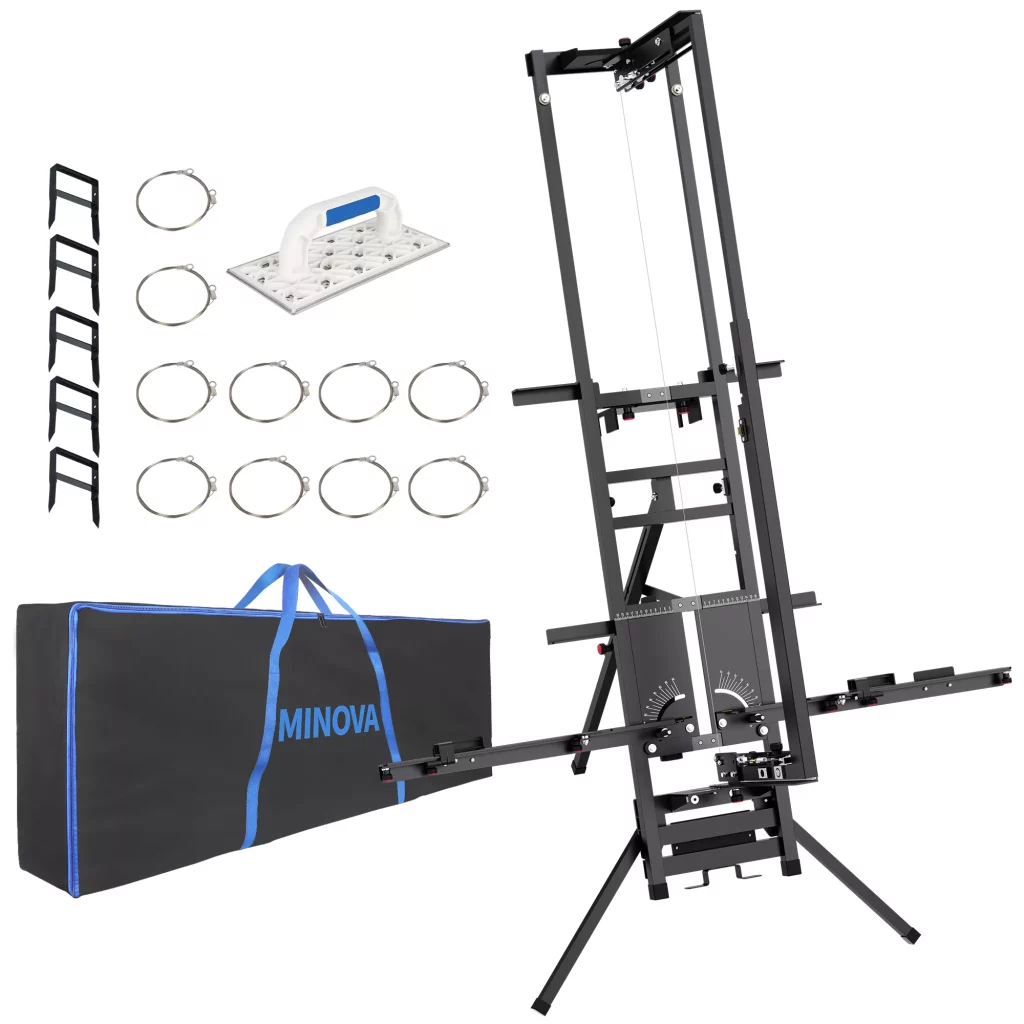
Professional guillotine cutter for cutting styrofoam styrodur Minova ELITE S30 260W
€ 888,00 -
Professional mechanical wool and insulation cutter Minova W101 (18V)
Original price was: € 1.920,00.€ 1.752,00Current price is: € 1.752,00. -
Cutting machine table guillotine for cutting styrofoam styrodur Minova CLASSIC 260W
Original price was: € 312,00.€ 300,00Current price is: € 300,00. -
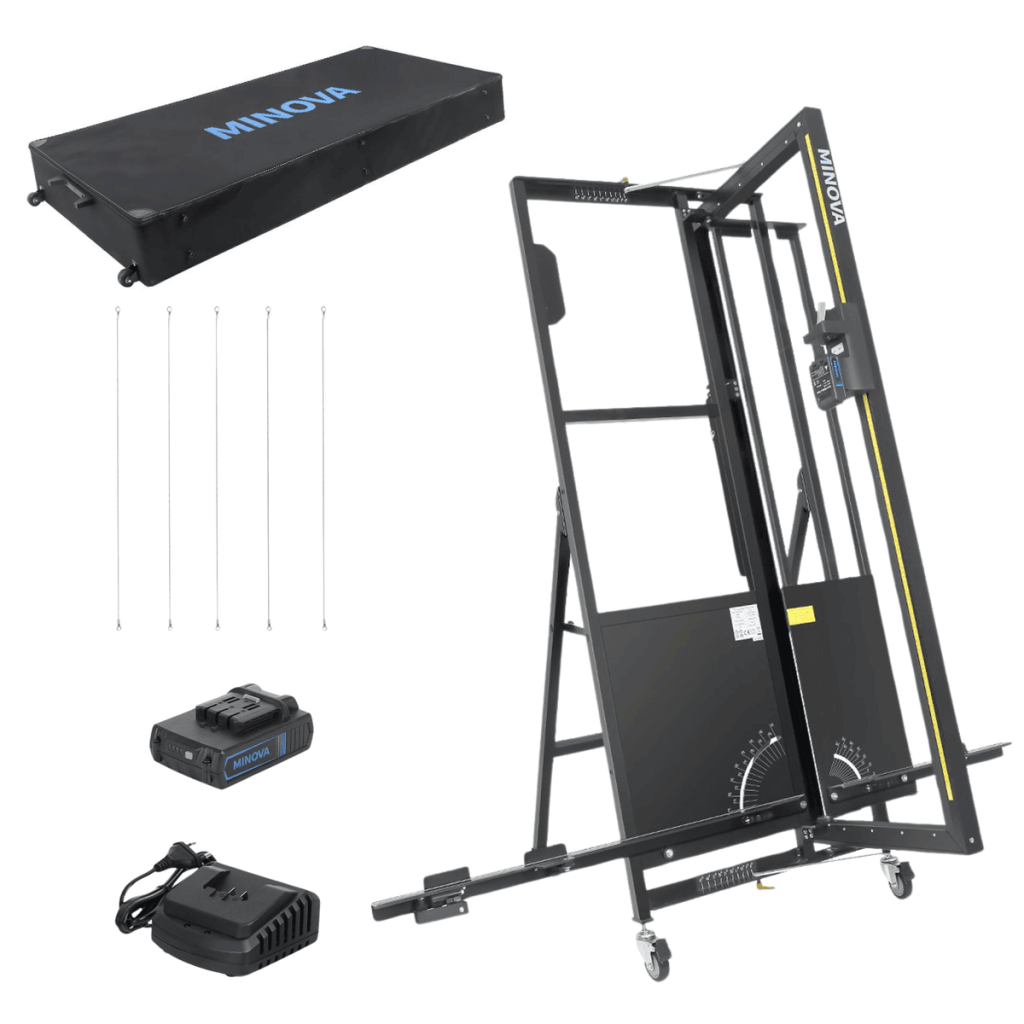
Styrofoam guillotine cutter Minova Pro 260W (Network + Battery)
Price range: € 479,76 through € 512,38 -
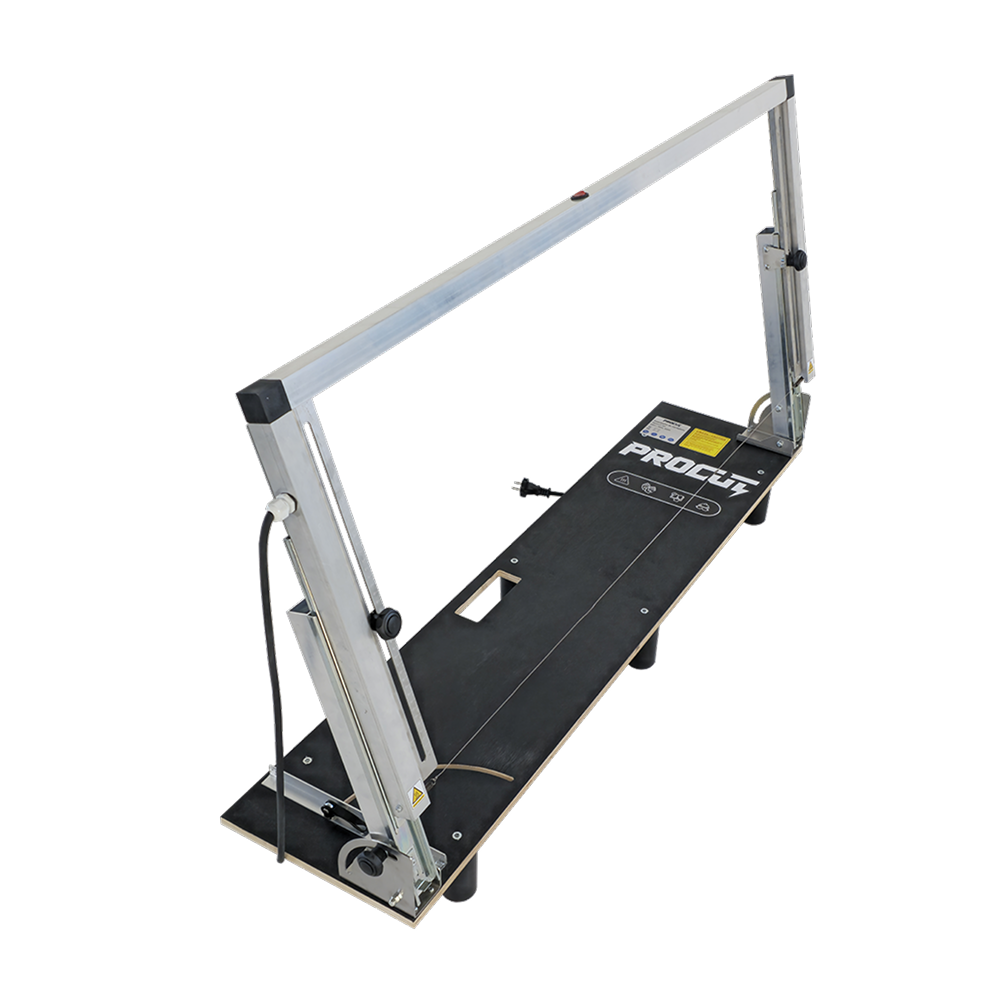
Procut Base 108cm 200W polystyrene cutter
€ 192,00

Cutting out details and precise shapes—which method works best?
When it comes to work that requires precision and creativity, the wire knife is second to none. Various cutting, shaping, and carving techniques (you can read more about them here: https://pro-cut.pl/sprzet-do-ciecia-styropianu-ciecie-formowanie-i-rzezbienie-styropianu) open up a wide range of creative possibilities. Thin resistance wire It allows you to create details that simply cannot be made with a standard blade.
When cutting out letters, logos, or decorative elements, the ability to guide the tool along any curve without restrictions is crucial. The wire follows the movement of your hand precisely, allowing you to bring even the most complex projects to life. Architectural models, event decorations, advertising elements—you can create all of these yourself without having to outsource the work.
What is the optimal temperature for a wire cutter?
The temperature in a wire cutter must be adjusted not only to the type of material, but also to its thickness and the pace of work. Thin wire heats up and cools down faster than a solid blade, which requires more precise control. Temperature adjustment allows you to tailor the settings to a specific task.
For standard EPS polystyrene, the optimal temperature is 280–320°C. Styrodur XPS requires 340–380°C. For delicate sculpting work, it’s best to set the temperature closer to the lower limit—this provides better control and reduces the risk of accidental melting. For fast cuts, you can raise the temperature for greater efficiency. It’s best to experiment on scrap material before starting your actual project.
Which knife should you choose for decorative projects?
For decorative work, precision and the ability to work for long periods without getting tired are the most important factors. The knife should be lightweight, well-balanced, and have an ergonomic handle. A wire length of 10–15 cm offers the optimal balance between freedom of movement and control. Temperature control is essential, as different materials and techniques require different settings.
Additional features useful for decorative work include fast heating (less than 10 seconds) and stable temperature during prolonged use. For projects lasting several hours, it is important that the tool does not overheat or change its settings. Interchangeable needles are also a plus – The ability to quickly replace the wire when it wears out or breaks allows you to continue working without long downtimes.
Applications – advertising, models, hobbies
The advertising industry makes extensive use of wire-cut machines to produce three-dimensional letters, 3D logos, and exhibition booth components. The ability to quickly produce a prototype or a small batch of components without having to outsource production saves a tremendous amount of time and money. For more practical applications, see our handbook.
Modelers and diorama builders appreciate the precision that thin wire provides. Buildings, landscapes, vehicles—all these elements require a level of detail that you simply can’t achieve with a thick blade. The ability to cut out windows, doors, and architectural details with millimeter precision gives models a professional look.
Hobbyists find the wire knife to be a tool for bringing their creative projects to life. Sculptures, holiday decorations, costume pieces, props for board games—the list of uses is practically endless. The low cost of both the tool and the material means you can experiment without worrying about the expense.
Safety – What Do You Need to Know Before Use?
Working with a hot wire requires an awareness of the risks and adherence to basic safety rules. A wire heated to 300–400°C causes immediate burns upon contact. Security Work is a topic that should not be taken lightly.
Basic Rules for Workplace Safety:
- Never touch the wire while in operation and for one minute after the power is turned off
- Work in a well-ventilated room – Styrofoam fumes may irritate the respiratory tract
- Secure the workstation – The power cord must not be in the cutting area
- Use the right lighting – Good visibility reduces the risk of errors
- Keep children and pets away – A hot wire is invisible, but very hot
An additional risk is the possibility that the wire could break during operation. A hot, live wire can bounce off in an unpredictable direction. That’s why it’s a good idea to wear safety goggles, especially during intensive work. Heat-resistant gloves are not necessary if you maintain a safe distance from the wire, but they can increase your sense of safety.
A thermal knife with a blade—why is it worth having one?
In addition to the wire knife, you can choose a knife with a blade. How does it differ, and what are its main advantages?
Mobility is its first major advantage. Unlike table saws You can take the knife anywhere and use it right at the assembly or installation site. There’s no need to set up a special workstation—all you need is access to an electrical outlet. Minova knife The product we offer combines a lightweight design with professional performance.
Versatility is the second key advantage. A single tool allows you to make simple cuts, create complex shapes, cut holes, and carve details. You don’t need separate tools for every type of job. Plus, the cost of purchasing a knife is significantly lower than that of a table saw, making it affordable for hobbyists and small workshops.
Benefits of using a thermal knife:
- Low operating costs – Replacing the wire is inexpensive and easy
- Low barrier to entry – Easy to use; no extensive training required
- Compact dimensions – it doesn't take up much space
- Versatility of Applications – from simple cuts to advanced carving
- Quick Start – heats up in seconds, with no lengthy preparation required
FAQ – Frequently Asked Questions About the Wire Knife
Which knife is better? A knife with a wire or one with a blade?
A wire-edged knife is better for precise shapes, curves, and details, while a flat blade works well for straight cuts and larger surfaces.
What's the best tool to use for cutting Styrofoam when sculpting?
When carving, the best tool is a knife with a thin support wire, which allows you to create intricate shapes and details with maximum precision.
What kind of Styrofoam knife is best for a hobbyist?
For hobbyists, a lightweight knife with a 100–150W heating element and basic temperature control will suffice; it’s suitable for most projects and comes at an affordable price.
What's the best tool for cutting shapes out of Styrofoam?
A wire-cut thermal knife is best for cutting out shapes, as it combines flexibility with precision and allows you to create both simple and complex shapes.