












Guide
Uneven Wire Heating – Troubleshooting


The wire glows unevenly, and the Styrofoam is cut differently at the beginning than at the end. One spot burns through the material, while another barely melts it. Uneven heating of the wire is a problem that compromises cut quality and poses a risk of burning through the material. How can you recognize the signs of a malfunction, and which causes are easiest to fix, while others require replacing parts?.
Key information about uneven heating:
- Uneven heating is evident in the varying colors of the wire's glow—light and dark areas visible to the naked eye.
- The most common cause is poor electrical contact at the terminals or oxidized mounting points.
- Worn wire with localized thin spots heats up unevenly even with an ideal power supply.
- The problem may lie with the power supply—an unstable output voltage causes temperature fluctuations.
How can you tell if the wire is heating unevenly?
The easiest way to see this is with the naked eye. Turn on the power and wait until the wire reaches operating temperature. Working resistance wire for cutting Styrofoam It glows evenly along its entire length in an orange-red hue. Keep in mind that, by default, the glow should only be visible in the dark. Uneven heating results in distinct light and dark areas – Areas that glow intensely white or yellow are overheated; darker or nearly non-glowing areas are too cool.
The second method is the cutting test. Pull the material through the wire at a constant speed. If the Styrofoam melts smoothly in some places but gets stuck or forms a rough edge in others, the problem is evident. Local overheating manifests as excessive melting and by widening the cutting groove, insufficient heating results in incomplete melting.
Characteristic symptoms of uneven heating:
- Different light colors – light and dark areas visible when the wire is in operation.
- Uneven cutting width – In some places, the groove is wider; in others, it is narrower.
- Uncut footage – Areas that aren't heated enough need to be re-treated.
- Descending smoke variables – more intense melting in overheated areas.
- Variable cutting speed – the material accumulates on the colder parts of the wire.
- Black streaks along the edge – overheating and burning of the polymer.
The most common causes of the problem
There may be several causes, and they often occur simultaneously. The first is poor electrical contact – oxidized terminals, loose mounting screws, or wires with damaged conductors. The current encounters resistance at the point of poor contact and causes the terminal to heat up locally instead of the wire. The second cause is wire for Styrofoam with variations in thickness—sections with a smaller diameter have higher resistance and heat up more intensely. After many hours of operation, the wire loses its uniform thickness; the thinner sections have higher resistance and heat up more—this is a self-perpetuating degradation process.
Electrical Causes
Electrical problems can be more difficult to diagnose. A power supply may deliver an unstable voltage due to component degradation. Wires may have a broken conductor even if the insulation is intact—they look fine on the outside, but they only conduct electricity partially.
Power Supply and Cables
Check the power supply’s output voltage with a multimeter. Measure it both with and without a load. If the difference exceeds 10%, the power supply is having trouble maintaining stable parameters. You can check the power cables by measuring their resistance—for a 1.5 mm² cable 2 meters long, the resistance should be less than 0.03 Ω.
Electrical causes of uneven heating:
- Unstable power supply – The voltage drops by more than 10% under load.
- Damaged wires – a broken core despite undamaged insulation.
- Oxidized terminals – Oxide layers increase contact resistance.
- Loose screws – The wire is not making full contact with the terminal.
- Blown internal fuse – The power supply is working, but at reduced power.
Mechanical causes
Mechanical causes are easier to diagnose—a visual inspection is sufficient. Wire with visible discoloration or areas of altered structure will not heat up evenly. Terminals showing signs of corrosion or traces of overheating are also a problem. Uneven tension in the wire affects how it heats up—a section under greater tension has a slightly altered structure, which affects its resistance. Check the tension at both ends; it should be identical.
Mechanical causes of uneven heating:
- Wire Shading – localized reduction in diameter after prolonged operation.
- Stains and film – A layer of oxides or impurities changes the conductivity.
- Mechanical damage – bends, twists, or tears in the structure.
- Uneven voltage – one side is more taut than the other.
- Corroded terminals – Rust at the mounting points increases contact resistance.
- The Wrong Wire – a diameter or alloy that is not suitable for the power supply's output.
How can I restore even heating?
Troubleshooting starts with the basics. Clean the terminals with sandpaper—remove any oxides and contaminants. Tighten the mounting screws to ensure a secure connection. Visually inspect the wires and move them while the power supply is on—if the wire’s glow changes, the core is broken. If the problem persists, replace the wire. When installing a new one, make sure it is properly tensioned.
Diagnostic and corrective steps:
- Clean the terminals – Remove the oxides with sandpaper or a brush.
- Tighten the fasteners – Make sure the wire is making full contact with the terminal.
- Check the wires – Move them while they're running and watch how the wire's glow changes.
- Measure the voltage – with a multimeter under load and without.
- Replace the wire – if it has visible shading or discoloration.
- Test the power supply – Check whether the voltage remains stable during extended operation.
You can find out more about cutting problems in the article – Uneven Cutting of Styrofoam.
When is uneven heating dangerous?
Localized overheating of the wire above 500–600°C causes permanent changes in the structure of the NiCr alloy. The material becomes brittle and breaks easily. The overheated area glows white or light yellow—this indicates a temperature significantly exceeding the operating range. In this condition, the wire could snap at any moment. An overheated power supply under overload can blow the fuses or damage the transformer. A loose connection at the terminals causes sparks and scorches the metal. If you see sparks or hear crackling noises, turn off the device immediately.
When is it necessary to replace the wire or the power supply?
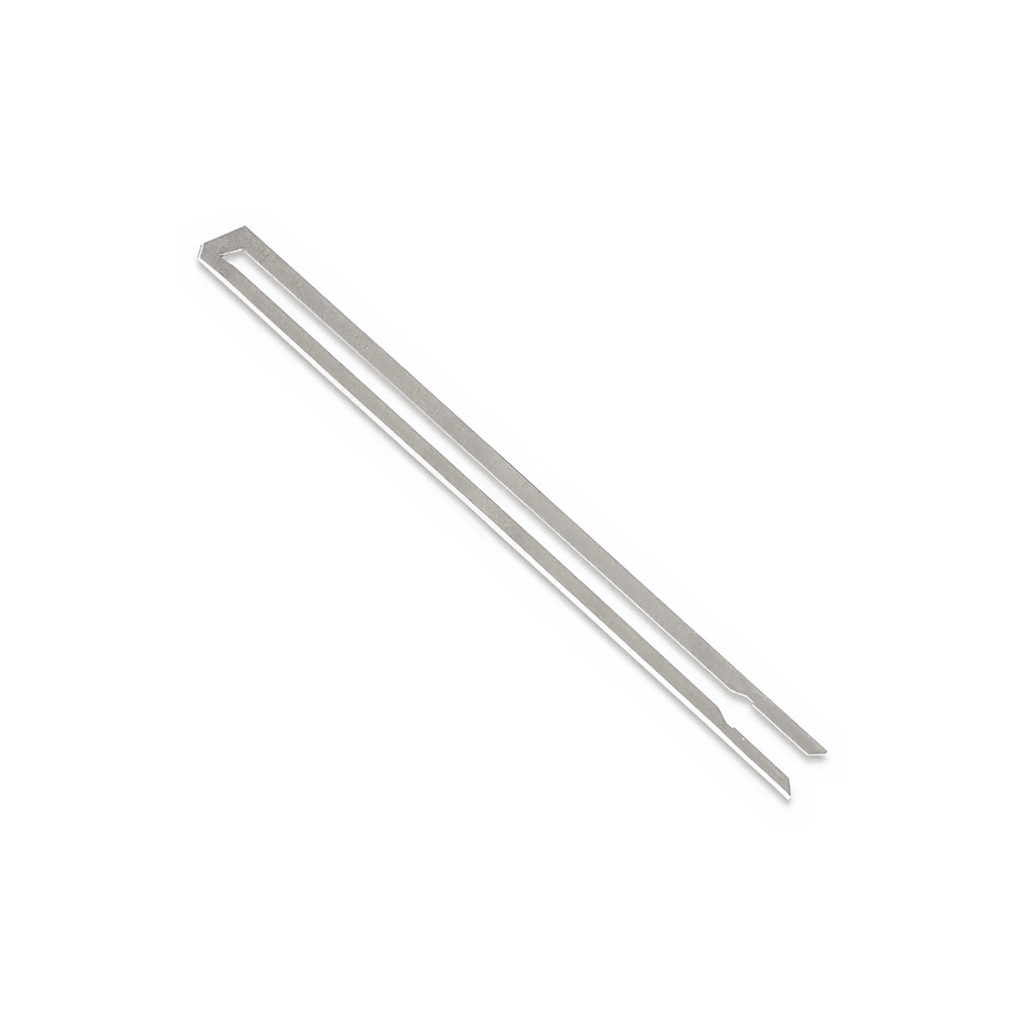
Replace the wire if it shows visible discoloration, staining, or repeatedly breaks in the same spot. Do not shorten or reassemble – This changes the total resistance. Our wire cutters are equipped with systems that ensure stable wire heating; replacement wires and power supplies are also available in our product lineup at Pro-cut.
FAQ – Frequently Asked Questions About Wire Heating
Does the problem always mean the wire is worn out?
Not always—the problem is often caused by poor contact at the terminals or an unstable power supply, so it’s a good idea to start troubleshooting by cleaning the terminals and checking the wires before replacing the wire.
How do I test a power supply?
Use a multimeter to measure the output voltage both with and without a load—if the difference exceeds 10% or the voltage fluctuates during operation, the power supply needs to be replaced or repaired.
Does the length of the wire matter?
Yes, length affects total resistance—a longer wire requires a higher voltage or a more powerful power supply to reach the same operating temperature as a shorter one.
Is it possible to work even if the heating is uneven?
We do not recommend this—uneven heating reduces cut quality, increases the risk of wire breakage, and may damage the power supply by causing it to operate under overload. It is better to fix the problem before continuing work.