
















Guide
Cleaning Styrofoam residue from the support wire

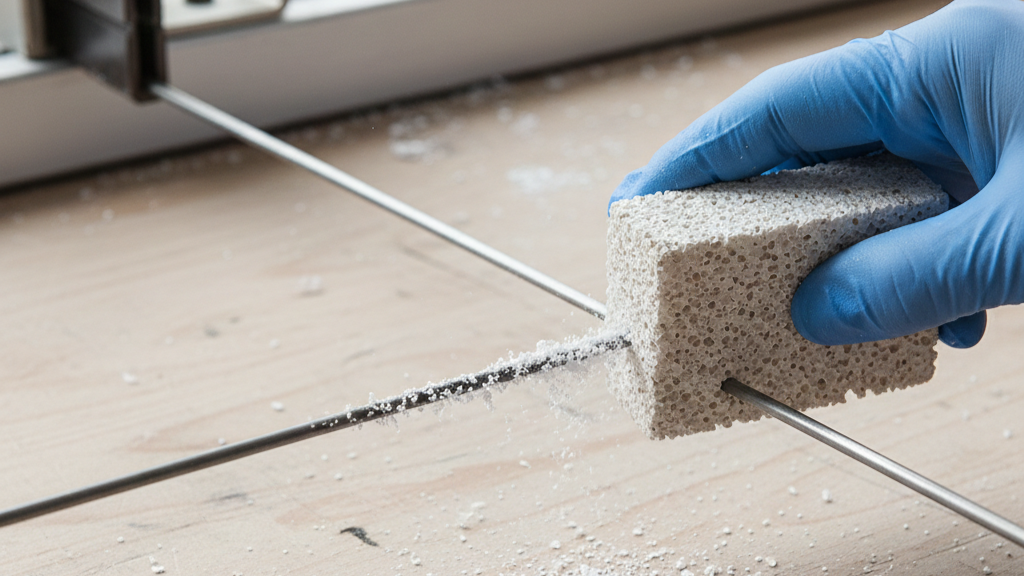
A wire that gets clogged is the bane of anyone who cuts Styrofoam regularly. Melted beads, hardened residue, and black stains on the wire—all of these are the result of neglecting maintenance. Cleaning the resistance wire may seem mundane, but the quality of the cut, the wire’s lifespan, and workplace safety all depend on it. How can you effectively remove polystyrene residue without damaging the wire? When should you clean it—while hot or cold? And why do some methods shorten the service life? wire, instead of Want to make it longer? Find out how to clean the wire the professional way!
Key information about cleaning wire:
- Regular cleaning extends the wire's service life by 30-50% compared to when maintenance is neglected.
- Hot cleaning (300–350°C) removes polystyrene residue without damaging the wire.
- Mechanical grinding is always performed on cold wire using a soft material.
- Scale buildup on the wire reduces heating efficiency and increases the time it takes to reach operating temperature.
- Sandpaper, wire brushes, and sharp tools damage the surface of the wire and shorten its service life.
Why does Styrofoam stick to the wire?
During cutting, the resistance wire operates at a temperature of 250–400°C. Resistance wire for cutting Styrofoam It does not cut the material mechanically—it melts it with heat. The problem is that not all components of Styrofoam melt evenly. Some of it solidifies on the surface of the wire, forming a permanent layer of scorched polymer.
Lower-quality polystyrene contains more impurities and additives that carbonize at high temperatures. Feeding the material through the wire too slowly allows more time for carbon deposits to form. Operating temperature is of critical importance – If it's too low, the metal won't melt completely; if it's too high, it will burn the surface, forming a hard crust.
Factors affecting the deposition of polystyrene:
- Quality of the material – Pure EPS produces less carbon buildup than cheaper recycled waste.
- Cutting temperature – A temperature that is too low or too high increases scaling.
- Cutting speed – Cooking at a slow pace gives you more time to caramelize the leftovers.
- Type of Styrofoam – XPS produces more carbon deposits than standard EPS.
- Material Moisture Content – Wet Styrofoam creates more vaporized residue that settles on the wire.
Methods for Cleaning Resistance Wire
You have two basic methods— thermal and mechanical. Both work, but in different situations. The first involves burning away residues with heat, while the second involves physically removing contaminants. The best results come from a combination of – First, burn off most of the carbon deposits, then gently clean them off mechanically.
Hot Cleaning
Turn on the power supply and wait until NiCr 80/20 wire It will reach its full operating temperature (300–350°C). Keep the wire at full power for 20–30 seconds—most organic contaminants will burn off on their own, producing white or gray smoke.
After firing, turn off the power and wait 10–15 seconds for the wire to cool down to about 100–150°C—warm, but not hot. Take a dry cotton cloth folded into several layers and gently wipe the wire along its entire length. The carbon residue will fall off on its own, and the wire will remain intact.
Advantages of thermal cleaning:
- Safe for the wire – It does not scratch the surface or damage the material's structure.
- Fast and effective – Most of the carbon buildup burns off in 20–30 seconds.
- No tools required – All you need is a power supply and a dry cloth.
- Removes tough stains – The burnt-out residue falls off on its own once it has cooled.
- Extends the service life of the wire – The absence of mechanical abrasion protects the surface.
Mechanical Cleaning
If the carbon buildup is too hard to burn off, you'll need to use a mechanical method. Always on the cold wire! A hot wire can be damaged even by a light touch. Use a soft cotton cloth dampened with isopropyl alcohol—it dissolves polymer residue without scratching the metal.
Gently wipe the wire along its entire length. Don't press too hard – Just apply light pressure. If the grime doesn't come off, dampen the cloth again and repeat. You can try to soften stubborn grime by spraying it with alcohol and waiting 2–3 minutes before wiping it off.
Permitted materials for mechanical cleaning:
- Cotton dishcloths – soft, they do not scratch the surface of the wire.
- Isopropyl alcohol – dissolves polymer residues without damaging the metal.
- Acetone – Stronger than alcohol, but use with caution in a well-ventilated room.
- Microfiber – gentle, but be careful with synthetic fibers, which can melt when they come into contact with a hot wire.
What Should You Avoid Doing When Cleaning?
Sandpaper, wire brushes, and metal scrapers are the worst things you can do to a resistance wire. Every scratch on the surface creates a heat concentration point that accelerates the material's degradation. Wire with a scratched surface loses 30–40% of its service life and it starts to overheat in certain areas. Also, it never Do not scrape off dried-on carbon deposits with sharp tools – It's better to dampen it with alcohol and wait for it to soften.
Complete list of prohibited methods:
- Sandpaper – They scratch the surface and accelerate corrosion.
- Wire brushes – They damage the protective layer and cause scratches.
- Metal scrapers – They can cut through a thin wire or permanently deform it.
- Water and Detergents – they leave a residue and accelerate oxidation.
- Hot Cleaning – A hot wire can easily be damaged even by a soft material.
- Corrosive chemical solvents – They can corrode the metal alloy and weaken the wire.
Top rated products
-
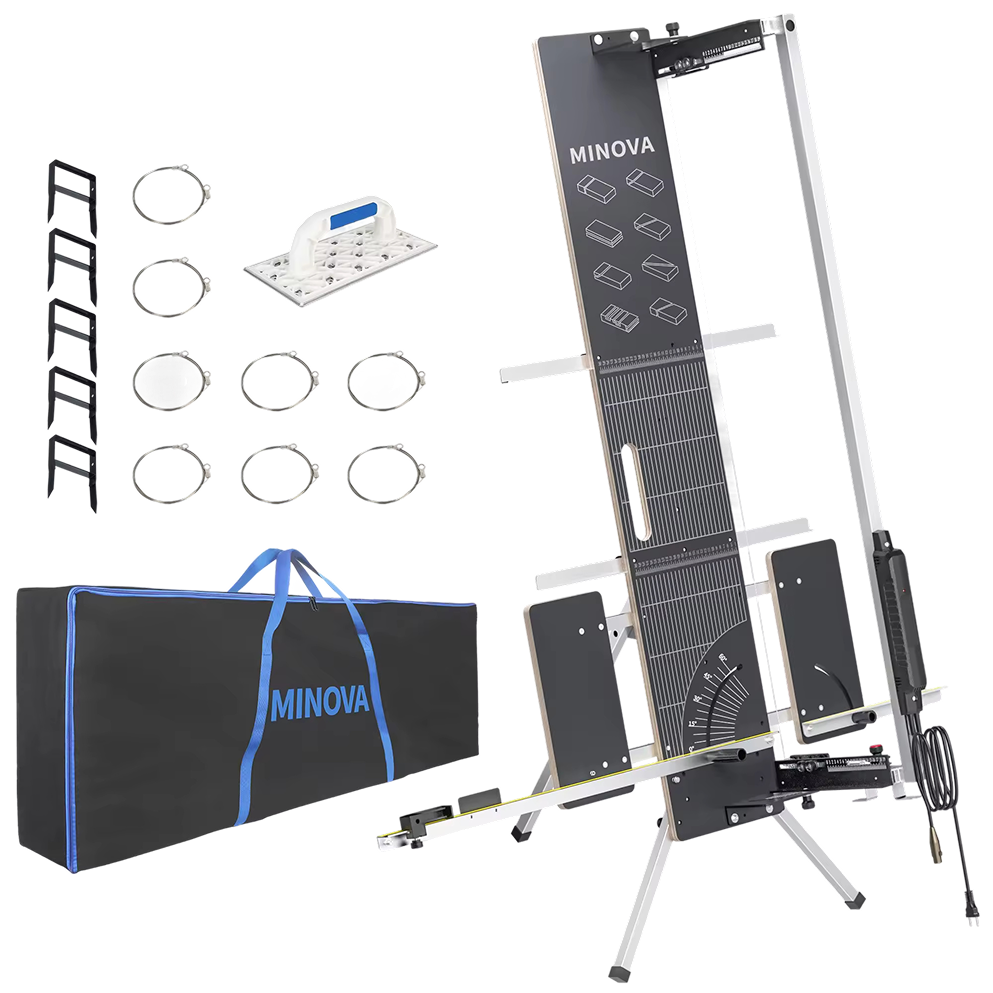
Styrofoam guillotine cutter Minova Pro 260W (Network + Battery)
Price range: € 479,76 through € 512,38 -
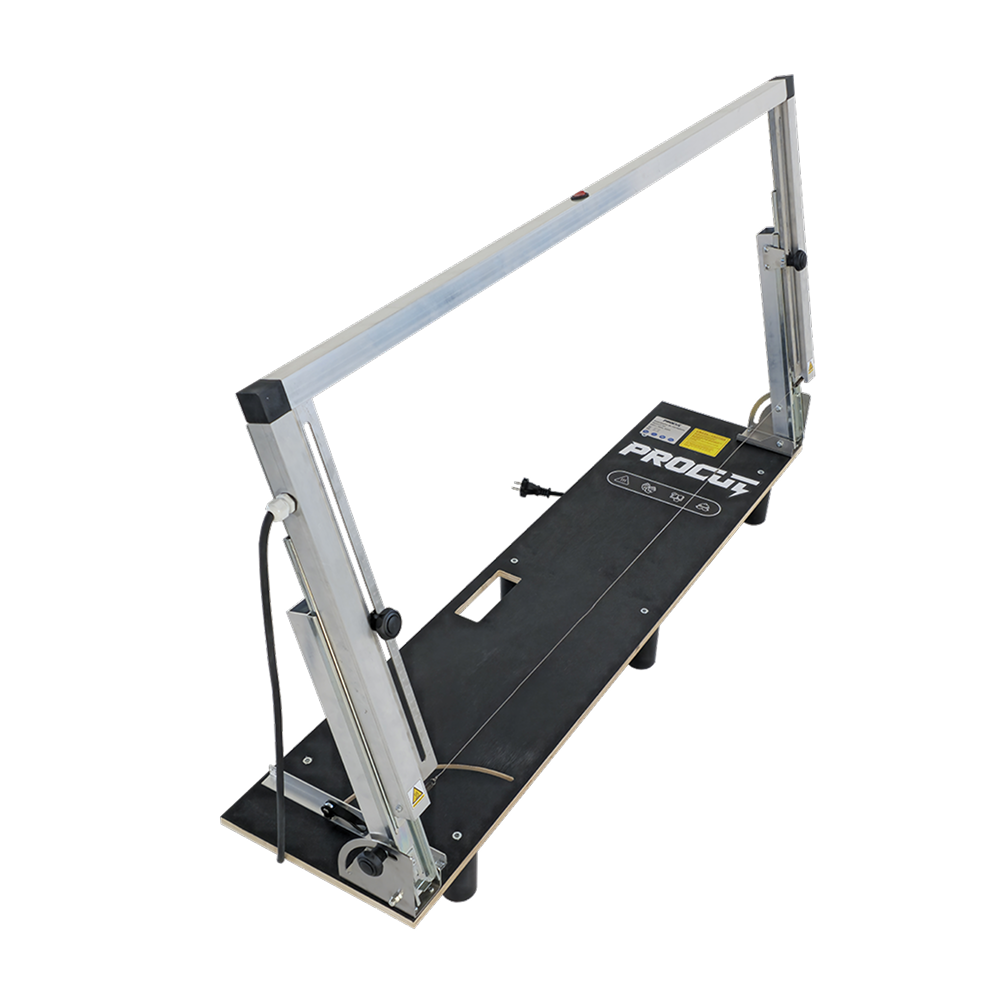
Procut Base 108cm 200W polystyrene cutter
€ 192,00 -
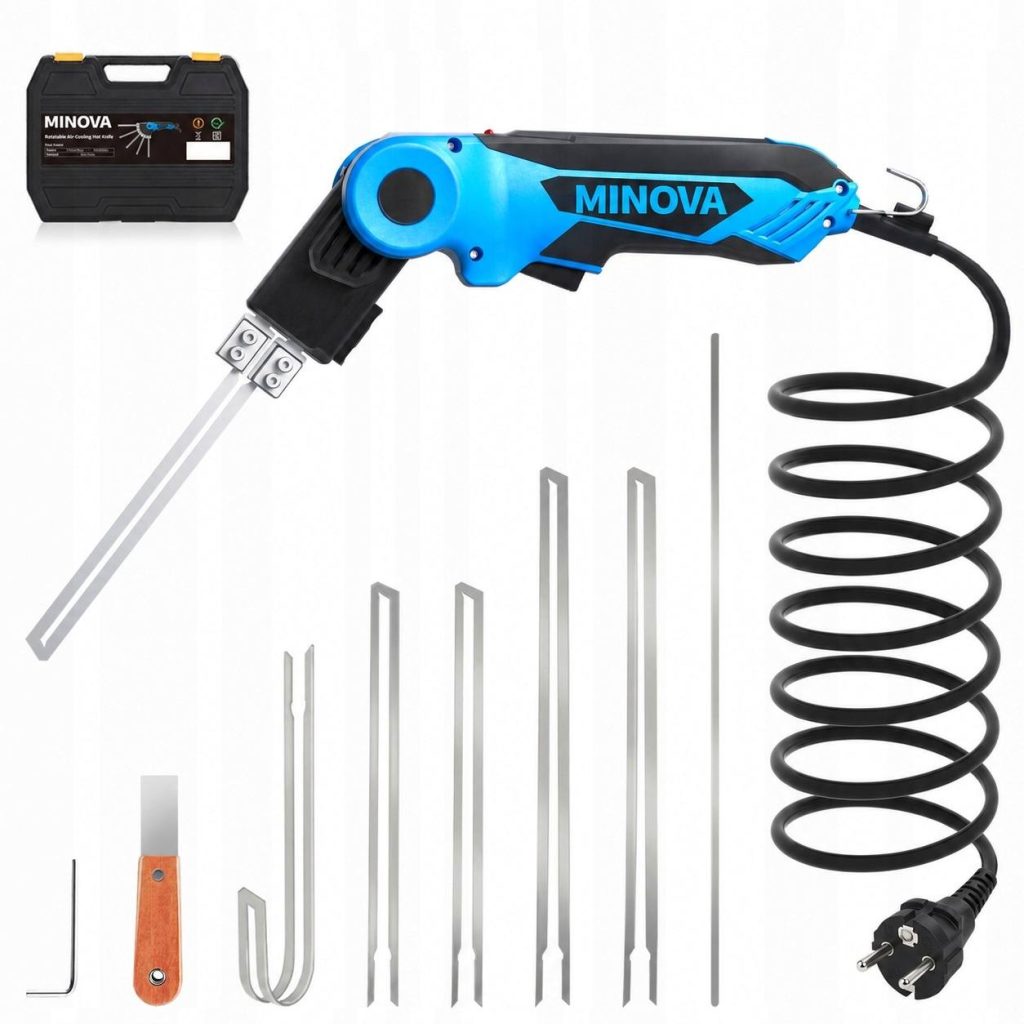
Minova 30Y 250W Thermal Knife with 6 Blades and Air Cooling
Original price was: € 216,00.€ 192,00Current price is: € 192,00. -
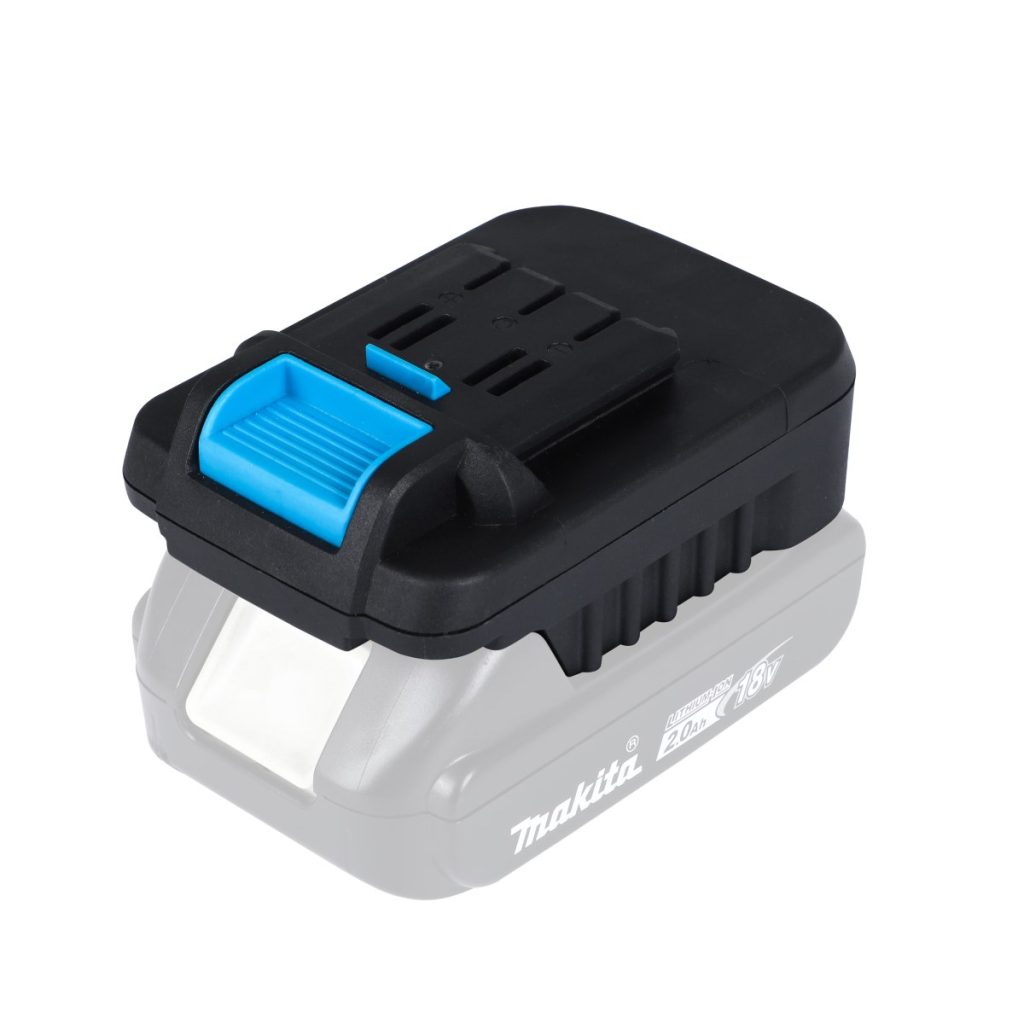
Minova → Makita 18V adapter
Original price was: € 29,00.€ 24,00Current price is: € 24,00. -
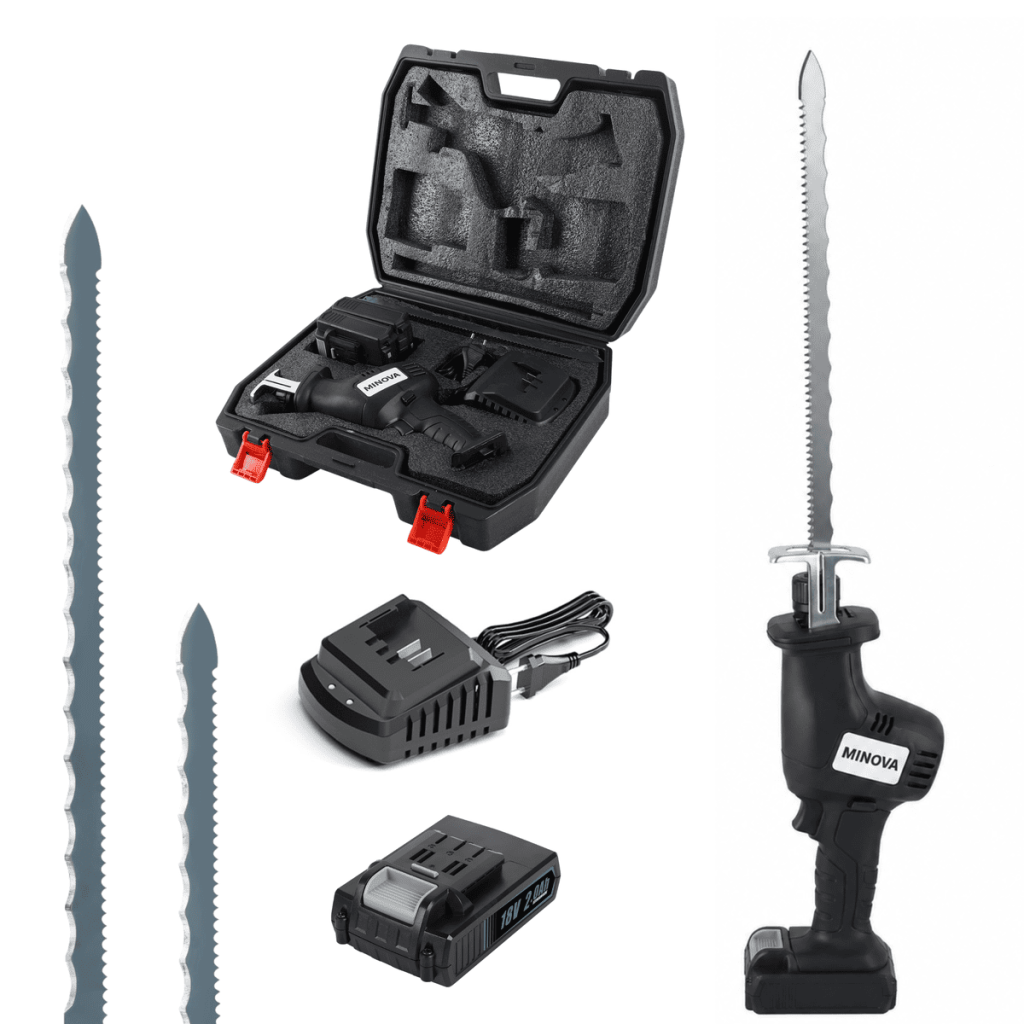
Cordless cutter for mineral wool, PIR and foams MINOVA W01
Original price was: € 209,00.€ 168,00Current price is: € 168,00.
How often should you clean the heating element?
The frequency depends on how often it is used. For professional use, 6–8 hours a day Clean the wire every day after work. For casual use—2–3 hours on the weekend—cleaning once a month is sufficient. Keep an eye on the wire—if you see dark spots or a whitish buildup, it’s time to clean it.
Wire scale develops gradually – First, a slight darkening; then, distinct black streaks; and finally, a hard crust. The sooner you act, the easier it will be to remove. A neglected wire with a centimeter-thick layer of carbon deposits may be impossible to clean—in that case, the only option is to replace it.
What's important is that, How to Set Up Your Workspace with a place to store cleaning cloths and alcohol—it’s easier to remember to clean when the tools are within reach. In our wire cutters, the wire is easily accessible, which makes it easy to perform quick maintenance without having to disassemble the entire unit.
Cleaning schedule by intensity:
- Heavy use (6–8 hours per day) – every day after work.
- Moderate use (2–4 hours per day) – every 2–3 days or after every 10 hours of operation.
- Recreational use (2–3 hours per week) – once a month or when carbon buildup is visible.
- Occasional use (a few times a year) – Check the condition before each use and clean as needed.
Mistakes That Shorten the Lifespan of the Wire
The first mistake is aggressive scrubbing with sandpaper „to make sure it’s clean”—ends up with microscopic scratches that become the seeds of cracks. The second mistake is cleaning at the maximum temperature, where an overheated wire loses its elasticity and breaks more easily. The third mistake is water use which leaves a deposit that accelerates corrosion even on corrosion-resistant nichrome.
The fourth mistake is complete neglect of cleaning – A layer of carbon deposits isolates the wire from the air, which alters heat dissipation and forces the wire to operate at a higher temperature, shortening its service life. It is also a mistake to clean the wire too infrequently, as a thick layer of carbon buildup can no longer be removed thermally and requires aggressive mechanical removal.
Clean tools are the key to working efficiently – Check out the full range of professional cutters at Pro-cut.
FAQ – Frequently Asked Questions About Wire Cleaning
Does cleaning shorten the wire's lifespan?
No, quite the opposite—regular cleaning extends its lifespan by 30-50%, provided you use the correct methods (thermal cleaning and soft cloths).
Can you clean wire with sandpaper?
Absolutely not—sandpaper scratches the surface of the wire, creating hot spots that accelerate the degradation and cracking of the material.
Does carbon buildup affect the quality of the cut?
Yes, significantly—the layer of carbon deposits insulates the wire from the material, prolonging the cutting time and causing the Styrofoam to melt unevenly, which results in jagged edges.
Is cleaning always necessary?
Not always, but with regular use, yes—failing to clean the wire shortens its lifespan and reduces cut quality, and a thick layer of carbon buildup may become impossible to remove.