
















Guide
Professional wire for industrial applications

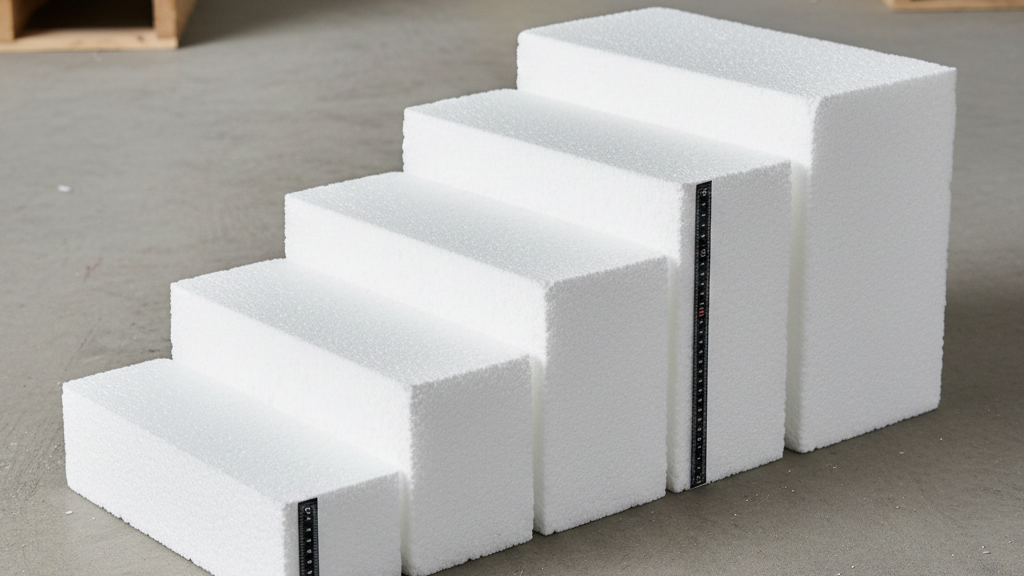
Industrial applications of resistance wire involve a completely different level of requirements than hobbyist or professional use. Production lines operating around the clock, automatic cutting machines, and mass production of thousands of components per day. The wire must withstand extreme thermal and mechanical loads while maintaining stable performance for hundreds of hours of operation. Which alloys work best in industrial applications, which parameters are critical, and why standard off-the-shelf wire poses an unacceptable risk. Discover the world of professional resistance wires!
Key information about industrial wire:
- The service life of industrial NiCr wire is 200–500 hours of continuous operation—5–10 times longer than that of standard wire.
- A diameter tolerance of +/- 0.02 mm ensures consistent heating from one wire to the next.
- The chemical composition certification confirms the nickel and chromium content with an accuracy of +/- 0.5%.
- Industrial wire requires a power supply with voltage stabilization of +/- 2%.
What is industrial resistance wire?
Industrial wire isn't just „better wire”—it's a material that meets rigorous quality standards and is certified for use in extreme conditions. Resistance wire for cutting Styrofoam For industrial use, it has a documented chemical composition, measured electrical resistance, and a certificate of compliance with standards. The manufacturer guarantees the specifications and offers technical support.
Technical Requirements
Industry requires predictability. The wire must have identical specifications in every batch. A resistivity of 2.15 Ω/m means exactly 2.15 ± 0.05 Ω/m. A diameter of 0.8 mm is 0.800 ± 0.020 mm without exception. This is the foundation of stable production.
Industrial wire specifications:
- Certified chemical composition – NiCr 80/20 with a tolerance of +/- 0.5% for nickel and chromium.
- Guaranteed electrical resistance – value measured every 10 cm, maximum deviation of +/- 2%.
- Controlled diameter – tolerance of +/- 0.02 mm, without local variations.
- Surface Cleanliness – free of oxides, impurities, and microcracks.
- Mechanical Properties – minimum tensile strength of 700 MPa.
- Service Life – a minimum of 200 hours at 90% power without degradation.
- Repeatability – Every shipment has the same specifications year after year.
Materials Used in Industrial Wires
The industry primarily uses two types of alloys – NiCr (nickel-chromium) and Kanthal (iron-chromium-aluminum).
Advanced NiCr alloys
NiCr 80/20 is a classic—80% nickel and 20% chromium. Resistant to oxidation up to 1100°C, with stable resistance. Our wire for Styrofoam uses this alloy. NiCr 60/15 is less expensive. NiCr 30/20 is a cost-effective solution for temperatures up to 900°C.
High-quality Kanthal wires
Kanthal A1 is an iron alloy containing 22% chromium and 5.8% aluminum. It is less expensive than NiCr, withstands temperatures up to 1400°C, and has higher strength. The drawback is its brittleness – It cannot withstand intense cycles. It is used where the wire operates at a constant temperature.
Comparison of Industrial Alloys:
- NiCr 80/20 – max 1,100°C, excellent resistance to thermal cycling, standard for expanded polystyrene.
- NiCr 60/15 – max 1,000°C, good resistance, good balance between quality and cost.
- Kanthal A1 – max 1,400°C, less expensive, brittle under cyclic loading, for continuous operation.
- Kanthal D – max 1,300°C, higher mechanical strength.
- NiCr 30/20 – max 900°C, the least expensive of the NiCr types, for lower temperatures.
Technical Specifications for Industrial Wires
Specific resistance is a key parameter – For NiCr 80/20, it is approximately 1.09 Ω·mm²/m. With a diameter of 0.8 mm (cross-sectional area of 0.503 mm²), this results in a linear resistance of 2.17 Ω/m. The temperature coefficient of resistance is +0.0001/°C—the resistance increases by 0.01% for every degree of temperature rise. A wire heated to 400°C has a resistance that is 4% higher than at room temperature.
Key electrical and mechanical specifications:
- Specific Resistance of NiCr 80/20 – 1.09 Ω·mm²/m, stable in the range of 20–1,100°C.
- Typical linear resistance – for Ø0.8 mm: 2.17 Ω/m, for Ø1.0 mm: 1.39 Ω/m.
- Temperature coefficient – +0.0001/°C, predictable increase in resistance.
- Material density – NiCr: 8.4 g/cm³, Kanthal: 7.1 g/cm³.
- Melting point – NiCr: 1,400°C, Kanthal: 1,500°C.
- Mechanical Strength – minimum 700 MPa, elongation 20%.
Industrial Applications of Resistance Wire
Industrial wire is used wherever precision, repeatability, and reliability are essential.
Production lines
Automated production lines produce thousands of parts a day. The wire must withstand 12–16 hours of operation for months on end. Every interruption results in losses.
Automatic cutting machines
CNC machines produce 3D shapes with a tolerance of +/- 0.5 mm. The wire must be kept at a constant temperature. A change in resistance of 5% corresponds to a change in dimensions of 2–3%, which is unacceptable.
Manufacturing of Technical Insulation
Insulation for HVAC, refrigeration, and petrochemical applications requires precision. The shapes must be identical. Tolerances of +/- 1 mm are standard.
Power Supply and Control Requirements
Industrial wire requires an industrial power supply. Voltage stabilization of +/- 2% is the minimum requirement. The warm-up time must be repeatable. Thermal protection prevents overheating. Power adjustment must be possible within the range of 10–100% with a resolution of 1%. We have highlighted the differences between hobbyist and professional equipment in Proxxon vs. Pro-cut Brand Comparison.
Temperature Controllers
PID controllers maintain the temperature within +/- 5°C. A thermal sensor adjusts the power. The system compensates for voltage fluctuations, wire wear, and temperature variations.
Security Systems
Breakage sensors stop the line in a fraction of a second. An overcurrent protection device protects against short circuits. A thermal protection device cuts off the power supply in case of overheating. Resistance monitoring detects wear and signals when replacement is needed.
Components of an industrial system:
- Regulated Power Supply – voltage +/- 2%, power 500–2000 W, active cooling.
- PID Controller – maintaining a temperature of +/- 5°C, with environmental compensation.
- Crack Sensor – detects a break in <0.1 s and stops the line immediately.
- Overcurrent Protection – Protects against short circuits and limits the current to 150%.
- Thermal Protection – cuts off the power supply at temperatures above 500°C.
- Resistance Monitoring – continuous measurement, wear detection, replacement alert.
- Parameter Logging – recording of temperature, current, and operating time.
- Communication Interface – integration with the line control system.
Top rated products
-
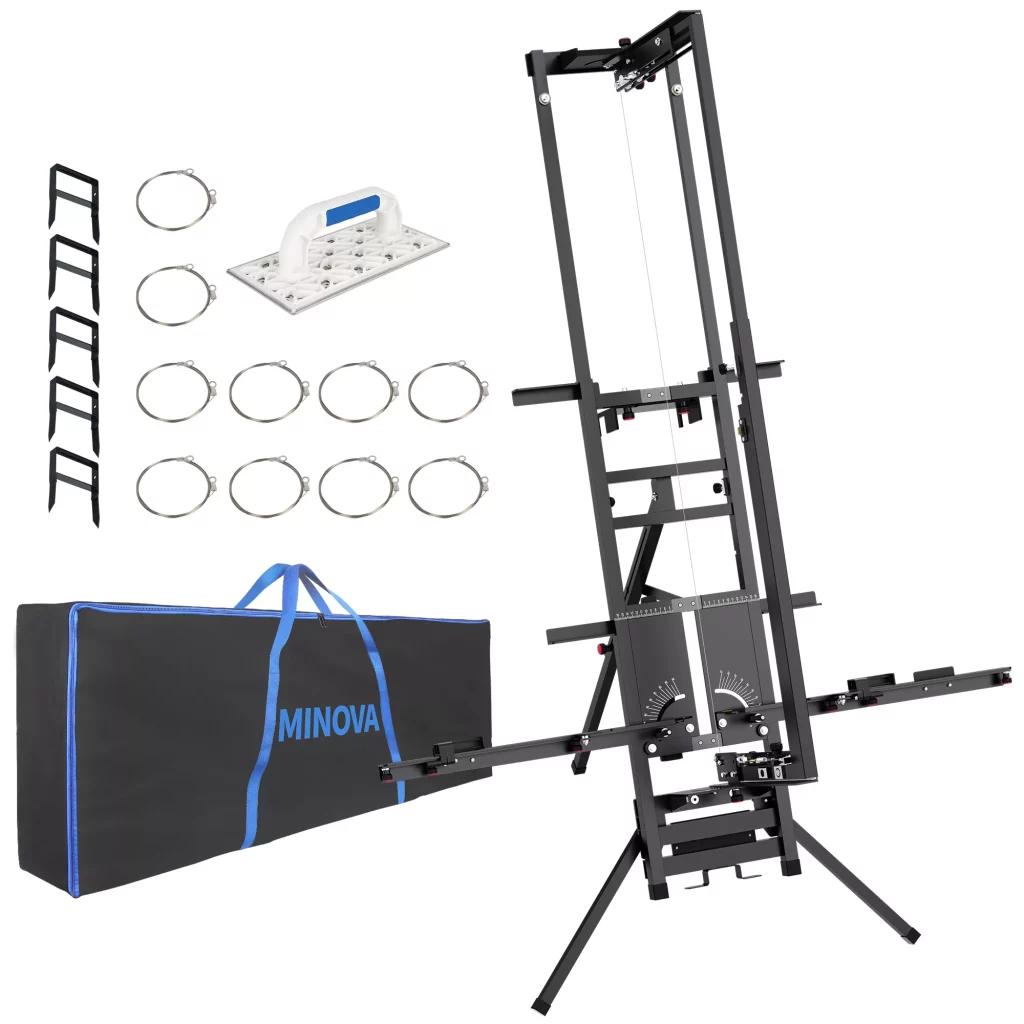
Professional guillotine cutter for cutting styrofoam styrodur Minova ELITE S30 260W
€ 888,00 -
Professional mechanical wool and insulation cutter Minova W101 (18V)
Original price was: € 1.920,00.€ 1.752,00Current price is: € 1.752,00. -
Cutting machine table guillotine for cutting styrofoam styrodur Minova CLASSIC 260W
Original price was: € 312,00.€ 300,00Current price is: € 300,00. -
Styrofoam guillotine cutter Minova Pro 260W (Network + Battery)
Price range: € 479,76 through € 512,38 -
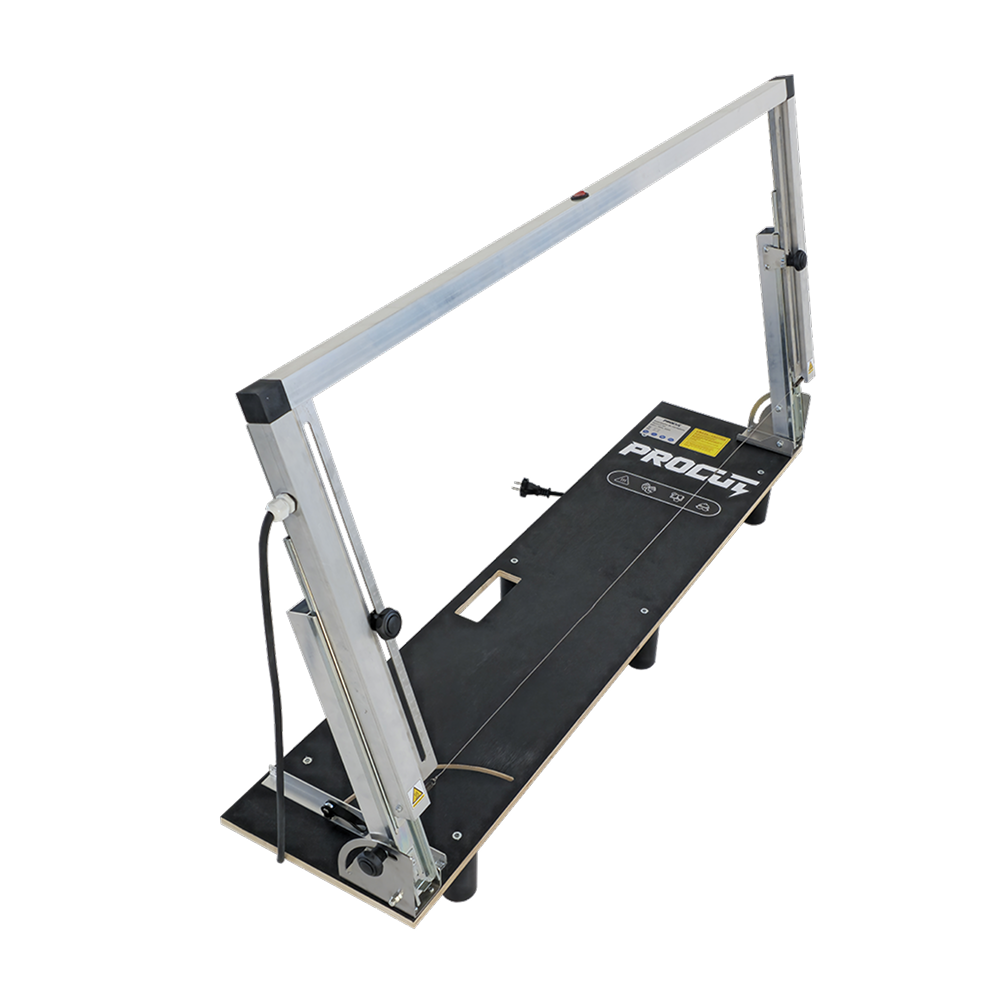
Procut Base 108cm 200W polystyrene cutter
€ 192,00

Is welding wire suitable for cutting Styrofoam?
Welding wire is made of low-alloy steel—its composition is completely different from that of resistance wire. The electrical resistance of the welding wire is too low—with a typical power supply, it will not heat up to the required temperature. The surface is coated with flux, which generates toxic fumes at high temperatures. Welding wire is not designed to operate at a constantly high temperature and oxidizes quickly.
When Is Standard Wire Not Enough?
Standard wire is sufficient for occasional use. When production increases, problems begin. The wire needs to be replaced weekly instead of monthly. Cutting parameters change between replacements—the settings need to be adjusted. The lack of documentation makes it impossible to file a complaint about defective batches. There is a risk of line downtime due to a failure at a critical moment.
We equip our professional cutters with industrial-grade wires that ensure stability—you can find them on our website Pro-cut!
FAQ – Frequently Asked Questions About Industrial Wire
Can industrial wire be cut on a standard guillotine?
Technically, yes, but it doesn't make economic sense—a standard guillotine won't take full advantage of industrial-grade wire, and industrial-grade wire only pays for itself with heavy-duty professional use.
How does the service life of industrial wire vary?
Industrial NiCr wire can withstand 200–500 hours of continuous operation at full power, while standard wire lasts 30–80 hours before degrading—a difference of 5–10 times.
Does it require a special power supply?
Yes, industrial wire requires a power supply with voltage stabilization of +/- 2% and a temperature controller—standard power supplies do not provide sufficient precision.
Is it worth it for small businesses?
It's worth it for heavy use—more than 20 hours a week—as you'll recoup the cost in 6–12 months; for lighter use, standard wire is sufficient.
How do you choose the right wire for mass production?
Choose a certified NiCr 80/20 alloy with a diameter matched to the power supply’s output, a tolerance of max. ±0.03 mm, and a guarantee of repeatability—consulting with the cutter manufacturer will help you select the optimal parameters.