

















Guide
Styrofoam guillotine - types and applications

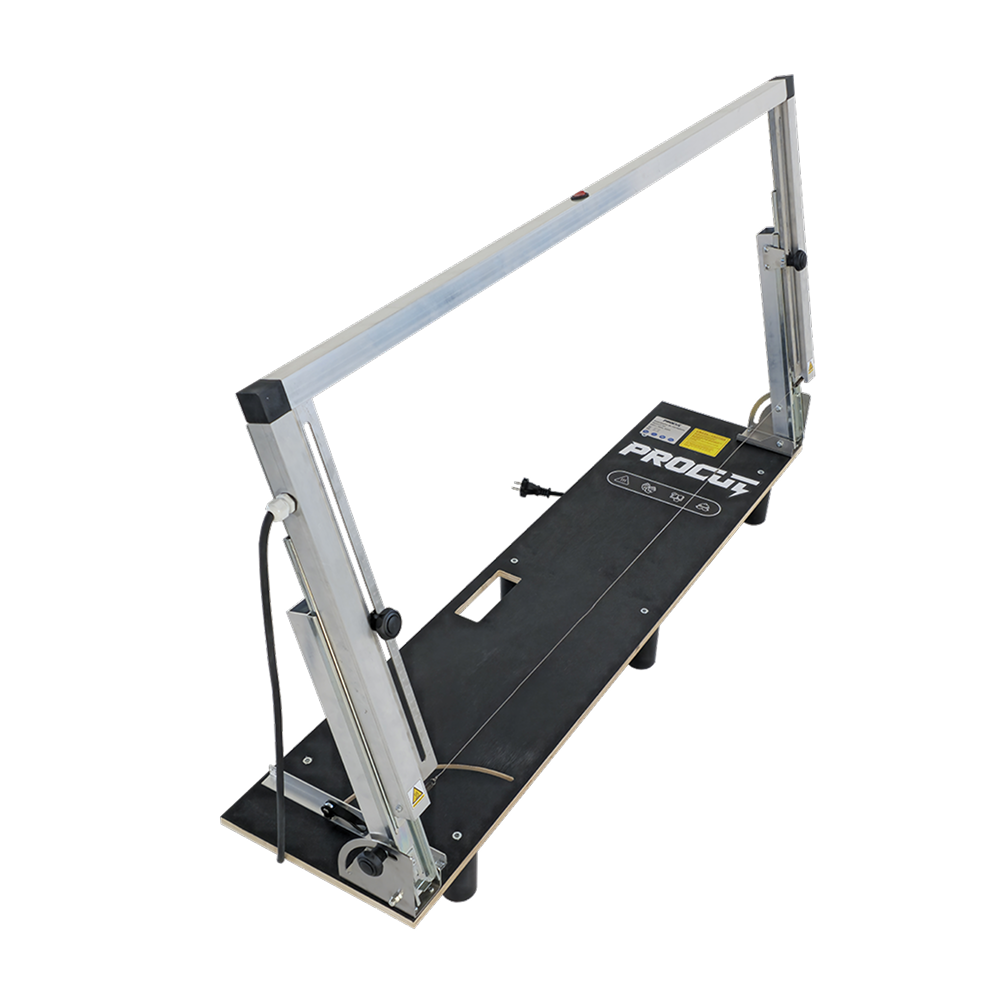
A polystyrene guillotine is a device with a resistance wire heated to 300–400°C that cuts EPS and XPS boards with a precision of ±0.5 mm—without crumbling the edges and without creating waste. This article compares three types of guillotine shears (mechanical, electric with resistance wire, and CNC), explains key parameters (power, cutting thickness, wire temperature) and provides approximate prices (300–5,000+ PLN) to help you choose the right model for a construction project, workshop, or manufacturing facility.
What is a Styrofoam cutter, and how does it work?
The Styrofoam guillotine cuts EPS and XPS boards using a resistance wire heated to 300–400°C, creating a smooth edge with a tolerance of ±0.5 mm without chipping or crumbling the material. The nickel-chromium (NiCr) alloy wire heats up evenly along its entire length, which eliminates thermal bridges and ensures a straight cut even with panels as thick as 30 cm.
Electric guillotine cutters achieve a precision of ±0.5 mm and cut EPS polystyrene with thicknesses ranging from 5 mm to 30 cm in a single, smooth pass. The voltage control system allows you to adjust the wire temperature to the type of material—a lower setting for soft EPS polystyrene, and a higher setting for hard XPS polystyrene.
An electric guillotine cuts the time needed to cut 10 m² of EPS panels from 2–3 hours (using a traditional or manual knife) to 30–45 minutes, reducing material waste by approximately 15%. This is a key difference for construction crews working with ETICS (exterior thermal insulation composite systems).
Resistance Wire vs. Oscillating Cut
Resistance wire technology is the most popular method in thermal insulation construction. A 0.5–0.8 mm thick NiCr alloy wire is heated by a toroidal transformer to a temperature of 280–400°C. Melting the material along the cut line creates a hermetic, smooth edge ideal for ETICS systems.
Oscillating cutting uses rapid vertical movements of the cutting tool—without melting the material. It works well with materials sensitive to high temperatures or when creating very complex 3D designs. It is used less frequently in construction; it is more common in model making and set design.
Types of Styrofoam Cutters – A Comparison of Types
There are three main types of thermal cutters for polystyrene foam available on the market: mechanical (non-electric, up to 20 cm thick), electric with a resistance wire (150–260 W, up to 30 cm), and CNC (programmable, up to 60 cm). The choice between them depends on the scale of the project, the type of material, and the required precision.
| Guillotine type | Power | Cutting thickness | Precision | Price | Best use |
|---|---|---|---|---|---|
| Mechanical | — | up to 20 cm | ±2 mm | 300–800 PLN | Occasional household chores, model building |
| Electric (resistance wire) | 150–260 W | up to 30 cm | ±0.5 mm | 500–3,500 PLN | Construction, facade crews, workshops |
| CNC | 500+ W | up to 60 cm | ±0.1 mm | 5,000+ PLN | Industrial manufacturing, 3D cutting |
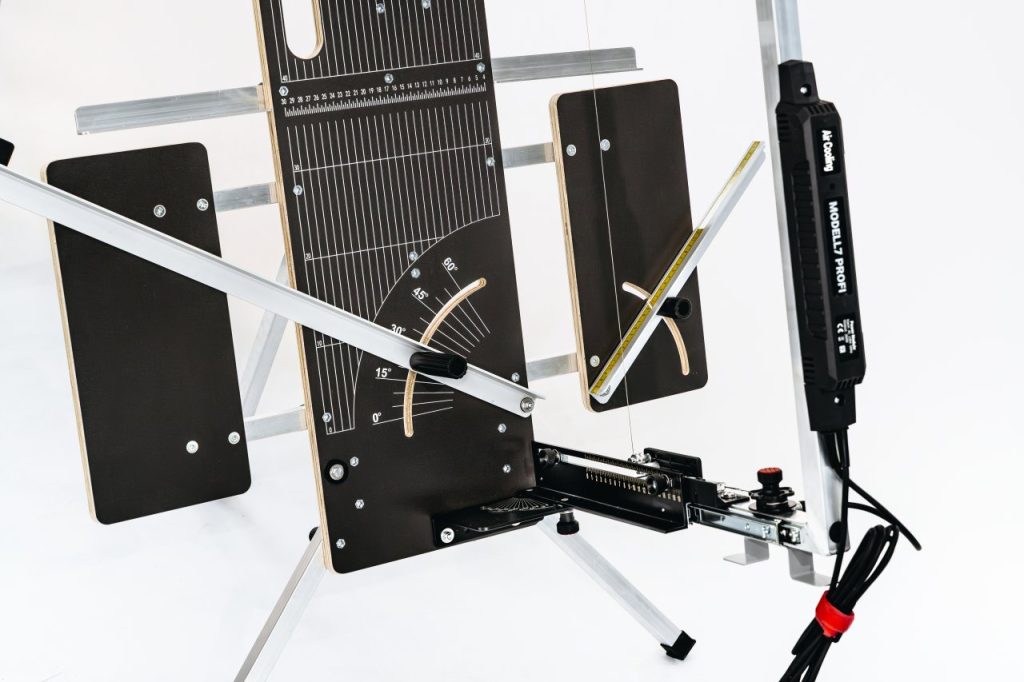
Electric wire-cut guillotines dominate the construction industry – model Procut Base 108 cm / 200 W will assist the facade crew with standard EPS panels, and Minova Pro 260 W / 132 cm It is ideal for intensive work with hard XPS Styrodur and thicker insulation blocks.
Technical Specifications—How to Read Them?
The key specifications of the electric guillotine are: toroidal transformer power (150–260 W), maximum cutting thickness (20–60 cm), working bar length (100–200 cm), and wire temperature (280–400°C). The thickness of the resistance wire (0.5–0.8 mm) affects the durability and width of the cutting gap.
| Parameter | Budget segment (up to 800 PLN) | Mid-range segment (800–1,700 PLN) | Premium segment (1,700–3,500 PLN) |
|---|---|---|---|
| Power | 100–150 W | 200 W | 260 W |
| Cutting thickness | up to 20 cm | up to 30 cm | up to 30 cm (XPS) |
| Length of the strip | 60–100 cm | 100–132 cm | 132–200 cm |
| Wire temperature | 280–320°C | 300–380°C | 300–400°C |
| XPS (Styrodur) Support | ❌ No | ✅ Yes | ✅ Yes |
EPS Styrofoam Cutter vs. XPS Styrodur Cutter—Which One Should You Choose?
An electric guillotine with a minimum power of 200 W cuts both EPS polystyrene (white, 15–25 kg/m³) and the harder XPS polystyrene (blue or green, 25–45 kg/m³) – XPS requires a wire temperature that is approximately 50°C higher and a more powerful transformer.
- EPS (expanded polystyrene) – a white, standard thermal insulation material. It is cut at 280–320°C. It is compatible with all electric models, even those in the budget segment. It is commonly used in ETICS systems for insulating building facades.
- Styrodur XPS (extruded polystyrene) – blue or green, harder and more moisture-resistant. Requires a wire temperature of 350–400°C and a minimum power of 200 W. Works well for foundation footings, inverted roofs, and floors.
When purchasing a cutting machine, check whether the manufacturer specifies support for XPS (Styrodur)—models with a power rating below 150 W may not reach a high enough wire temperature to cut harder materials and will produce a jagged edge or break the wire.
How much does a styrofoam cutter cost?
Prices for Styrofoam cutters start at 300 PLN for mechanical models and go up to 3,500 PLN for professional electric models and over 5,000 PLN for CNC systems. The choice of price range should be based on the frequency of use and the type of material being cut.
| Price segment | Price | Device Type | Who is it for? |
|---|---|---|---|
| Budget | 300–800 PLN | Mechanical/electric 100–150 W | DIY Enthusiast, Uncommon Household Chores |
| Average | 800–1,700 PLN | Electric 200 W (EPS + XPS) | Small construction crew, workshop |
| Premium | 1,700–3,500 PLN | 260 W electric with cooling | Professional facade team |
| Industrial / CNC | 5,000+ PLN | CNC-programmable | Manufacturing plant, mass production |
The cost of the resistance wire (spare) and any replacement of the wire once it wears out must be added to the price of the device—NiCr wire measuring 0.5–0.8 mm costs between a dozen and several dozen zlotys per set, depending on the length of the strip.
Applications of Styrofoam Guillotine Cutters in Various Industries
The Styrofoam guillotine is primarily used in the thermal insulation construction industry (ETICS systems), but it also works well in packaging, advertising, and model-making—anywhere a precise, chip-free edge is needed.
- Construction – ETICS Systems: Precise cutting of insulation panels for facade insulation. A precise fit to the dimensions eliminates thermal bridges and improves the insulation's airtightness.
- Packaging: manufacturing of protective polystyrene inserts custom-shaped to fit specific products.
- Advertising and Decorations: cutting 3D letters, logos, and exhibition elements.
- Model Making and Set Design: creating complex architectural shapes and forms.
- The Furniture Industry: Cutting polystyrene foam inserts to be used as fillers in furniture structures.
The CNC guillotine is designed for facilities that require 3D cutting and a repeatability of ±0.1 mm at a throughput of 50+ parts per hour—it is the ideal tool for mass-production packaging manufacturers and insulation prefabrication facilities.
Which Styrofoam cutter should you choose? Decision-making chart
For home use: a mechanical or electric guillotine cutter, 150 W (up to 800 PLN); for a construction crew: an electric guillotine cutter, 200–260 W (800–3,500 PLN); for a manufacturing facility: a CNC machine (5,000+ PLN). The key criterion is the type of material—if you plan to cut XPS Styrodur, you’ll need at least 200 W.
| User / Application | Recommended type | Minimum parameter | Estimated price |
|---|---|---|---|
| DIY, Household Chores (EPS) | Electric, 150 W | Cutting thickness: 20 cm | 500–800 PLN |
| A small construction crew (EPS + XPS) | Electric, 200 W | 100–108 cm strip, XPS compatible | 800–1,700 PLN |
| Professional facade team | Electric, 260 W (e.g., Minova Pro) | 132+ cm strip, cooling | 1,700–3,500 PLN |
| Manufacturing Facility / Batch 3D Cutting | CNC-programmable | Repeatability: ±0.1 mm | 5,000+ PLN |
A Styrofoam cutter must have a minimum power of 200 W to effectively cut XPS Styrodur that is more than 15 cm thick. When selecting a cutter, also check the length of the cutting bar—standard thermal insulation boards are 100 cm wide, so a cutting bar measuring 100–108 cm is considered the minimum for construction use.
Work Safety When Using a Styrofoam Cutter
Thermal cutting of polystyrene foam releases styrene and other volatile organic compounds—work with a window open or under a fume hood; IP44-rated guillotine cutters can be used on damp construction sites without the risk of electric shock.
Styrene Vapors and Ventilation
When polystyrene is melted using a resistance wire, styrene fumes are released. Although the amounts are significantly lower than when welding plastics, working in enclosed, unoccupied rooms without ventilation may cause respiratory irritation. Recommendations:
- Always work with a window open or the exhaust fan on.
- When cutting intensively (more than 2 hours a day), use a half-mask with a VOC-absorbing filter (A2).
- Avoid overheating the wire—setting the temperature too high increases vapor emissions.
IP44 Rating and Use on Construction Sites
IP44-rated electric guillotine saws are resistant to water splashes and dust—they can be used on open construction sites and in high-humidity conditions. Before use, check the device’s IP rating in the technical specifications. Never use guillotine saws with a rating lower than IP44 in the rain or on wet surfaces.

FAQ – Frequently Asked Questions About the Styrofoam Guillotine
What is the best way to cut Styrofoam?
Cutting with a NiCr resistance wire heated to 300–400°C yields the best results—precision of ±0.5 mm, a smooth edge without chipping, and no waste. A traditional knife is slower and less precise; a power saw crumbles the material and leaves a lot of waste.
How much does a styrofoam cutter cost?
Prices start at 300–800 PLN for budget mechanical and electric models (100–150 W). Electric models for professional use cost 800–3,500 PLN, while CNC systems cost 5,000 PLN and up. Include a supply of resistance wire and any necessary mounting accessories in the price.
Can a Styrofoam cutter cut XPS Styrodur?
Yes, but only electric models with a minimum power of 200 W and a cutting wire temperature of up to 400°C. Harder XPS Styrodur (blue/green) requires a cutting temperature that is approximately 50°C higher than that of soft EPS Styrofoam. Models with a power rating below 150 W may not reach the required temperature and may cause the wire to break.
A Styrofoam cutter vs. a hot knife—what's the difference?
A polystyrene guillotine cuts in a straight line across the entire width of the board in a single stroke (wire blade 100–200 cm). A heat knife (heat gun) is a hand tool for irregular cuts and finishing touches—it is slower and less precise for long, straight lines. Both tools complement each other on the construction site.
Which Styrofoam cutter should you choose for your home?
For occasional household projects, a 150-watt electric paper cutter with a 60–100 cm cutting bar (costing 500–800 zł) will suffice. If you also plan to cut XPS Styrodur (for floor or foundation insulation), choose a 200-watt model that specifies XPS compatibility in its specifications.
What is the best resistance wire for a polystyrene cutting machine?
Nickel-chromium (NiCr) alloy wire with a thickness of 0.5–0.8 mm provides the best durability and even heating. Thicker wire (0.8 mm) breaks more slowly when cutting hard XPS, but leaves a slightly wider cut gap. Always use wire that is compatible with the device’s transformer—if the wire is too thin and the voltage is too high, it will break immediately.
How is resistance wire different from regular wire?
NiCr heating wire has high electrical resistance and a melting point above 1,400°C, which allows it to maintain a stable temperature of 300–400°C at low voltage (6–24 V). Ordinary steel or copper wire heats up unevenly, oxidizes quickly, and is not suitable for precision thermal cutting of polystyrene.
See also:
- How do you maintain a polystyrene guillotine so that it operates trouble-free for years?
- How to Choose the Best Styrofoam Cutter? A Complete Guide for Professionals
- Does the power of a cutter for Styrofoam and Styrodur matter?
- Cutting Styrofoam on a Construction Site – How to Set Up a Workstation?
- What Should You Use to Cut Styrofoam? A Complete Guide to Cutting Tools and Methods
- Types of Styrofoam and Choosing a Cutting Method—What Do You Need to Know?
- The principle of the polystyrene foam cutter